Showing posts with label homework. Show all posts

Thursday, November 20, 2014

Thursday, 20th November

Hello everybody! I hope your projects about the Baroque Art are nice ;)

Today, when we passed to the class, Paqui was checking the projects that some of us have uploaded the night before.

First of all, she has told us that Mary Wollstonecraft was the woman who made the vindication of the rights of the women (the 1st important document in feminism. Then, we have checked the scheme about the Enlightenment and we've talked a little bit about it. After that, Aza has read the point three and we've started (and finished) a new summary about it, the Enlightened despotism. I've added to my summary that:

  • Some European monarchs received the influence of Enlightenment.
  • They made some reforms in education, administration and economy, but they didn't make political or social reforms beause this would have meant reducing their power so they continuedto rule as absolute monarchs (despots) and privileged were preserved.
  • The reforms that they made ere insufficient.
  • Its slogan was "Everything for the peopole, but without the people".
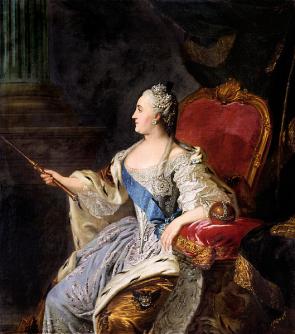
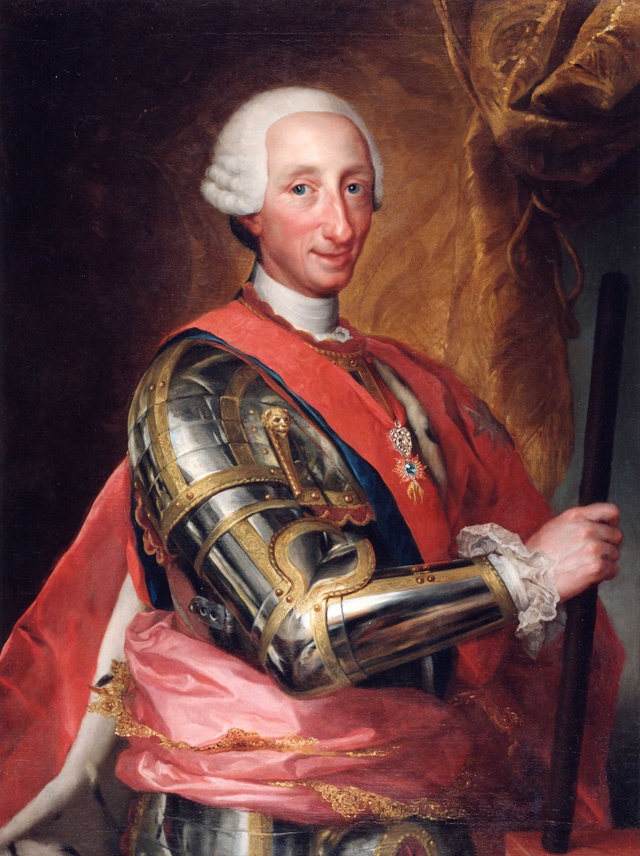
  • Some examples of Enlightened despots:
    • Catherine II of Russia
    • Frederic II of Prussia
    • Charles III
Paqui has told us that the Rulers (government) were as people's parents because they told them what to do, if not, people wouldn't know what to do. At the end, Paqui has explained a little bit about the independence of the USA (no taxaion without representation).

And finally some new words to our glossary:
-Virtual: virtual
-Vindication: reivindicación
-Free trade: libertad industrial o librecambio
-Free industry: libertad industrial
-Pioneer: pionero
-Subject: súbito (the opposite of citizien)
-Civil servants: Funcionarios

Oh, and don't forget to do the homework! Exercises 13, 14 and 15 of the review of the page 11.

Bye!

Saturday, October 26, 2013

Work for next week

Hello everybody, 


As Cristina told you, I'm going to be absent for some days. You will have to work autonomously, preparing the schemes and summaries of the last part of the Modern Era. This is what you will have to do: 

- Check the synoptic chart you had for Friday with the information of the presentation Dani included on his journal. 

- Summarize the information about the decline of the Hispanic Monarchy (17th century) and write a scheme including Philip III, Philip IV and Charles II's reigns. After this , summarize the information about economy and society in the Hispanic Monarchy during the 17th century. You can check your work with the information included on the PowerPoint presentation Maribel included on her journal. 

- Make two schemes about the art of the Modern Era in the Hispanic Monarchy, one for Renaissance art and another one for Baroque art. As we did when we studied Renaissance and Baroque, your schemes will have to include the following sections: architecture, sculpture and painting and every of these sections will have to include main features, artists and works. When you finish your work, check it with the help of this presentation. 


Please, use the time of the lessons to work and check it at home with the presentations. Look up for the new words you find and add them to your glossaries. If you have any questions, you can use the blog or the e-mail to ask me, but be patient, because I don't know when I will be able to answer. 

The people in charge of writing the journal next week are Jesús Herencia (Monday) and Marina Jiménez- Zarza (Tuesday). Please, write what you do on these days: who the guardia teacher is, what part of the work you do during the time of the lesson, the information you learn, include all the new words you find and one or several pictures related to the content. 

I wish to come back soon. See you. 

Saturday, February 4, 2012

Classwork and homework for next week


 Otto Von Bismarck offering slices of Africa to the European powers at the Berlin Conference

The Rhodes Colossus, depicting colonialist Cecil Rhodes 
as a giant standing over Africa and representing the Scramble for Africa

Here you have what you will have to do during next week´s lessons: 

MONDAY, 6th 
- Student in charge of the journal: Daniel Pintado
- Copy the outline of the new unit on your notebook. It corresponds to Unit 4 on the book (pages 33-43):

UNIT 5: EUROPE IN THE 2ND HALF OF THE 19TH CENTURY.THE AGE OF EMPIRES
1. The unifications of Italy and Germany.
2. The Age of Empires
   A) Definition, causes and justification of colonialism
   B) Attitudes towards colonialism
   C) Conquest, organization and exploitation of the colonies
   D) The big colonial empires and Berlin Conference
   E) Consequences of colonialism
3. Spain in the 2nd half of the 19th century
  A) Isabella II´s reign
     a) The Progressive Biennium (1854-1856)
     b) Alternation between the moderates and the Liberal Union (1856-1868)
  B) The Glorious Revolution and the Democratic Sexenio (1868-1874)
     a) The Provisional Government (1868-1870)
     b) Amadeus I of Savoy´s reign (1871-1873)
     c) The 1st Republic (1873-1874)
  C) The Restoration (1875-1931)


- Read point 1 of the unit on page 33 and do exercises 1, 2 and 3 of page 41


On this unit you will have the possibility of doing a project about point 3 of the unit. It will consist of choosing one of the periods of the Spanish history in the 19th century, researching about it and making a comic (2 pages at least) or a video presentation, similar to this one:


WEDNESDAY, 8th
- Student in charge of the journal: Yolanda Abad
Cristina Blanco will be with you. She will use a new ppt presentation to correct the activities you did on Monday.
- Start point 2 of the unit, copy the definition of  Age of Empires from the ppt presentation, read page 34 and do exercises 4, 5, 6 and 7 of page 41


THURSDAY, 9th
- Student in charge of writing the journal: Carmen Salido
Read pages 35 and 36 and do exercises 8, 9 and 10 of page 41.
- Complete the blank map Cristina will give you about the big colonial empires

If I can´t come back next week, maybe you should think about doing the exam on a different date.

Sunday, January 29, 2012

Activities for this week


This is the work you will have to do this week in the classroom and at home: 


MONDAY, 30th
- Student in charge of the journal: Ana de la Fuente.

- Read point 3 ("Socialism and anarchism"on pages 29 and 30 and do activities 13, 14 and 15 of page 31

WEDNESDAY, 1st FEBRUARY
- Student in charge of the journal: Juan Carlos Huertas


- Check with Cristina Blanco the activities you did at home and on Monday. She will use the PowerPoint presentation to show you images and schemes to help you complete the information of the activities.

- Read the point "The International Workingmen´s Association" on page 30 and do exercise 16 of page 31. If you don´t have time during the lesson, do this exercise for homework. 

THURSDAY, 2nd FEBRUARY
- Student in charge of the journal: Mari Luz Ortiz

- Check the exercises left.

- Do the crossword of page 32 to review the unit. Don´t check your notes or the book. Try to do it with what you remember about the unit. When you finish it, check it with Cristina.

You should also start thinking about a date to do the exam of this unit and the last contents of Unit 3 (Restoration, Ferdinand VII´s reign, the Regencies and the Moderate Decade in Spain). 

Saturday, January 21, 2012

Activities for next week


Industrial Manchester from Kersal Moor, painting by William Wylde (1851)


Here you have the work you will have to do next week: 

MONDAY, 23RD
- Student in charge of the journal: Laura Bustamante 

- Answer the following questions, which correspond to point 1B2 of the outline of the unit (Development of the First Industrial Revolution): 

1.      Explain what the main energy sources used during the First Industrial Revolution were.
2.      What was the factory system?
3.      What industries developed during the First Industrial Revolution?
4.  Explain the main inventions that allowed the development of textile industry. What were the consequences of these inventions?
5.    Explain the main innovations inventions that allowed the development of iron and steel industry. What were the consequences of these inventions?
6.   Explain the main improvements made in transport. Why were these changes considered to be revolutionary?

- For homework, read section "Development of industrial capitalism" on page 27 and do activities 4,5 and 6 on page 31.

WEDNESDAY, 25TH
Remember that the students who didn´t pass the first term will have to do the make-up exam on this day. 

- Student in charge of the journal: Alejandro Torrillas

- Read point E on page 27 ("The Second Industrial Revolution"), which corresponds to section 1C of the outline of the unit, and do exercises 7 and 8 on page 31.

- Read point 2 on page 28 ("The new class-based society"), which corresponds to section 2 of the outline of the unit, and do exercise 9 on page 31. 

THURSDAY, 26TH
- Student in charge of the journal: Ana Isabel Lucas

- Check with Cristina Blanco the activities you did on Monday and Wednesday. She will use a PowerPoint presentation to show you images and schemes to help you complete the information of the activities. You will have the PowerPoint presentation available on the blog in the following days. 

- For homework, read section 3 A ("The first workers associations") on pages 28 and 29 and do activities 10,11 and 12 on page 31. 

If you have any questions or doubts, please use the blog to ask. I´ll include some extra explanations here and I hope you read them and complete your notes. Cristina Blanco will be with you on Wednesday and Thursday and she will make her best to help you. Please, help her doing your work and having a good behaviour. Have a good week. 

Monday, October 25, 2010

Someone "has forgotten" to write the journal today


Daniel Rodríguez was in charge of writing the journal today. I´ve sent him two e-mails reminding him that he had to write the journal Can any other person write today´s journal? It will be great. Thanks in advance.