Friday, February 8, 2013

Journal of 8th February 2013

 Hello classmates:
Today Paqui has said that it’s my turn to do the journal. At first when all the people have sat some of the classmates have said that Paqui didn’t follow them in twitter. Paqui has said that she created a  twitter account  to participate in a cyber action which consisted of asking questions to the president and she doesn't follow any student.


https://blogger.googleusercontent.com/img/b/R29vZ2xl/AVvXsEj5Noq9-tz9Tms1Esxjq7AmwC5EN8249rB1DxpNY_42cCCvhPgA51DpmsneUIngJpBljb26THRz7560ON4QPS43pQVsTuGRxusSiewLLNkEgwbF9i4cWMiQlcQ2LKfmcQsKz_audj_Azu4/s1600/twitter.gif
 Then we have started with the lesson. Paqui has revised the final contents of last class:
-The most important inventions during the First Industrial Revolution such us the steam engine that was created by James Watt.
- The new energy sources such as mineral coal (it  started being used in the Industrial Revolution)and the hydraulic power.

http://www.portlandfiremuseum.com/images/steam_engine.jpg

Then Paqui has continued with the explanation of the Factory System that it’s a concentration of machines and workers in big factories and division of work. Working conditions got worse. The Factory System was a new way of organized work.                                                                                        
Paqui has added a extra information about F.W. Taylor who decided to produce weapons in an Assembly line that's why production line is called Taylorism.


After this Paqui has coughed , Laura and Paloma have said she that if she wanted  water they have some, but Paqui didn’t want water. She has said that she is constantly working and talking and she feels like in a factory, producing notes for fourth  and them for other groups, and some classmates have said that she needs a rest.


Then Paqui has continued with the lesson and she has explained the different industries that developed in the first Industrial Revolution.
-Textile Industry. (cotton fabric industry). It was divided into two types of  mechanization;
         
             - Mechanization of spinning. Inventions like The Water Frame (it was invented by Richard Archwick)The  Mule Jenny (Samuel Croptom) and The Spinning Jenny (it was created by James Hargreaves)
Raquel has said that why this inventions were called Jenny and Paqui has answered that is Jenny came from engine and this is why this two inventions are called like this.
              
              -Mechanizations of weaving. Inventions like Flying shuttle invented by John Kay and manually after this it was created the Power Loom invented by Edmond Cartwright.

- Iron and Steel Industry (steel) It included the coke coal that produced more energy and calories. It was created by Abraham Darby and Henry Bessemer.  

https://blogger.googleusercontent.com/img/b/R29vZ2xl/AVvXsEhYm_0nK7kcY2lqjASARrM7_lgMndXnUHX-ennBS0G7ayZ6zXErl_DYH6mo2JkD-Hgb8MIAMlGmQjCXY3txaDCfA4mwsC3sEVsZQuTWzP-eUhNctpGR_z0cAT31HOhlBX6z0AQh3-XgYQs/s1600/2+revolucion+industrial.jpg

Then Paqui has shown us an animation about the Blast Furnace that consists in throughing iron inside the machine them the coke and them the water move the engine and the iron and coke melt and finally produce a lot of hot. Paqui has said that this animation is on the BBC website and in this page we can see a lot of interesting things. Also we have made some interactive activities on this website. This animation can be seen in: http://www.bbc.co.uk/history/interactive/animations/blast_furnace/index_embed.shtml

Then we have continued with the point b.3 of the unit. It’s about the Transport Revolution. Paqui has copied on the blackboard the scheme of this point.

Causes: need for moving products from factories to markets and more interest of people in morning from one place to another.

Improvements: Amelioration of traditional infrastructures like roads, river canals...

Inventions: Use of the Steam Engine for road transport, maritime and fluvial transport.
-          Locomotive built by George Stephenson in 1816 it was produced by a intelligent man to transport passengers.
-          Steamboat built by Robert Fulton in 1806.

After this some classmates have talked about  Pilar’s boyfriend. Then we have continued.

Consequences: speed increased, travel duration and expenses reduced and people’s trips and trade increased.
https://blogger.googleusercontent.com/img/b/R29vZ2xl/AVvXsEjXQ8U_NLCoKy8-tR-dk68iULo6hiYu9L2c8lW4c9sDbHY4Tn_Pgw3CKtR4msjaZ5MNJ-DFgn90Ggewr5ZOsPJQ4x80Yq0FuYZx6Fk-tHQZl1NbXAYIqqLEn4YMOqhwx_75xnrVN8591m4/s1600/Perfect+Steamer.jpghttp://www.aquiqueretaro.com/images/SJuanRio/maquinaFCA.jpg

Paqui has given us the exercise four of page 31 and she has recommended us to read the new post that she has included on the blog.

 Glossary:
Charcoal: carbón vegetal.
Production/ Assembly line: cadena de montaje
Iron and steel industry: siderúrgica
spinning:hilado
to weave:tejer
weaving: tejido
Flying shuttle: lanzadora volante
thread: hilo
power loom: telar mecánico
loom:telar
blast furnace: alto horno
coke coal: carbon de coque
river canal:canal fluvial
amelioration: mejora
to derail: descarrilar
railway: raíles

I hope you like it! Enjoy this carnival and have a good time!
Elena:)

Curious stories about some inventions of the Industrial Revolution

Yesterday I told you the story about the flutes James Watt forged to get the money he needed to for his experiments with the steam engine. You can read the full story here: 

http://todayinsocialsciences.blogspot.com.es/2012/01/what-do-flutes-have-to-do-with.html

This is the link to the story about the true inventor of the telephone, who was not Alexander Graham Bell, but Antonio Meucci. Graham Bell is supposed to have copied Meucci´s invention and registered it in his name: 

http://todayinsocialsciences.blogspot.com.es/2012/01/antonio-meucci-true-inventor-of.html

The story  of electricity is very curious as well. Everybody considers Thomas Alva Edison, the Wizard of Menlo Park, to be one of the biggest inventors ever. He accumulated 2,332 patents worldwide (1,093 in the USA), but he didn´t invent all the products people commonly attribute him. Many of them were improvements of previous inventions and other were developed by his workers in his laboratory in Menlo Park. Edison was more a business man who got the money for his projects. Here you have a complete list of all the inventions patented by Edison: 


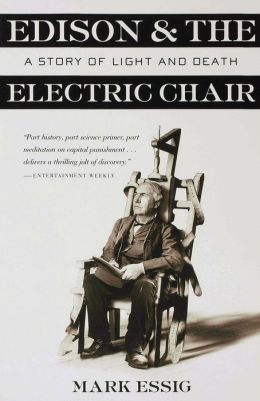
Edison was also involved in the so called War of Currents with Nikola Tesla, a great inventor. Edison defended direct current and Tesla defended alternating current. Tesla received George Westinghouse´s financing and Edison tried to discredit alternating current by all means. He reached the point of inventing the electric chair with an old Westinghouse generator. The first executed criminal was William Kemmler, who died in an awful spectacle. Later Edison  executed a circus elephant which had killed three men to show how  dangerous alternating current could be. But despite all his efforts, finally Tesla and Westinghouse proved that alternating current was cheaper and more efficient. 


If you want to read more about the War of Currents, here you have some links: 


Thursday, February 7, 2013

Wednesday, 6th February 2013

Wednesday, 6th February 2013
  http://cienciahumana.info/ver-la-letra-a-antes-de-un-examen-puede-ayudarte-a-sacar-buena-nota/

Today, when we have came into the class, the checked exams were over the tables. Paqui has given until 8:25 to see the exams. The average mark has been good, only two or three classmates haven't passed the exam. Gema was very angry with her mark, because she studied a lot and she has had an argument with Paqui. Paqui has said that we only memorize the information "to puke" it in the exam. She has explained us the answers from the exam. Then she has reviewed the points we saw in the last class, the Norfolk four-field system of crop rotation, mechanization and the selective breeding.

SELECTIVE BREEDING
 http://www.le.ac.uk/el/newdishley/animals.html
                                http://www.bbc.co.uk/history/historic_figures/bakewell_robert.shtml

Robert Bakewell was the first to breed only animals with certain qualities. He elaborated genealogical records of his valuable animals and maintained his stock carefully. He had a great success with sheep.
The photography above shows a sheep created by Bakewell crossing the best species of sheep to obtain a lot of whool.


Then we have studied the:

Development of the 1st Industrial Revolution.

The causes for the development were that the population increased due to the improvements in medicine, hygiene and agriculture. This population demanded all type of products.
Producers started trying to produce more inventing and innovating, with a new way of organizing work: factory system (concentration of workers and ,machines in big factories and division of work), and with new energy sources like hydraulic power and mineral coal.
https://www.mtholyoke.edu/courses/rschwart/ind_rev/images/indust.html.htm

Then, the bell has rung.

Glossary
  • to puke: vomitar.
  • fodder: forraje (what animals eat).
  • sheep (it's used for the singular and plural, both).
  • to breed: criar animales.
  • surplus: excedente.
  • to starve: morirse de hambre.
  • manufacturing: manufactura/fabricación de productos.
  • fabric: tela
  • farming = agriculture.
  • farmer = agricultor.
  • stimulus: estímulo.
  • factory system: sistema fabril.
  • steam engine: máquina de vapor.
  • patent: patente.
  • to forge: falsificar.
  • flute: flauta.

I hope you like it, and sorry for the delay.


Monday, February 4, 2013

MONDAY 4th February 2013

Monday 4th February 2013

Today was: The day of the exam!!!
http://cbspeeradvising.files.wordpress.com/2011/08/exams-exams-22022569-866-352.gif

Today we have gone to the class during the break time, because of the exam, to have more time to do it. Some people have gone at the beginning of the break time but other people has gone after.
The exam was about the French Revolution and Restoration wasn't so much difficult. It consisted on five questions:
-The first question: was about match important characters of the French Revolution such as Charles IV, Ferdinand VII, Robespierre, Godoy, Duke of Wellington, Louis Philip I, Louis XVI, etc, with information about them. This question worthed one point. It was the easiest question.
http://alphahistory.com/frenchrevolution/wp-content/uploads/2012/10/frenchrevolution.jpeg

-The second question: was about the beginning of the French Revolution and its causes and the events that took place in the summer of 1789. The French Revolution started when Louis XVI had to called Estates General and the Third Estate protests for the way of voting, the causes were the economic crisis, financial crisis, discontent of the Bourgeoisie, etc, and the events ware the storming of Bastile and the Great Fear. This question worthed 2 points.
http://www.english-online.at/history/french-revolution/storming-of-the-bastille.jpg

-The third question: consisted on choose two questions between four questions. The questions were:

  1. About the Jacobins Convention.
  2. About Napoleonic Era.
  3. About the official and rebel government during Peninsular War
  4. About the Congress of Vienna.

This question worthed 3 points.


-The fourth question: was about choosing 5 concepts between 10, but you have to choose at least 2 of each column. The concepts were:
  • SANS CULOTTES                                              - TREATY OF FONTAINEBLEU
  • GIRONDISTS                                                    - MUTINY OF ARANJUEZ
  • CONTINENTAL BLOCKADE                              - ABDICATIONS OF BAYONNE
  • RUSSIAN CAMPAIGN                                        - FRANCOPHILES
  • BUFFER STATE                                                 - GUERRILLA
This question worthed 2 points.

-And the last question: was about the main ideas of Liberalism and Nationalism and give an example of each one. This question worthed 2 points.
During the exam Javi has entered to the class with an injury in his hand and he couldn't write so he is going to do the exam by oral way.
At the end Paqui has collected all the exams.

That's all and good luck for your exam's marks and see you on Wednesday!!!

Saturday, February 2, 2013

Interactive activities to review

Here you have some review activities about the crisis of the Ancien Régime in Spain, Restoration and the revolutions in the first half of the 19th century.  The MEC server is not working today (I don´t know why). I´ve sent an e-mail to the person in charge, but I don´t know if they are working during the weekend. If the problem is not solved and someone wants to review, please, send me an e-mail and I´ll send you the packs of activities and the instructions to practice. 

P.S (3rd February): the problems were solved and everything works right now. 

Link to the post to review the French Revolution: 


http://todayinsocialsciences.blogspot.com.es/2013/01/interactive-activities-about-french.html


- Activities about Charles IV´s reign and the Peninsular War: 


- Activities about Restoration and the three revolutionary waves of 1820, 1830 and 1848: 


Friday, February 1, 2013

FRIDAY, 1ST OF FEBRUARY

Hello everybody!
Today, Paqui has started explaining that we have some links in the blogger to review for the exam. We also remembered what we have studied the last day. She showed us a graphic about Demographic Revolution and she said that now we have the similar situation ( low birth rates and low mortality rates ) and population growing is very slow and we loss population, because people go to other countries and we need young people. She also said: "that the prime minister say that to solve the solution is to die".
Then we saw an other graphic about Life Expectancy, it was very low until 18 century but then it increase considerably. An example of Life Expectancy, in Africa is around 40 years old, the average.


After we have seen the point about Agricultural Revolution: The reason was that it were more demands of products and farmers started to produce more. The many improvements were:
- Extension of the cultivated lands.
   Enclosures: many communal lands, were sized by private farmers, enclosed and converted in private lands.The consequences was that more lands were cultivated.


- Improvements in stockbreeding.
  Charles Turnip Thownsed introduced a system called: 
    Four- field system of crop rotation ( Norfolk system ). Alternation of cereals and fooder crops. This way the farmers:
      - got cereals
      - got food for the cattle
      - got natural fertilizers for the land
      - could renew the land without leaving any part follow.
The crops cultivated in this system were: turnips, ryegrass and clover for animals and wheat, baley for people.


- Inventions and innovations.
   Some invention made the mechanization of some works possible.
  •  Seed Drill ( invented by Jethro Tull ).
  •  Rotherham Iron Plough ( invented by Joseph Foljambe ).
  • Threshimg Machine ( invented by Andrew Meikle ).

Glossary
statement-declaración                                                                       enclosures-cercamiento de tierras
Estate-Estamento                                                                              fallow-barbeche
useless-inútil                                                                                      manure-estiercol
in good mood-en buena forma                                                           fodder-foraje
average-medio                                                                                  turnip-nabo
to feed-alimentar                                                                               ryegrass-césped
cattle-ganado                                                                                    clover-trébol
to saize-ocupar                                                                                 to graze-tierras comunales

Finally for homework we have to do a summarize of the Agricultural Revolution ( pag.23 ) including the causes, the improvements and innovations and the consequences.
             
 STUDY FOR THE EXAM!! 
 Bye...


Wednesday, January 30, 2013

Medical improvements in the 18th century

As we have studied today, medical improvements strongly contributed to the reduction of mortality and population growth in the 18th century. There were several discoveries which led to an extraordinary advance in healthcare. For example, Anton van Leeuwenhoek, a Dutch scientist, improved the microscope and discovered red blood cells, bacteria, and protozoa. The Italian doctor Giovanni B Margagni founded pathologic anatomy and the French biologist Marie François Xavier Bichat developed histology. But the most transcendent improvement was made by Edward Jenner, a British doctor who improved inoculation and created the first vaccine to prevent smallpox. The story of this invention is very curious: 

The principle of vaccine is inoculating a small dose of the virus you want to prevent, so that your organism is able to create the antobodies to combat the virus by himself. Jenner discovered that milkmaids didn´t get the smallpox and thought that this might be related with the pus inside the blisters milkmaids had from cowpox (a disease cows suffer, very similar to smallpox). He extracted the pus from one of these blisters and inoculated an 8-year-old boy with this liquid and the boy became immune to smallpox. That´s why the word "vaccine" comes from "vaccinus,-a, -um" (bovine in English) and "Vacca,-ae" ("cow" in English). The cow that contributed to the invention of vaccine was called Blossom.

At the beginning people were not convinced of the effectiveness of vaccines and many thought that  if they were inoculated with cowpox they would become cows. Here you have a 1802 caricature which shows doctor Jenner vaccinating patients who were afraid of the "secondary effects" of vaccination: 

File:The cow pock.jpg


There was also a Spanish contribution  to the history of medicine: the Balmis and Salvany smallpox expedition: 
https://vimeo.com/13199960


In 1803 Doctors Francisco Xavier Balmis and José Salvany proposed to vaccinate all the children in the American colonies. Their expedition was financed by King Charles IV, because his daughter, infant María Luisa, had suffered from smallpox. The problem was how to transport the vaccine to the Indies, because they didn´t have means of preserving it. Balmis had the idea of taking 22 orphans and inoculating the vaccine to some of them and passing it from ones to others. This way, the virus could arrive in America and they could start the vaccination campaign. This expedition was very important. They took the vaccine to the Canary Islands, Colombia, Perú, Ecuador, México, China and the Philippines and they inoculated thousands of children in two years. This expedition is considered to be the first international healthcare expedition in history. Edward Jenner himself was admired by this important achievement.


Map of the smallpox expedition

If you want to learn more about other medical improvements, click on the following link: 

Presentation for Unit 4

This is the presentation about the Industrial Revolution and the Labour Movement. As I have told you, one of the images of the cover is the painting called The Fourth Estate, painted by the Italian painter Giuseppe Pellizza da Volpedo in 1901. The name of the painting refers to the proletariat, the new estate appeared after the end of the Ancien Régime, according to the painter.


30th January 2013

30th January 2013.

Today Paqui has said that is my turn to do the journal. We have started the unit 4 which is called “Industrial Revolution and the Labour Movement” We have copied the index that contents the next points. 

1. THE INDUSTRIAL REVOLUTION. 
a) Definition and stages
b) The First Industrial revolution
c) The Second Industrial revolution
d) Consequences of the Industrial Revolution
2. THE NEW CLASSIC-BASED SOCIETY
3. THE LABOUR MOVEMENT 
a) The First Worker's associations
b) Socialism 
c) Anarchism
d) The International Workingmen´s Association

Paqui has said that this unit is unit 3 on the book and she has explained how is divided the unit and its main parts, she has also said that this unit isn’t as longer as unit 3 about the French Revolution. Paqui has asked what  a revolution is, but nobody has given a complete revoluiton so she has said that revolution is a deep change of a part of the society.  She has said that the industrial revolution was an economic and social revolution and it wasn’t violent. We have started the point one of the unit and  Paqui has told us that we had to do a scheme of the point a that is called Definition and stages. We have done it in the class.
When we have finished, Paqui has asked what we have written on our schemes.  We have said that we have written the definition, and most important things. Paqui has started writing the scheme on the computer and she has shown it to us on the whiteboard with the projector.
 The scheme was about "Indusrial Revolution" Its definition is that is a big change in the way of producing which led to important changes in economy or society. 
And its stages were: 

  • The First Industrial revolution took place during the last decades of 18th century and it finished on the first half of 19th century. It started in Great Britain and spread to Continental Europe and North America. 
  • The second industrial revolution took place on the 2nd half of the 19th century and it finished the first decades of the 20th century. Great Britain lost initial advantage and other countries became big industrial power such as USA, Germany and Japan. 

After, we have started the point b "The First Industrial Revolution"  and we have copied the index of this point. 
1; Causes: Demographic and Agrarian Revolution. 
2; Development
3; Transport Revolution
4; Development of industrial capitalism. 

We have comented on two photos that appeared in the power point presentation of this unit. They show us  there was a lot of pollution in this period.  


Isa has read the point 1 "Causes: the Demographic Revolution" Paqui has explained this point. The causes were that there were less wars and more improvements in medicine and hygine and a better diet which, contributed to the reduction mortality, while birth rates continued to be high and the consequences were that there was a strong population growth and life expectancy increased, this created  more demand for all types of products that caused the agricultural revolution and industrial revolution. Paqui has told us that smallpox vacine was one of the medical improvements and it was invented by Edward Jenner. She has started to tell us the story about how it was created, but the bell has rung and she has told us that she will put the information on the blog.


Glossary:
  • Labour movement: Movimiento obrero
  • Deep change: Cambio profundo 
  • Long term: De larga duración
  • Smallpox vacine: Vacuna de la viruela
  • Milkmaid: Lechera 
  • International Workingmen's Association (IWA): Asociación Internacional de Trabajadores (Ait) It's also called "The International", and "La Internacional". 

Bye bye, I hope you like my journal. See you tomorrow and don't forget to start studing for the Social Sciences exam. 

Saturday, January 26, 2013

25th JANUARY 2013


25 TH JANUARY 2013


Today has been the make-up exam of the first term so when we’ve arrived to the class we’ve found four classmates doing the exam. I hope that they will pass. GOOD LUCK!!!
 
First Paqui has said to us that we don’t have to make noise out of respect to our classmates. Then Paqui has switched on the whiteboard and she has put her PowerPoint presentation to correct the exercises she gave the other day: we had to do a brief scheme of revolutionary wave of 1830 and 1848
 

We have seen the situation of:

 France: The absolute king Charles X was dethroned and a new dynasty was enthroned, the Orleans. Louis Philip of Orleans established a Constitutional Monarchy.
Poland: the revolt was very strongly  repressed by Russia
Belgium: In the United States of Netherlands, the Belgians decided to separate from the Netherlands. A constitutional monarchy was established in Belgium.


Also we have done the revolutionary wave of 1848. This revolutionary wave was called the “spring of the peoples”. The revolution started againts France


We have also completed:
France: the protest expelled King Louis Philip from the throne and the 2nd Republic was proclaimed. Two year later Louis Napoleon Bonaparte was elected president.

Today we've had a big scene in class because the other day my classmate and I thought that Paqui said to us that we were going to do a project instead of the exam of this unit (that is very very very…long). Everybody left the class with a smile in the face.


But Paqui has said us that we are going to do an exam of this unit and a project too. The project will replace a part of the theory but the unit continued been very long so everyone has protested. So the people who that were doing the exam couldn't concentrate concentrated very much.

Some classmates have tried to convince Paqui that she give us a project of the whole unit. But she has said us that we are in 4th year  and we have to get used to study a lot.

Also we have voted to elect to do an exam very long or to do an exam less long and a project. We have elected to do an exam and a project.

Then we have tried to decide the date of the exam. The exam must be on the days 4th 6th and 8th of February because some classmates are going to go to France and Rome. But as the people were very tense for exam it has been a scandal… Paqui has got furious and she has decided the date that she preferred: 4th of February. 

Finally she has shown us examples of last year's project. They were very good !!! The project will consist in the Spain's history.

.

GLOSSARY:
Barricades: barricadas
To Date from: datar de, remontarse
Chancellor: canciller
Progressive Party: partido progresista
The spring time of the peoples: la primavera de los pueblos
…


So Paqui, in the name of everyone I ask forgiveness you for the scene of today.
Understand us please…