Showing posts with label inventions. Show all posts

Friday, February 8, 2013

Curious stories about some inventions of the Industrial Revolution

Yesterday I told you the story about the flutes James Watt forged to get the money he needed to for his experiments with the steam engine. You can read the full story here: 

http://todayinsocialsciences.blogspot.com.es/2012/01/what-do-flutes-have-to-do-with.html

This is the link to the story about the true inventor of the telephone, who was not Alexander Graham Bell, but Antonio Meucci. Graham Bell is supposed to have copied Meucci´s invention and registered it in his name: 

http://todayinsocialsciences.blogspot.com.es/2012/01/antonio-meucci-true-inventor-of.html

The story  of electricity is very curious as well. Everybody considers Thomas Alva Edison, the Wizard of Menlo Park, to be one of the biggest inventors ever. He accumulated 2,332 patents worldwide (1,093 in the USA), but he didn´t invent all the products people commonly attribute him. Many of them were improvements of previous inventions and other were developed by his workers in his laboratory in Menlo Park. Edison was more a business man who got the money for his projects. Here you have a complete list of all the inventions patented by Edison: 


Edison was also involved in the so called War of Currents with Nikola Tesla, a great inventor. Edison defended direct current and Tesla defended alternating current. Tesla received George Westinghouse´s financing and Edison tried to discredit alternating current by all means. He reached the point of inventing the electric chair with an old Westinghouse generator. The first executed criminal was William Kemmler, who died in an awful spectacle. Later Edison  executed a circus elephant which had killed three men to show how  dangerous alternating current could be. But despite all his efforts, finally Tesla and Westinghouse proved that alternating current was cheaper and more efficient. 
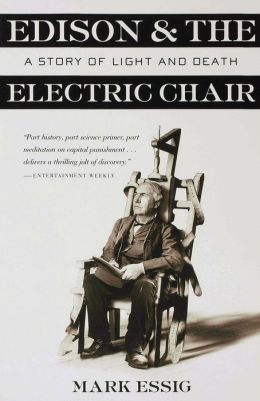


If you want to read more about the War of Currents, here you have some links: 


Thursday, January 26, 2012

2011-2012 Challenges. Number 17

Here you have some questions about the Second Industrial Revolution inventions:  

QUESTION 1
Who were the inventors of the following crucial inventions: first electric battery, first electric motor, telegraph, incandescent light bulb, four-stroke engine, radio?

QUESTION 2

What was the first electrical telegraph line? When did it start working?

QUESTION 3

What was Menlo Park? Who was the "Wizard of Menlo Park" and why was he called this way?


QUESTION 4
What was the so called "War of currents"? Who were its main protagonists? What lethal invention was related to this war?

QUESTION 5
There are thousands of women inventors, but their achievements remain mainly unknown. Here you have some important women inventors who contributed to make life easier: Margaret Knight, Mary Anderson, Josephine Cochran and Katherine Blodgett. What did they invent?


QUESTION 6
Some inventions soon became consumer goods and are present almost in every house in the developed countries. Who were the inventors of the sewing machine and the washing machine?

P.S: I´m not including the sources of the pictures until someone answers the questions. 

Wednesday, January 25, 2012

Antonio Meucci, the true inventor of the telephone


Antonio Meucci

You may have studied at school that Alexander Graham Bell was the inventor of the telephone. But this was not exactly true. The true inventor of the telephone was an Italian-American called Antonio Meucci. In 1854 Meucci built the first telephone to communicate some rooms of his house, beacuse his wife suffered from rheumatism. In 1860 he presented his invention in New York, but he didn´t have enough money to pay the patent expenses. He called  his invention "Telettrofono". Some years later he had an accident and his wife had to sell many of his prototypes in a pawnshop. Once recovered, Meucci tried to redeem his prototype from the pawnshop, but it had been sold to an unidentified young man. Meucci worked hard to rebuild his telephone and get money enough to pay the patent, but he couldn´t pay a definitive patent. In 1874 he sent his material and an explanation of his invention to the Western Union Telegraph Company, but he couldn´t get a meeting with the executives of the company. As he didn´t receive any answer from the company, he decided to ask for his invention to be returned, but they told him that the telephone had been lost. Two years later, Alexander Graham Bell, who shared a laboratory with Meucci at the Western Union, registered the patent of the telephone with his name and became very rich and famous. Bell apparently stole Meucci´s invention. Meucci went to the court and tried to be recognized as the real inventor of the telephone, but he died before the trial finished. In 2002 the Congress of the USA definitively recognized Meucci as the true inventor of the telephone. 


More information: 

Friday, January 20, 2012

2011-2012 Challenges. Number 16

Sorry for the delay. This week´s questions are related to some of the inventions which contributed to the First Industrial Revolution. 


James Watt´s first steam engine (1776)

QUESTION 1

James Watt is considered to be the inventor of the steam engine. In fact, he improved some pre-existing engines, such as Thomas Savery´s water pump or Thomas Newcomen´s atmospheric engine. In 1606, at the beginning of  the 17th century a Navarrese military man, musician and cosmographer patented the first machine to use steam power. He also invented a diving suit, which was tested in the Pisuerga River. Who was this Hispanic inventor?

QUESTION 2

James Watt drew also inspiration from Denis Papin´s inventions. What was the most important contribution of this French inventor?

QUESTION 3

The Spinning Jenny was one of the most important inventions that contributed to the mechanization of textile industry. Who invented it? Why was this machine called Jenny?


Spinning Jenny
QUESTION 4

When and where did the factory system appear?

QUESTION 5

What were the Rainhill Trials? What was the realtion of this event with the history of transport?