Tuesday, October 1, 2013

Journal.Tuesday, 1st of October

Hi everybody!

Today in Social Sciences we have learnt some new things. First we have corrected the definition of Triangular Trade that Paqui  gave us for homework.
After that Paqui has explained us how the Triangular Trade worked and we have seen a video related to this:


The triangular trade was the main trade route of the Atlantic Ocean because it was the responsible for connecting the three continents (America, Africa and Europe) exchanging  differents products.
Between Europe and Africa they exchanged manufactured goods, like textile.
Between Africa and America they exchanged slaves , who came from Africa and they passed throught the Middle passage.
And finally between America and Europe they traded with raw materials.
 http://www.answers.com/topic/triangular-trade

Then Paqui has started the 2nd point of the unit about politics:

-First Paqui has started with The Thirty Years War (1618-1648):
There was a confrontation between the Protestant kingdoms of  Northem Europe and the Catholic kingdoms of  southern Europe. France helped the catholics fighting with them because they were enemies of the Hispanic Monarchy.


The Surrender of Breda was a painting made by Velazquez, which describes a battle of this war.

Some years after the Peace of Westphalia was signed (1648), which was a treaty that meant several changes:
-End with the religious wars.
-The independence of Low Countries.
-France became Hegemonic because the Hispanic Hegemonic ended.
-Consolidation of the state nations and absolute monarchy.


-Then Paqui has told us somethings about Authoritarian Monarchy and Absolute Monarchy.
Kings tried to reinforce their autority and they tried to have unlimied power.
Many years later kings were considered to be untouchable and some theorists said that their power came from God, so no one could be against their opinions. It happened because people were illiterate. Kings thought that they had all the power but in fact they couldn't control all in a kingdom, so they were helped by councils, parliaments...
The most clear example is Louis XIV who wanted to control the nobles.
He made some strategies to convince the nobles, like organizing parties from them. All that took place in the Palace of Versailles.


Also during the class we have added some new words on the glossary, such as:

Renewal - renovación
Population loss - pérdida de población
To call the Parlament - convocar al Parlamento

Monday, September 30, 2013

Some maps to learn about international trade in the 17th century

Here you have some maps to study the evolution of trade during the Modern Era:

- This map includes the traditional trade routes controlled by Portugal and the Hispanic Monarchy (the spice route to Asia and the precious metals route to America) until the 17th century and also the triangular trade route. You can observe the main products exchanged in these routes: 


This is an interactive map about triangular that includes an oral explanation about the rise of cities as a consequence of trade. The map is focused in North America's trade. That's why it doesn't include the products exchanged between Europe and Africa. Click on the map to play the animation: 


Source: http://glencoe.com/sites/common_assets/socialstudies/in_motion_10/tav/TAV_039.swf

And this one also includes an oral explanation that you can follow reading the text below. Click on the image and later Play : 


And finally, here you have a report about the slave trade. The route the slaves followed was called Middle Passage: 

Monday, 30th September 2013

Hello everybody!

Today in class of Social Sciences we have done several things. First, Paqui said all the things that Bea has to correct in her journal
 . After that, Paqui has corrected the homerwork, that was a summary of 17th century. This summary is divided into  different parts:

 The first part of the summary has been  corrected by Dani Carmona.:
- Demography: Population grew very slowly caused be epidemics(bubonic plague) and strong famines related to bad harvests. Only in the places where new agricultural techniques were new agricultural techniques were introduced, the population grew.
 The second part of the summary has been corrected by Santy:
     - Society: It continued to be divided into privileged and underprivileged, but the differences inside the underprivileged estate grew.

 source: http://jaimecast.blogspot.com.es/2011/09/el-antiguo-regimen.html
Privileged states: clergy and nobles
under privileged third state: workers, peasant, baurgeoise
The baurgeoise became powerful, rich.. They were critical to the privileges and unhappy with their situation
The third part of the summary has been  corrected Andrea and Carlos Rodriguez:
- Economy: Agriculture continued to be the main economic activity. The most important changes took place in production and trade:
                     -  Production: Production was limited by the guilds, which controlled the work in workshops Some merchants had the idea of escaping the control of guilds by producing in the countryside. They provided the peasant with tools and raw materials and they also concentrated workers and tools in big workshop called manufactures.
. In some countries (France) the State create royal maufactures, where products for the royal palaces were produced
 source: http://mariaantoniajosephinajohanna.blogspot.com.es/2012/07/gluck-et-marie-antoinette.html
                        - Trade: International trade grew by the Portuguese and the Castilians in the 16th century.
Paqui has show the colonial empires, America in the 17th century and Galleon ( heavier ships and  whith more cargo capacity) in the proyector
And after the trade routes in the indian ocean in the 17th century:
In 17th century a new trade route appeared: the triangular trade, which linked Europe Afirca and America.
 source: http://abolition.e2bn.org/slavery_43.html

The mediterranean Sea lost importance and the Atlantic ports grew.
The English, the French and the Dutch broke the Iberian monopoly of colinial trade. Trade companies of their States. Trading companies dedicated to trade, whose shareholdes invested money in a commercial business and received benefits in proportion to their investment. Trading companies got the protection of the States they belonged to.


  At the end of the class, Paqui for homework said that we copy  in the power point "the trading company" and we explain with own words the triangular trade.

Today we learn a lot of vocabulary:
keyboard: teclado
farmine: hambruna
bad harvet: mala cosecha
bourgeaise: burguesía
wealth: riquez
health: salud
healthy: sano
weak: débil
manufactory: manufactura
guilds: gremios
merchant: comerciante
crockery: vajilla
porcelain:porcelana
raw: crudo
raw materials: materias primas
glassware;cristalería
caravel: carabela
galleon: galeón
to seize: apoderarse de, ocuparse
trading companies: compañías comerciales
shareholder: accionista
share: acción
go bankrupt: arruinarse

And the bell has rung, and we have gone to the next class!

See you soon! :)


Sunday, September 29, 2013

Presentation to study the 17th century


Here you have the presentation we are going to use to study the second point of this unit. It also includes information about the Hispanic Monarchy, but we´ll include this on point 3. Please, use the presentation to complete your notes and exercises. 

Michelangelo's Last Judgement and the Sistine Chapel


This is a short analysis of Michelangelo's Last Judgement in the Sistine Chapel, made by the Khan Academy experts. You can read a summary of their explanation on the following link: 


Here you have a more detailed explanation of the different scenes and figures of the fresco. It includes the information I gave in class: 


And this article by The Telegraph includes 50 fascinating facts about the Sistine Chapel: 

More about Raphael's School of Athens

Here you have a video about  The School of Athens, by Raphael. It explains the composition of the painting, the classical architecture and the meaning of the gestures of the main figures


On the following link you can see the video with subtitles in English: 


And this is an interactive map, where you can lean about the main figures represented on the painting. Click on the image to access the interactive presentation


And here you have two more interactive  explanations of the painting. They are less complete, but you can also learn something from them: 


Friday, September 27, 2013

Friday, 27th September 2013

Hello classmates!
Today in Social Sciences we have learned a lot. First Paqui has explained the different Mona Lisa versions and some videos that she has put on the blog about that. Then she has remembered somethings of tuesday. Afterwards we have seen different paintings by Rafael (The school of athens).


This picture has a classical architecture with vault and barrel vault. We can distinguish 3D dimensions and other classical elements. The people of the picture are philosophores, scientists... And there were important persons like Leonardo, Plato, Aristotles, Michelangelo, Bramante representing Euclid etc.. All the people listened to the philosophers and scientists because there were persons interested in learning.

Also we have seen Perugnino one work by Perugino; The marriage of the Virgin.


And a lot of works by Rafael; The fire of the borgo, and The portrait of a young girl.


We saw some works by Michelangelo like Sistine Chapel.

The new Pope was elected there, in the Sistine Chapel. Not only the new Pope, but all the Popes are elected in the Sistine Chapel
Some details of Michelangelo works were distribution of the Sistine Chapel frescoes on the wall and the distribution of the sistine chapel frescoes on the ceiling.
Other works of this artist were:
The creation of Adam.


The last judgement.


Michelangelo painted naked mans, this was a scadalus because this picture would be in a religious building.

Later we saw the work Venus of Urbino, by Titian.


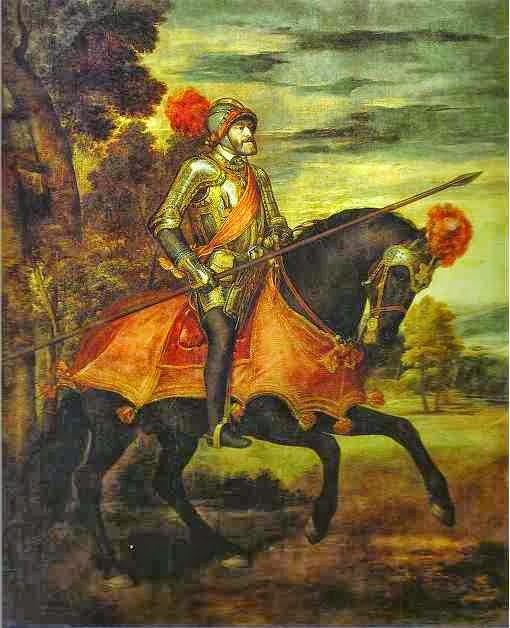
The portrait of emperor Charles V at the battle of Mülhberger Sistine.


After this we saw in the projector a virtual web of the sistine chapel very interesting and amusing, here you have the link of this page:

And saw different pictures of the sistine chapel that were in the blog. 
She has given the introduction of the point 2:
2. The 17th centuryy and socity
A. Demography, economy and society.
B. Politics: Absolute Monarchy and the English Revolutions.
C. Art and culture: The Scientific Revolution and Baroque.

For homework we have to summarize the point 1 that is in the page 101.
Like all days we have copied some words in the glossary
Comission: encargo
Vault: bóveda
Vanishing point: punto de fuga
Tribute: homenaje
Childish: infantil
Canvas: lienzo
Scaffold: andamio
Breeches painter: pintor de pañales
Sinner: pecador
Flayed skin: pellejo
Armor: armadura

And that's all for today!
See you soon :)


Tuesday, September 24, 2013

The different Mona Lisa versions

File:The Isleworth Mona Lisa.jpg

Sources: http://elpais.com/elpais/2012/02/02/inenglish/1328163642_850210.html
http://en.wikipedia.org/wiki/Isleworth_Mona_Lisa

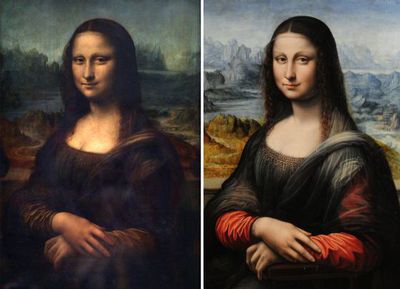
Here you have three different versions of Leonardo Da VInci's Mona Lisa: 

- The painting on the left is considered to be the original one and it's located in the Louvre Museum, in Paris (France).

- The work in the center belongs to El Prado Museum. It was stored in the basement of the museum and was discovered and restored in 2012. It is supposed to be a copy made by Salai, Leonardo's pupil, at the same time that Leonardo painted the Mona Lisa. On the following link you can read more about its discovery and restoration: 

http://elpais.com/elpais/2012/02/02/inenglish/1328163642_850210.html

On this video in Spanish you can see the restoration process of this painting: 


- The painting on the right is called Isleworth Mona Lisa. It was discoverd by a British art collector called Hugh Blaker, who bought it and brought it to his studio in Isleworth, London. There are a lot of doubts about its authenticity, but last year the Swiss Federal Institute of Technology said that this painting was made before the Louvre Mona Lisa. Here you have more information about this  painting: 


And this is another article which analyzes Mona Lisa' s similarities with Salai and the theory about the real model for this painting: 


And finally, here you have a link with a small biography of Leonardo Da Vinci that includes data about his sexuality: 

http://www.dailymail.co.uk/news/article-1352915/Mona-Lisa-model-man-Was-Leonardo-da-Vincis-male-apprentice-model.html

Which version you prefer?

Tuesday, 24th September 2013

 Hello everybody!

Today, in the class of Social Sciences we have done several things. First, Paqui has explained how to comment on the journals and she has reminded the people who haven´t accepted the invitation for the blog.
After this, Paqui has remembered the things learned yesterday and then, we have started correcting the last part of the schueme of the Renaissance art meanwhile Paqui has added others important details:

Sculptures of some artists:

·Donatello: Il Zuccone, Equestrian Statue of Gatamelatta.


Source:http://arthistoryblogger.blogspot.com.es/2011/07/brunelleschi-ghiberti-and-beginnings-of.html

·Michelangelo Buonarrotti: David ( his most famous sculpture of 5.17 meters long and 5.5 tonne which represents David before his confrontement with Goliath), Pietà ( which had several conflicts because the Virgin looks younger than Jesus) Tomb of Medici and Moses.El original David de Miguel Angel
Source:http://www.academiaflorencia.com/el-david-de-miguel-angel/

When we have seen that Moses had horns, Paqui has told an anecdote: the translator of the Bible from Hebrew to Latin, Saint Jerome, made a mistake in the paragraph that tells the moment when Moses came back from Mount Sinai. The mistake that he made was in the word Karan, which has two meanings in Hebrew; 'brightness' and 'horn'. This part suggests that Moses' head was surrounded by some kind of halo, and Jerome wrote 'horns' instead of 'halo'; and this is why Moses is represented with horns.

PAINTING:
-Features: the main subjects were religious and mythological, the use of perspective and drawings were more important than colours.
-Painters:
 15th century:
    · Massacio, Hole Trinity and Tribute Money.
Tribute Money
 Source:http://www.artinthepicture.com/paintings/Masaccio/Tribute-Money/

·Piero della Francesa, Constantine's Dream and the Flagellation of Christ.   
Click to view full-sized image Source: http://www.artchive.com/artchive/P/piero/dream.jpg.html

·Botticelli: Primavera and the Birth of Venus.
  Source: http://historiadelartecomentarios.blogspot.com.es/2011/03/nacimiento-de-venus-de-botticelli.html

15th-16th centuries:
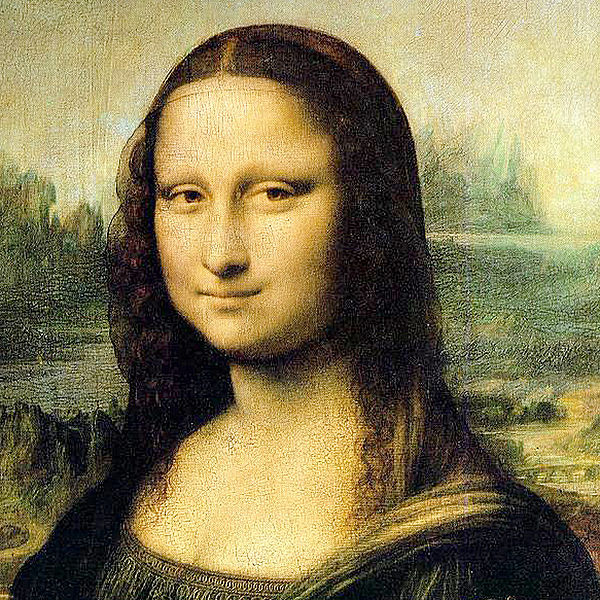
   ·Leonardo Da Vinci: Mona Lisa, the Last Supper and the Virgin of the rocks.
Archivo:Mona Lisa face 800x800px.jpg   Source:http://es.m.wikipedia.org/wiki/Archivo:Mona_Lisa_face_800x800px.jpg

  Paqui has explained why the drawings of people (man or woman) of Da Vinci
have femenine characteristics.

·Rafael: Madonnae and School of Athens.
The School of Athens - Raphael  Source:http://www.wikipaintings.org/en/raphael/school-of-athens-detail-from-right-hand-side-showing-diogenes-on-the-steps-and-euclid-1511

·Michelangelo: Frescoes of the Sistine Chapel.
Image of The Last Judgement  Source: https://www.boundless.com/art-history/italy-in-the-1500s/the-counter-reformation/rome-and-the-vatican/

·Titian (Tiziano): belonged to the Venetian school. Charles V in Mühlberg and the Venus of Urbino.
  Source:http://culturedart.blogspot.com.es/2010/11/venus-of-urbino-titian.html

    While we were correcting the scheme, we have copied some new words on the glossary:
 -On horseback: a caballo
 -Muscles: músculos
  -Fold: pliegue
 -Cloth folds: pliegues del vestido
 -Golden calf: becerro de oro
 -Dusk: crepúsculo
 - Dawn: amanecer
 -Coffin: ataúd
 -Corps: cadáver
 -Foreground: primer plano
 -Background: fondo
 -Androgynus: andrógino

   Finally, the bell has rung and we have gone to the breaktime.

See you!

Monday, September 23, 2013

Monday, 23rd September 2013.

Hello classmates!

Today in the Social Sciences lesson we have done a lot of things. First, Paqui has reminded us to accept the invitation to the blog, cause some students don't accept it yet. Afterwards, Paqui has revised that we have done the homework ( a scheme about the Renaissace art). 
Then, we have corrected it and Paqui has added some important details.
The scheme is formed by different parts:

CHRONOLOGY AND STAGES: Renaissance art was the art style of the 15th and 16th centuries. It started in Italy and it spread to the rest of Europe. There was two stages in Renaissance art:
·Quattrocento (15th century): It developed mainly in Italy and the main centre was Florence.The most important patrons were the Medici family.
·Cinquecento (16th century): Renaissance spread out to Europe. The main centre was in Rome and the Popes were the most important patrons.

MAIN FEATURES OF THE RENAISSANCE ART:
·Inspiration in the artistic models of Antiquity(Greece and Rome): simplicity, harmony, proportions... They rejected the elaborated decoration of Gothic art.
·Interest in representing the ideal beauty. Artists studied the human body and nature to reach this goal.

ARCHITECTURE:
-Features: Architects used simple and classical elements: rounded arch, columns with the classical orders (Doric, Ionic and Corinthian) They built smaller buildings.
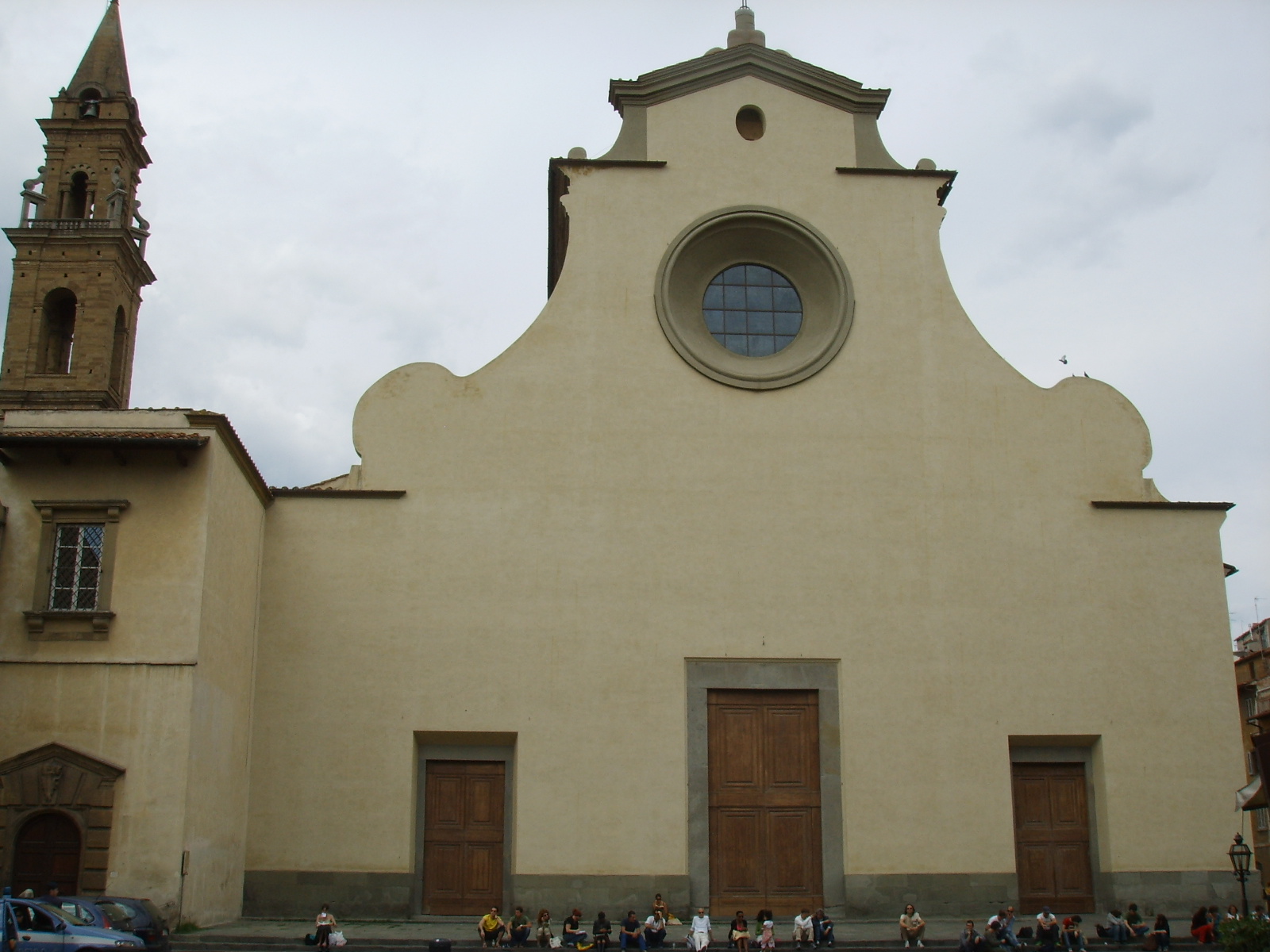
-Artists and works: ·Brunelleschi(15th century): Church of Santo Spirito in Florence( don't finished)


Source: http://www.caftours.com/magazine/wp-content/uploads/2013/03/Santo-spirito-oltrarno-florence.jpg


Church of San Lorenzo in Florence
http://upload.wikimedia.org/wikipedia/commons/a/a7/Basilica_di_san_lorenzo_33.JPG
Source: http://upload.wikimedia.org/wikipedia/cofmmons/a/a7/Basilica_di_san_lorenzo_33.JPG

Dome of the Cathedral of Santa Maria di Fiori in Florence
http://upload.wikimedia.org/wikipedia/commons/a/a6/View_of_the_Duomo%27s_dome,_Florence.jpg
Source: http://upload.wikimedia.org/wikipedia/commons/a/a6/View_of_the_Duomo%27s_dome,_Florence.jpg

·Alberti(15th century): Church of Santa Maria Novella in Florence, Rucellai Palace.
http://upload.wikimedia.org/wikipedia/commons/a/a6/Palazzo_Rucellai.jpg
Source: http://upload.wikimedia.org/wikipedia/commons/a/a6/Palazzo_Rucellai.jpg

·Bramante(16th century): Church of San Pietro in Montorio, project of the Basilica of San Pietro in Rome ( in the Vatican)
http://www.arttrav.com/wp-content/uploads/2012/05/tempietto-bramante.jpg
Source: http://www.arttrav.com/wp-content/uploads/2012/05/tempietto-bramante.jpg

·Michelangelo: Dome of the Basilica of Sain Peter in the Vatican, the staircase of the Laurentian library in Florence.
http://static.ddmcdn.com/gif/michelangelo-buildings-10.jpg
Source:http://static.ddmcdn.com/gif/michelangelo-buildings-10.jpg

SCULPTURE
-Features: showed interest in representing human beauty and proportioned sculptures.

ARTISTS AND WORKS
·Ghiberty: Gates of the Baptistery of Santa Maria dei Fiori
http://sunilshinde.typepad.com/.a/6a00d835494ab953ef016302df0d21970d-pi
 Source: http://sunilshinde.typepad.com/.a/6a00d835494ab953ef016302df0d21970d-pi

 ·Donatello: Saint George, Il Zuccone, David in bronze, Equestrian Statue of Gattamelata.
http://upload.wikimedia.org/wikipedia/commons/0/00/Donatello,_Monumento_equestre_al_Gattamelata_04.JPG
Source:  http://upload.wikimedia.org/wikipedia/commons/0/00/Donatello,_Monumento_equestre_al_Gattamelata_04.JPG

And we will continue tomorrow in class, so tomorrow we will study the famous sculpture Michelangelo  and also we will study the painting in the Renaissance ( features, artists and works: Masaccio, Botticelli, da Vinci, Raphael, Tiziano, Michelangelo).

Today also I have added new interesting words on my glossary:
-competition: concurso
-gravity: gravedad
-cloisters: claustro
-rustication: almohadillado ( Rucellai Palace)
-tempietto: templete
-courtyard: patio
-Tholos:Templo circular griego
-centralized  floor plan: planta centralizada
-equestrian:ecuestre, a caballo
-idealized: idealizado

In the today's lesson Paqui has explained a very interesting thing that surprised me. She has told that the tempietto of Saint Peter is built were S.Peter was crucified.

Paqui has explained  also the different types of the floor used in the Church's ( Latin cross floor plan and Greek cross floor plan).
Finally, the bell has rung and Paqui has told us to review the new things that we have learned.

See you tomorrow!