Showing posts with label 18th century. Show all posts
Showing posts with label 18th century. Show all posts
Tuesday, November 14, 2017


Monday, November 7, 2016
Presentations to study the 18th century
These are the three presentations we'll use to study the 19th century. The first one includes the general information about the Ancien Régime, the Enlightenment and the independence of the USA. The second presentation includes the contents referred to Spain and the last one includes art.
Sunday, June 12, 2016
Art project
Church of
Sainte Madeleine
This building was designed by Pierre Alexandre Vignon between 1807 and 1827. This type of architecture belongs to the the New Classicism. Napoleon was who ordered the construction of this church, this was a temple for the glory of the French Army. This church has the structure of a Greek temple, it has high columns, on it there is a pediment with the figure of people sculpted, its doors have a lot of details too, in the interior you can see domes paintings and sculptures of angels. The basic material used was stone sculpted to make the characteristic details of this style. This church belongs to the New-Classicism because of the details it has, for example the use of columns and pillars, the domes, the pediment and its arches.
 |
  |
||


Two old men
eating soup
This painting was made by Francisco de Goya y Lucientes, a Spanish painter who was born in Zaragoza, Fuendetodos in 1746. He made this painting between the 1819 and 1823. It doesn’t belong to a general style, this is one of the Black Paintings which he painted when he retired to a house on the banks of the river Manzanares called house of the Deaf Man, he startied painting on this way when he became deaf, because of this illness his paintings became more cirtical and introspective ans colours were darker, that is why they were called Blaack Paintings. He didn’t paint this work because someone connisioned him to do it, he made paintings on the walls of his house when Ferdinand VII came back and he lost his job, on that period he became completely isolated. On it there are two old men painted. The man who is on the left is smiling, he has got a spoon in his right hand, I can also see that the two men are looking at their left, the two men are bold, the two man are covered with something which seems to be like a bed sheet, on the bed sheet there is a plate with soup, the man who is on the right has no eyes, the whole background is black. It was made by a technique called oil painting. On this painting no one knows who the men are, some people think they are witches but we can't know it exactly because Goya didn't put a name to this paintings. This painting belongs to the dark paintings of Goya, these ones are featured by being painted with dark colours like grey, black…

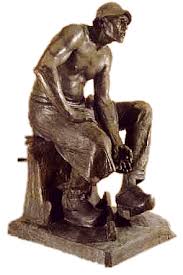
The puddler
This sculpture was made by Constantin Meunier, a Belgian painter who was born in Etterbeek. He made this sculpture in 1885. This work belongs to the Naturalist style, the last stage of Realism. On this sculpture I can see a man who is sitting, he is wearing a hat, trousers and boots, the whole sculpture is brown, this is because of the material used to make it. It is sculpted on bronze. This sculpture shows a worker, this is one of the sculptures he made when he came back to Belgium. We can say this sculpture belongs to the Naturalism because of the details it has and its theme, the work, this is one of the main themes of realism.


Monday, April 18, 2016
New project: art catalogue of the 18th and 19th centuries
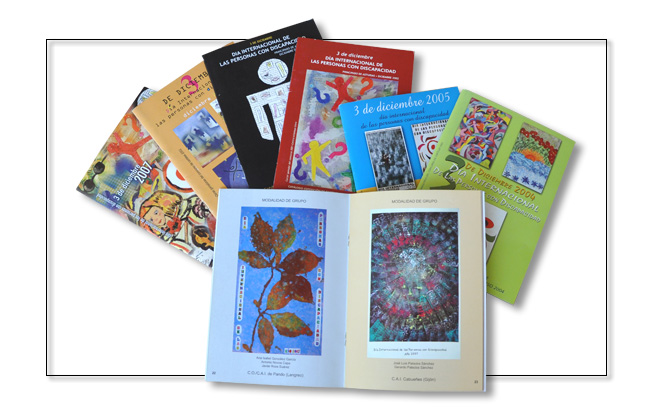
This time the project is individual and it will consist of studying the art of the 18th and 19th centuries. This is what you have to do:
You are an art lover and you have
decided to spend your summer as an intern
at El Prado Museum. The museum is preparing an art exhibition of the 18th and 19th century and your boss has given
you the responsibility to look for all the necessary information to prepare the catalogue. You will also have to contact the foreign museums to ask them
to lend El Prado some important artworks. Your boss has also given you the
opportunity to write about your favourite art work of every style
and include your texts in the official museum catalogue. Your don’t want to
deceive your boss and want to do a good quality work.
As the exhibition will be next
month, you’ve decided to plan your work. The styles you need to explain are the following:
- - 18th century: Rococo, Neoclassicism
(architecture, sculpture and painting in both styles)
-
Transition between the 18th and 19th centuries:
GOYA
- - 19th century:
o
ARCHITECTURE: Historicism, Iron and Steel
Architecture and Modernism
o
SCULPTURE AND PAINTING: Romanticism, Realism
and Impressionism
o
PAINTING: New-Impressionism, Post-Impressionism
You have decided to distribute your work per weeks:
-
Week 1: Rococo, Neoclassicism and Goya
-
Week 2: Historicism, Romanticism and Iron and
Steel architecture
-
Week 3: Realism, Impressionism and
Neo-Impressionism
-
Week 4: Modernism and Post-Impressionism
You can present your work in two ways:
- The catalogue has to include:
- A prologue, presenting your work to the readers and thanking the museums that have lent their works to El Prado
- Main features of every style, main artists and works
- Your favourite work of every style and a deep explanation: when it was made, author, theme, main features, reflection of the style on the work, other art works from which it drew inspiration or other artists influenced by this work…
- The other option is your workbook to prepare the exhibition, where
you can include all the information you get and all the procedures you follow
to get it ready in time.
Here you have some images of exhibition catalogues:

And these are some examples of art worbooks:

Source: https://megankounnas.wordpress.com/

Source: http://dennerd.victorschools.org/ibworkbookgallery.html

Here you can see some more examples:
The deadline to hand in the project will be the 23rd of May (Monday)
Here you have the presentations of these contents, just in case you want to have a look on them to choose your favourite works:
Tuesday, March 8, 2016
Presentations for your project about Spain's history in the 19th century
Here you have them. Have a look on them to make your characters look alike to the real ones. You can also get some ideas for some of the scenes.
Sunday, November 8, 2015
Video in Spanish about the enlightened thinkers
I'm taking a course to improve as teacher and I had to prepare a video with questions for one of the activities. It's in Spanish, but I think it can also be interesting for you. Here you have it. We´ll do something similar with another project, so start preparing your Velleda markers ;)
The video with the questions is here. Challenge yourselves and try to answer without studying:
Tuesday, November 3, 2015
Tuesday, 3rd November 2015
Hi, what's up? It's Lucía. Today it's my turn to do the journal. So, let's review the lesson :)
At the beginning of the class, we've reviewed what we did on Monday.
That's Enlightenment and his features, in 18th century (century of lights):
–They used the Reason to learn and understand the world and improve it. Philosophers said that they wanted to "Eliminate the darkness of the world with the lights of reason". So they rejected all that couldn't been explained (superstitions, traditions, revelations, miracles...)
– They were tolerant of religions. No religion was superior to another. But they thought that religions gave more problems than positive things.– They rejected the authority principle, this means not to do things that always have been done only because it was traditional or someone ordered it.– They considered education the most important thing.– They criticized absolute monarchies and defended freedom of all the human beings.– They considered knowledge as the basis of happiness and they were very optimistic.
After that, the class has started straying. We have started to speak about Spain and the similarities between the present/current world and the Enlightenment. We think that education should be free or cheaper, like in France or Denmark, and make the economy a little easier. You can change a kilo of potatoes for a kilo of tomatoes, or maybe another person can repair your piping. in exchange forpainting his house. I don't know, we can do many things better but no one tries to do it. Maybe the way is to pay more taxes (but not stupid taxes), like Paqui hassaid hahaha.
And at the end, Paqui has started explaining the Encyclopedia.Before Enlightenment, books which contradicted Dogma were forbidden because the Church thought they were dangerous. Knowledge "was dangerous". But in 18th century, Denis Diderot and Jean Rond D'Alembert issued the first Encyclopedia in France in 1751 with 35 volumes, asking philosophers and scientists for advice.
NEW VOCABULARY:
At the beginning of the class, we've reviewed what we did on Monday.
That's Enlightenment and his features, in 18th century (century of lights):
–They used the Reason to learn and understand the world and improve it. Philosophers said that they wanted to "Eliminate the darkness of the world with the lights of reason". So they rejected all that couldn't been explained (superstitions, traditions, revelations, miracles...)
– They were tolerant of religions. No religion was superior to another. But they thought that religions gave more problems than positive things.– They rejected the authority principle, this means not to do things that always have been done only because it was traditional or someone ordered it.– They considered education the most important thing.– They criticized absolute monarchies and defended freedom of all the human beings.– They considered knowledge as the basis of happiness and they were very optimistic.
 |
| Source: https://commons.wikimedia.org/wiki/File:Salon_de_Madame_Geoffrin.jpg#/media/File:Salon_de_Madame_Geoffrin.jpg |
 | |
| KANT. Source:
|
 |
 |
| Source: www.pinterest.com |
ACQUIRE: Adquirir.
AUTHORITY PRINCIPLE: Principio de autoridad.
BIASED: Tendencioso.
GRANT: Beca.
IN INSTALMENTS: A plazos.
PURSUE: Consecución, alcanzar un objetivo.
PRECAUTION: Precaución.
TRUST: Confiar.
TAX FRAUD: Fraude fiscal.
TIME BANK: Banco de tiempo.
WILLING TO: Dispuesto a.
-----------------------------------------------------------------------------------------------------
And here you have a very beautiful picture that I've found looking for images of Enlightenment!

-----------------------------------------------------------------------------------------------------
And here you have a very beautiful picture that I've found looking for images of Enlightenment!
Source: http://www.ishafoundation.org/blog/sadhguru/masters-words/sadhguru-enlightenment-experience/
Monday, November 2, 2015
Monday, 2nd November 2015
Hi, mates, I'm Irene, let's see what we' ve studied today in class:
First, we' ve reviewed about what did we studied last day in class, Ancien Régime and we have drawn this pyramid:

Then, we have continued with the scheme but we have studied Changes in production: peasants continued using fallow technique and that was the reason for low production. Peasants had to pay taxes and the tithe to the privileged people, 10% of their production was destined to clergy. Guilds controlled production.


-Glossary
Rents-> rentas
Gallicanism-> Galicanismo
Fallow-> barbecho
Drought-> sequía
Double-> duplicar, doblar
Claim-> reivindicar
Culmination-> culminación
Enlightened-> ilustrado
Elitist-> elitista
See you tomorrow!
First, we' ve reviewed about what did we studied last day in class, Ancien Régime and we have drawn this pyramid:

It's about the Ancien Régime society and explains the differences between the three estates: Nobility (divided into high and low) had lands and rents and they charged taxes to peasants; Clergy (divided into high: cardinals and bishops, and low: divided into monks and priests) had also land and charged the tithe; and finally the Third Estate (which included peasants, bougeois, servants, manual workers, merchants and craftsmen), formed by 90% of population, they worked to survive, paid taxes, didn't have participation in politics and didn't have rights.
Then, we have continued with the scheme but we have studied Changes in production: peasants continued using fallow technique and that was the reason for low production. Peasants had to pay taxes and the tithe to the privileged people, 10% of their production was destined to clergy. Guilds controlled production.

After that we've seen the Power Pyramid and what the French revolutionaries wanted to obtain:
-representative government, elected by citizens
- a society based on equality of all the citizens, without priviledges
-a productive economy, where those who had initiative could make business without limitations

Power Pyramid in Ancien Règime
Finally, we have started with Enlightenment which was an intellectual movement during 18th century in Europe which questioned all Ancien Règime principles and was based on Reason. We have copied this in class about Enlightenment:
-15th-16th century: HUMANISM-> human being, center of interest and reduction of the influence of religion
-17th century: SCIENTIFIC REVOLUTION-> Rationalism and Empiricism. It was a reason and experience where the best mean to learn
-18th century: ENLIGHTENMENT-> use of Reason (intelligence) to learn, understand the world and improve it
Remember, for homework we must do a scheme about Enlightenment in which we have to include definition of Enlightenment and its features.
-Glossary
Rents-> rentas
Gallicanism-> Galicanismo
Fallow-> barbecho
Drought-> sequía
Double-> duplicar, doblar
Claim-> reivindicar
Culmination-> culminación
Enlightened-> ilustrado
Elitist-> elitista
See you tomorrow!
Thursday, October 29, 2015
Presentations of Unit 2
These are the two presentations we'll use in this unit. You can use them to have an idea of the contents and start looking for inspiration, just in case you want to participate in the songs' project:
Tuesday, March 24, 2015
Tuesday, 24th of March 2015
Hello everybody!
Today we have started the class of Social Sciences a little bad. Paqui was very angry with us because we don't work enough on the blog, and I think that it's true, all could work and participate more.
Then Paqui has given to us the final mark of the term. And generally she has said that we talk a lot.
After this, Paqui and some classmates have decided the day of the make up exam.
Finally Paqui has explained to us a new project about art. We have to do a travel journal. We have to imagine that we are a time traveller and an art lover. We have to learn about the art styles of the 18th and 19th centuries. Paqui has written a scheme on the blackboard to help us:
Art in the 18th-19th centuries:
- 18th century
- Baroque
- Rococo
- New Classicism
- 19th century
- Historicism
- Iron and steel architecture
- Art Nouveau
-Sculpture and painting
- Romanticism
- Realism
- Impressionism
- Neo-Impressionism (Pointillism)
- Post-Impressionism
Like everyday, we have copied some new words in our glossary, like:
- Pointillism: Puntillismo
- Travel journal: Cuaderno de viajes
- Time traveller: Viajero en el tiempo
- Historicism: Historicismo
- Iron and steel archil: Arquitectura del hierro
- Art Nouveau: Modernismo

Art project: travel journal through the 18th-19th centuries

These are the guidelines for the new project:
Imagine that you are a time traveller and an art lover. Your next trips will be to the 18th and 19th centuries to learn about the art styles of these centuries. Your project will consist of making a travel journal with the following contents:
- Main features, artists and works of every art style, narrated as in you were visiting the times and significant places of every artistic period.
- In addition, you will have to choose your favourite art work of each style, write a short biography of its author, an explanation of the work and your personal opinion about it
- Every stage of your trip will have to include images of the main works and artists. They can be images that you print or drawings you make.
- The styles the project will have to include are the following:
- 18th century: Rococo and New-Classicism
- 19th century:
- ARCHITECTURE: historicism, iron and steel architecture and Art Nouveau
- SCULPTURE AND PAINTING: romanticism, realism, impressionism, new-impressionism and post-impressionism
Try to set the art styles in chronological order.
The format of your travel journal is free: it can be a real journal, bought or made by you with cardboard or another material you prefer, it can also be a presentation or a video journal.
The deadline to hand in this project will be the 23th of April.
Here you have some advice about how to make an original travel journal on paper, creating beautiful backgrounds for your pages:
Use your imagination and enjoy the trip!
Saturday, December 6, 2014
Presentations for Unit 3
Here you have the presentations we're going to use in this unit:
- The French Revolution and the Napoleonic Era
- The Congress of Vienna and Restoration
- The Crisis of the Ancien Régime in Spain
- Spain from Restoration to liberalism:
Monday, December 1, 2014
Monday, 1st of December
Good afternoon everybody!
Today in Social Sciences we have done a lot of things and we have learnt a lot.
As always, at first, we have started speaking until Paqui has said: Stop talking please!!
Then, the lesson has started. Firstly Paqui has started speaking us about the scheme of the Bourbons and she has remembered us the content about Philip V and Ferdinand VI.
Paqui has remembered us also Philip V's main decisions and his political system:
- Nueva Planta Decrees.
- The Catilian institutions were extended to all the territory.
- Kings were helped by secretaries and councils.
- The division of the territory into provinces.
- The creation of intendants to collect taxes. They were an institution imported from France.
Paqui has said that he was married twice, and we have spoken also about his personal crises. Due to these crises he abdicated and his son Louis I became king, who reigned only for six months because he died of smallpox.
Philip V Ferdinand VI
Paqui has explained us what the cadastre was.
- The cadastre: it was a tax imposed in Catalonia related to the properties everybody had. Everybody had to pay for their properties, including the privileged. It had different names inside the Crown of Aragón. For example, in Valencia it was called "equivalente". But the privileged people of Castile didn't want to pay this tax.
There was another type of cadastre:
- The Marquis of Ensenada, Ferdinand VI's minister, wanted to impose this tax also in Castile and he prepared a big survey to know the properties of the population with the purpose of establishing a unique tax in Castile. Finally the tax wasn't imposed due to the protests of the privileged.
After this, we have started to speak about the TV programm Isabel. Paqui has told us that in today's chapter, Isabelle dies. And she has said that the next TV programm is about Charles I.
Later we have started with the Enlightened despotism. Paqui has started saying us that Aranda, Floridablanca were enlightened ministers and Charles III was an enlightened despot. Paqui has also explained us also the Esquilache riots, which appeared at the beginning of Charles III's reign. The privileged instigated the people's revolt using the new hygiene and public order ordinances as as a pretext.
Charles made some reforms in order to prevent crime and illnesses.
- In order to prevent crime: they ordered to cut brims and cloaks.
- In order to prevent illnesses: they established very strict hygiene rules:
- Price of wheat had been liberalized damaging speculators.
- Privileged were afraid of Esquilache's reforms.
Charles III expelled the Jesuits because he accused them of having participated in the riots.
Absolute monarchs didn't like the Jesuits because they didn't obey them. They only obeid the Pope and the Church.
After this, we have started to speak about the reforms of the Enlightened monarchs:
- Educational.
- Administrative.
- Economic.
Finally, Paqui has written a scheme on the blackboard about the second part about the Enlightened despotism scheme.
During our lesson, today we have copied a lot of things in our glossary:
- Navy: armada
- Half brother: hermanastro
- Schillaci: Esquilache
- Wheat: trigo
- Brim: ala del sombrero
- Long cloak: capa larga
- Esquilache riots: motín de Esquilache
- To dimiss/ to fire: echar, despedir
- Jesuits/ Society of Jesus: jesuitas o compañía de Jesús
- To instigate: instigar, empujar a alguien a hacer algo
Pictures' sources:
Philip V
http://en.wikipedia.org/wiki/Philip_V_of_Spain
Ferdinand VI
http://en.wikipedia.org/wiki/Ferdinand_VI_of_Spain
Brims and cloacks
http://todayinsocialsciences.blogspot.com.es/2012_11_01_archive.html
Thursday, November 27, 2014
Thursday, 27th of November.
Hello everyone! I am Minerva.
Today in Social Sciences we have done a lot of things.
At first, we have corrected the summary we had to do for today. It was about the War of the Spanish Succession. María has read the causes which caused this war; as Charles II died without successors, he left his kingdoms to Philip of Anjou who was Louis XIV's grandson. But some countries (Austria, the Low Countries, Portugal, Great Britain and the crown of Aragón) were against the French influence over the Hispanic Monarchy and supported Archduke Charles of Austria. In the Iberian Peninsula, Aragón feared for the French absolutism.

Philip V's painting in Xátiva Museum
Then, Andrea has read the next point that was about the candidates to the throne and its supporters.
Azahara has read the development of the war. There were equal forces on both sides, the British invaded Gibraltar and Minorca, the French - Castilian army defeated those who supported Archduke Charles in Almansa (1707). When the Emperor of Austria died, Archduke Charles became Emperor, so after this, the Europeans powers looked for an agreement to end the war (The Treaty of Utrecht). But the war continued in Catalonia until 1714, when Barcelona was bombed by Philip V's order. Finally they surrender.
With the Treaty of Utrecht, Philip V became the king and he had to renounce to his rights of the Crown of France and all the European territories Spain had, were distributed among Austria and Savoy. Great Britain kept Minorca and Gibraltar and they received two rights in the Indies: the Assiento and the ship of permission.

Finally we have copied the consequences of the war because we didn't find them in our book. We have copied some of them but Paqui has said that there were more. One of them was, for example, the birth of Spain as a unified nation with the imposition of the laws of Castile to all the territories (only Navarre and the Basque provinces kept their fueros).
Secondly, we have started a new scheme with the title of "The 1st Bourbons (18th century)". Paqui has started explaining us Philip V's reign with some slides. He imposed absolutism, inspired on France's political system. New Planta Decrees were imposed to the Crown of Aragón created, all the Castilian institutions were extended to all the territory, the king was helped by secretaries and councils and intendants were used to collect taxes.
Philip V decided to abdicate in favour of his son Louis in 1724. Louis I reigned only for six months because he died. So Philip V was forced to return to the throne but he was helped by secretaries. After his death in 1746, Ferdinand VI (son of Philip V's first wife) became the new king.
We have started the Ferdinand VI's reign but the bell has rung. So we have to finish the 1st part of the scheme for the next day.

As always, we have written down some new words in our glossary:
- To fear for/to be afraid of: temer.
- Enthroning: entronización.
- Remorse: remordimiento.
- Nueva Planta Decrees: Decretos de Nueva Planta.
- Barely: rara vez, pocas veces.
- Intendant: intendente.
- Survey: encuesta.
- To complain: quejarse.
- Cadastre: catastro.
This is all for today, hope you have a nice weekend! See you on Monday :)
Today in Social Sciences we have done a lot of things.
At first, we have corrected the summary we had to do for today. It was about the War of the Spanish Succession. María has read the causes which caused this war; as Charles II died without successors, he left his kingdoms to Philip of Anjou who was Louis XIV's grandson. But some countries (Austria, the Low Countries, Portugal, Great Britain and the crown of Aragón) were against the French influence over the Hispanic Monarchy and supported Archduke Charles of Austria. In the Iberian Peninsula, Aragón feared for the French absolutism.
Philip V's painting in Xátiva Museum
With the Treaty of Utrecht, Philip V became the king and he had to renounce to his rights of the Crown of France and all the European territories Spain had, were distributed among Austria and Savoy. Great Britain kept Minorca and Gibraltar and they received two rights in the Indies: the Assiento and the ship of permission.
Treaty of Utrecht
Secondly, we have started a new scheme with the title of "The 1st Bourbons (18th century)". Paqui has started explaining us Philip V's reign with some slides. He imposed absolutism, inspired on France's political system. New Planta Decrees were imposed to the Crown of Aragón created, all the Castilian institutions were extended to all the territory, the king was helped by secretaries and councils and intendants were used to collect taxes.
Philip V decided to abdicate in favour of his son Louis in 1724. Louis I reigned only for six months because he died. So Philip V was forced to return to the throne but he was helped by secretaries. After his death in 1746, Ferdinand VI (son of Philip V's first wife) became the new king.
We have started the Ferdinand VI's reign but the bell has rung. So we have to finish the 1st part of the scheme for the next day.
Ferdinand VI
Here you have this interesting video about all we have studied about the War of the Spanish Succession. Hope you like it!
- To fear for/to be afraid of: temer.
- Enthroning: entronización.
- Remorse: remordimiento.
- Nueva Planta Decrees: Decretos de Nueva Planta.
- Barely: rara vez, pocas veces.
- Intendant: intendente.
- Survey: encuesta.
- To complain: quejarse.
- Cadastre: catastro.
This is all for today, hope you have a nice weekend! See you on Monday :)
Tuesday, November 25, 2014
Tuesday, 25th of November
Today in Social Sciences we have done a lot of things.
At first we have corrected the exercises that Paqui has gave us for today, about the Type of State and Constitution in USA
The type of state was divided into Federal Republic which means that every state has important powers: own laws, own courts of justice..., and the Presidentalist Republic, which means that the president holds wide powers.
And the Constitution was divided into the Principles on which it was based which includes seven articles with the organization of the new State, based on the principles of political liberalism. The Content was freedom, property, religious freedom, freedom of speech, press freedom, right to wear weapons. And the Amendments which are 27 up to this moment and included the abolution of slavery, the right to vote for women for black people, the prohibition of alcohol... and so on
Later Paqui has started to explain the last point of this unit, Spain in the 18th century,A) War of Spanish Succesion (1700-1714). When Charles II died without direct succesors, he left his kingdom to Philip of Anjou. Louis XIV's grandson and a lot of people disagreed with his testament. Austria, the Low Countries, Portugal and Great Britain were against the French influence over the Hispanic Monarchy and supported Archduke Charles of Austria. In the Iberian Peninsula: Castile supported Philip of Anjou and Aragon supported Archduke Charles.

Philip of Anjou
Source: http://www.cachecoins.org/leopoldhre.htm

In the development of the war Paqui has explained this with a map and said that they had equal forces on both sides; the British invaded Gibraltar and Minorca; the French-Castilian army defeated those who supported Archduke Charles in Almansa; When the emperor of Austria died, Archduke Charles became emperor. Fearing Austria's reinforcement, the European powers looked for an agreement to end the war and they signed the Treatry of Utrecht, Spain appeared with the Nueva Planta decrees Philip V issued to punish the reings of the Crown of Aragón. Later the war continued in Catalonia until 1714, when Barcelona was bombed by Philip V's order. Finally they surrendered.

Battle of Almansa
Source: http://en.wikipedia.org/wiki/Battle_of_Almansa
The Treaty of Utrecht included the following decisions: Philip V was recognized king of the Hispanic Monarchy; The Europeans territories of Hispanic Monarchy were distributed among Austria and Savoy; Great Britain preserved Gibraltar and Minorca and they got also two important rights: the assiento: they could sell black slaves in the Indies and the ship of permission: once a year they could send a 500 tons ship with their products to be sold in the Indies.
We have also added some new words to our glossary:
Take the risk-Arriesgarse
Assiento-Derecho de asiento
Ship of permission-Navío de permiso
At the end of the class Paqui has given us the homework that we have to do: a scheme about all that we have learnt today.
Finally the bell has rung and we have gone to run.
Bye!
Thursday, November 20, 2014
20th November, 2014 (Thursday)
Hello, I'm Inés :)
Today, in the class of Social Sciences, the teacher,
Paqui has scolded us because she says that we never correct our
journal and all the people can see our mistakes.
At the beginning of the lesson, we have talk about
the deadline of the Baroque project and we have tried to have a
little more of time, but Paqui has said to us “No”.
After that, Paqui has reviewed the homework, whcich was
a scheme of the Enlightenment. So later, we have started to correct
it.
When we have been correcting the part of precedents
of the Enlightenment who were John Locke and Isaac Newton,
someone, I don't remember who, has said that they seem like girls
because they had long hair, but Paqui has said that this is not true,
because probably they had short hair, but they wore a wig. Paqui has
told us that in the justice of England and Australia judges wear this
types of wig and she thinks that “It's so stupid”
.
Source: en.wikipedia.org/wiki/John_Locke

Source: http://famousface.us/isaac-newton/
Later, we have
corrected the main features of Enlightenment
that were:
- Absolute faith in Reason.
- Rejection of everything that couldn't be explained through Reason.
- Optimism and trust in progress.
- Knowledge as the basis of happiness.
- Trust in education considered to be the best way to improve the living conditions of the people.
- Religious tolerance.
- Criticism of absolutism and the estate-based society and defense of freedom and equality of all human beings.
Paqui has explained us
that in this period the Human Rights started.
Amalia has asked to Paqui
“Why only the rich people could go to participate in the meetings
of enlightened philosophers?” and Paqui has said to her that people wanted education for all the society, rich people were those who
managed the changes of the world, people who didn't sutdy couldn't know how to change the situation because they had been educated in
this way, and the rich burgeois who paid schools for their children
and participated in the elistist who wanted to change the situation
beacause they knew what they wanted to change.
When we have finished to
correct the scheme, Paqui has given us another scheme to complete of
“Enlightened thinkers”.
At the same time, Lucía
has found a book of Universal Literature.
After this, Paqui has
explained the social contract and the general will proposed by
Rousseau.
One minute after, Paqui
has started to talk about Podemos and their Internet tools, so José
Mari has asked Paqui “ Do you like Podemos?”. And a discussion
about Podemos has started.
Paqui has talked about
José Mugica a president of Uruguay, I don't remember why; and later
she has talked about the poverty of Venezuela and when Hugo Chávez
became president of Venezuela he gave a lot of money for education and
health services.
Then, Paqui and Jose Mari
have had a discussion about several themes.
I have just remembered
that at the beginning of the lesson Lucía has passed into the class
saying that the duchess of Alba had died.

Source: http://canarias3puntocero.info/2434/
Today, like always, we have copied some vocabulary:
- To open path: Abrir camino.
- Dare to know: Atrévete a saber.
- Sovereignty: Soberanía.
- Sovereign: Soberano.
- General will: Voluntad general.
- Participatory democracy: Democracia participativa.
The homework of today is
to complete the scheme of “Enlightened thinkers”
See you later,
Inés.
Subscribe to:
Posts (Atom)