I don't know if we'll be able to finish this unit before the school year ends, but here you have the two presentations we are going to use to learn these interesting contents:
Monday, May 27, 2013


More about GULAG
GULAG is an acronym of the Soviet institution that was in charge of the forced labour camps, the Glavnoe Upravlenie ispravitel’no-trudovykh Lagerei (Main Administration of Corrective Labour Camps). There were forced labour camps all around the USSR, but the largest ones were located in the most extreme regions of the country, where climatic conditions were really hard (in Siberia and the North Arctic region). These forced labour camps appeared in 1917, but their number increased considerably during Stalin's rule. After Stalin's death the number of prisoners reduced, but forced labour camps continued to exist until Gorbachev's times.

The GULAG system included all type of prisoners: real criminals (robbers, murderers,rapists...) and dissidents (those who opposed the government). But during the period of Stalinist purges, many innocent people were sent to the camps as a consequence of the imaginary state of siege and paranoia the regime experienced. Here you have an example:
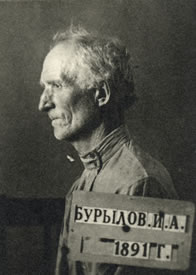
In 1949 this man, called Ivan Burylov, was sentenced to 8 years in camp, because he wrote "commedy" on a ballot paper, as a protest against the farce of the elections in the USSR: although there was one only allowed party, the authorities organized elections and people felt forced to vote, because if they didn't do it, they could be accused of opposing the government. Burylov found a way of protesting, but he was caught and sent to the camp.
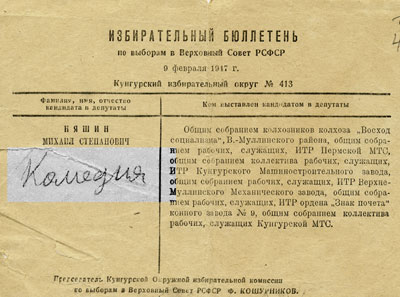
Ballot paper where Burylov wrote "commedy"
If you want to learn more about GULAG, you can visit an online exhibition on the following link:
Monday, 27th of May
Hello!
Today it was my turn to do the journal. At first Paqui has talked about the
trip to Madrid 8 a .m. in the CUM. If there isn’t
much traffic we are going to arrive at 10 a .m. At first we are going to go for a walk from
the Real Palace Retiro Park Prado Museum
Paqui has
explained the rules of the museum. It is forbidden to take photos and we can’t
have big bags. Paqui has said that we have to have a good behaviour.

Then Paqui
has explained the origin of the Prado Museum and also that Picasso wanted to shown the Guernika in this museum but the authorities treasoned Picasso's memory, because they wanted to open a new museum and as it hadn't got much content, they decided to move the Guernika there.

After that
some partners have complained about the exam because the unit is too long. Paqui
has said that we are always complaining.
Then we
have continued with the unit. Paqui has reviewed for the persons who weren’t in
the lesson last Friday. We have finished with Stalinism. We have copied some
notes about the period under Stalin’s government.
Stalin
changed the orientation of the economic policy. He imposed:
-
Collectivization
of all the private properties.
-
Centrally
planned economy.
-
Priority
to heavy industry.
The results
were the quick industrialization of the USSR
Paqui has
explained that the products were stolen or hidden and sold in illegal markets.
Then she
has said that in Spain
Paqui has
explained that the peasants who resisted collectivization were sent to Siberia .
After we
have copied some notes about cult of Stalin’s personality: Propaganda presented
Stalin as a big leader.

Paqui has
told us about Stalin's Purges:
Constant
repression against anyone suspected of criticizing the regime. The Communist
Party was purged several times and many of the leaders were killed.
The members
of the communist party who had fallen from grace were eliminated from the official
pictures.
Paqui has
told that there were others dictators that manipulared pictures, such as Franco.
.jpg)
Source: http://tejiendoelmundo.wordpress.com/2010/01/17/el-photoshop-en-los-tiempos-de-lenin-y-stalin/
This is a link of a post put by Paqui last year about the manipulation of pictures:
http://todayinsocialsciences.blogspot.com.es/2012/05/vanishing-bolsheviks-and-other.html
Then she
has explained the Gulag, which were forced labour camps across the USSR

With this
we have finished the unit.
These are
some words that I have added to my glossary:
-
Treason:
traición
-
Hickup:
hipo
-
To
prioritize: priorizar
-
To
lack: carecer de
-
Purge:
purga
-
Gulag:
forced labour camp
Bye! And
remember we have to be in time tomorrow!
Food shortages in the USSR and the Communist block
Last Friday we talked about some problems the Centrally Planned Economy caused in the supply of consumer goods in markets. Here you have some more information about this topic:
On this link of Arte channel you have a complete exhibition about the Communist block from 1975 to 1990. The section dedicated to shortages includes information about the problems the citizens had to access basic goods:
Lines were usual when products arrived to the shops. People were afraid of running out of products:
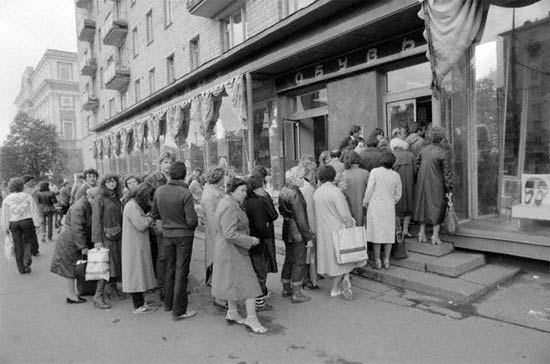
Line to buy shoes
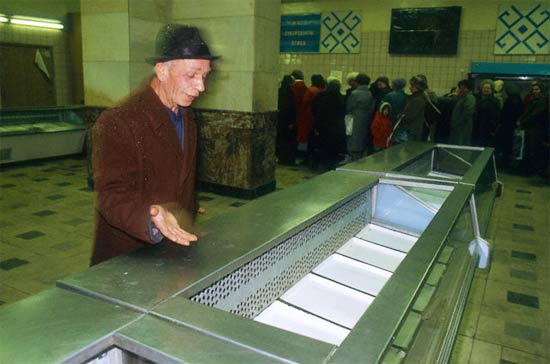
Empty shelves
You can watch more photos on the following link:
http://kcmeesha.com/2010/02/20/behind-the-iron-curtainshortages/
If you want to read more about Stalinism, here you have another link:
http://allrussias.com/soviet_russia/stalinism_1.asp
If you want to read more about Stalinism, here you have another link:
http://allrussias.com/soviet_russia/stalinism_1.asp
And finally, here you have some jokes about lack of consumers' goods in the Soviet block:
An American boasts "Our Herbert Hoover (president of the USA from 1928 to 1932) taught people to stop drinking,"
"Big deal," answers the Russian. "Stalin taught people to stop eating."
An American man and a Soviet man died on the same day and went to Hell together. The Devil told them: "You may choose to enter two different types of Hells: the first is the American-style, where you may do anything you like, but at the condition of eating a bucketful of manure everyday; the second is the Soviet-style, where you may ALSO do anything you like, but at the condition of eating TWO bucketfuls of manure a day." The American man chose the American-style Hell, and the Soviet man chose the Soviet-style one. A few months later, they met again. The Soviet man asked the American man: "Hi, how are you going?" The American man said:"I'm fine, but I can't stand the bucketful of manure everyday. How about you?" Answered the Soviet man: "Well, I'm fine, too; except I don't know whether we had a shortage of manure or if somebody stole all the buckets away."
"Dad, can I have the car keys?"
"Ok, but don't lose them. We will get the car in just seven years!"
Pole 1: Where are you going?
Pole 2: To Krakow, to buy bread.
Pole 1: Krakow? I heard that only Warsaw has bread.
Pole 2: That's true. But the end of the line is in Krakow.
Question: What did Romanians use for light before they had candles?
Answer: Light bulbs.
Pole 1: Where are you going?
Pole 2: To Krakow, to buy bread.
Pole 1: Krakow? I heard that only Warsaw has bread.
Pole 2: That's true. But the end of the line is in Krakow.
Answer: Light bulbs.
Sources of the jokes:
Friday, May 24, 2013
Friday, 24th of May, 2013
JOURNAL, FRIDAY ON THE 24th OF MAY, 2013.
Today Alicia, Salva, Javi, Fernando G. and me have been late to the class and inmediately Paqui has told me that today is my tourn to do the journal. After that Paqui has told to Fernando G. that he spent his life sleeping. Today has also been a little different because most of my classmates have been in a biology trip in Ruidera, we have missed them. Then we have started the normal lesson. At first, Paqui has explained:- FIGH FOR POWER: STALIN AND TROTSKY
-Trotsky wanted to export revolution to other countries (proletarian internationalism).
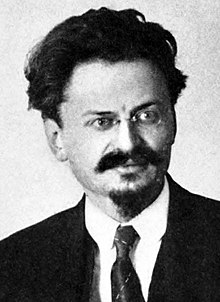
-Stalin wanted to consolidate revolution in the RSSU (socialism in one cuntry).

- STALINISM (1927-1953):
ECONOMY: Stalin changed the orientation of the economic policy. His priority was to transform the USSR into an industrial power. He impossed:
- Collectivization of all the private properties: lands, factories, trnasports, banks became State property.
- Centraly planned economy: the State controlled and planned economy through the Gosplan (Ministry of Planning). They elavorated Five-Years Plan, in which they decided on all the production of the USSR. All the producers had to carry out all these plans.
- Priority to heavy indudtry, to the detriment of light industry.
Results: quick industralization of the USSR, but permanent luck of consumers' goods and consolidation of the black market.


Paqui has told to Salva that before having big industries , people at first stablish small markets, shops and things like that.
Paqui has got angried with me because I was talking a lot with Alicia and in this way I couldn't listen to the lesson. And she has also got angried with Javi, Gonzalo, Erique M., and Fernando G. because they were playing.
Paqui has also written on the blackboard the index of a new unit:
UNIT 8: THE INTERWAR PERIOD
1. The USA: from the " Roaring Twenties"to the great Depressim and the new Deal.
2. Fascist Italy.
3. Nazi Germany.
And finally the vocabulary that we have seen todaty is:
-Roaring: rugiente
-Roaring twenties: felices años 20
-Contrally planned economy: planificación contralizada
-Five-Year Plan: Plan Quinquenal
-To blacknail: sobornar
-Surplus: excedente
-Wheat: trigo
-Weed: hierbajo/ marihuana
-Seaweed: alga
-To reach the goals: alcanzar las metas
-Statement: declaración
-To lack of: carecer de...
-Consumer goods: bienes de consumo
I know that my journal is very short but today we have dialgued a lot, so we haven't advanced in that unit.
So I hope you will have a happy weekend and study so much!
Bye, bye:)
Wednesday, May 22, 2013
JOURNAL 22/5/2013
Hello
classmates!!!
Today it's
my turn to do the journal. Paloma, Mónica, Fernando G. and I have been late.

Paqui has started the lesson showing us a PowerPoint presentation
We have seen these slides of the PowerPoint presentation:
FIRST
DECISSIONS OF THE BOLSHEVIKS:
-Signature
of the Brest-Litovsk Treaty with Germany, in order to take Russia out of war.
-Expropriation of lands to distribute them
among the peasants.
-Factories were put under workers´ control.
-
Eight-hour day, unemployment pay and pensions for workers
-Religion
was banned and divorce allowed
-The
Constituent Assembly was dissolved and the “dictatorship of the proletariat”
was proclaimed
-The Cheka
(secret police) started arresting, torturing and killing those considered to be
enemies of the State.
The first row of the class were speaking a lot and Paqui has become angry, she has said that
she couldn't explain with that noise.

We have
continued with the PowerPoint.
RUSSIAN TERRITORIAL LOSSES
Russia lost a lot of
territories in the West: the best industrial and agricultural lands in Poland
and Ukraine and the territories of Finland, Estonia, Latvia and Lithuania.

PROBLEMS:
CIVIL WAR (1918-1921)
The
partisans of the tsar (part of the army, aristocracy and rich peasants)formed
the White Army and declared war on the Bolsheviks. They received the support of
the UK and France. The Bolsheviks organized the Red Army(directed by Trostky),
mobilized 5million soldiers and ordered the total requisition of food (War
Communism)

The Bolsheviks finally won the war, but at a high cost:
-5 million
dead by starvation and poverty
-total
destruction of the productive system
-development
of the black market and shortage of supplies in the official markets
The
Bolsheviks managed to get rid of the other parties and control the soviets.
CREATION OF THE USSR
-The Union of Soviet Socialist Republics was
created in 1922: federal State formed by 11 republics: Russia, Ukraine,
Belarus, Georgia, Armenia, Azerbaijan, Kazakhstan, Kirghizstan, Turkmenistan,
Tajikistan and Uzbekistan
- Totalitarian State:
- One/
Single-party system: the Communist Party of the Soviet Union (CPSU), considered
to be the representative of the proletariat. The Communist Party
controlled all the institutions
- No
division of powers: ruled by a Parliament called Supreme Soviet, which
concentrated both the executive and the legislative power
- Those who
opposed the government were persecuted and punished.

Enrique Pérez has asked Paqui the meaning of the flag of the USSR, she didn't know the meaning of the star, but she has sent me an e-mail and this is the meaning of the flag:
- the star represents the government of the Communist Party, - the sickle represents the peasants,
- the hammer the industrial workers and
- the red colour comes from the banner of the Communist Party and was a tribute to the international aspect of workers' revolution.

Paqui has
said that we study history because you learn things of the past to change the
future.
THE NEW ECONOMIC POLICY
Economic policy launched by Lenin in order to
recover production after the wars and the awful consequences of food
requisition.
Lenin defined it as State capitalism:
-Privatization
of lands and small factories
-The State
kept the control of the big industries, banks and foreign trade Results:
economy quickly recovered
FIGHT FOR
POWER: STALIN AND TROTSKY TROTSKY STALIN
In January
1924 Lenin died and a fight for succession started:
-Trotsky
wanted to export revolution to other countries (proletarian internationalism)
-Stalin wanted to consolidate revolution in the USSR (socialism in one country)
Finally Stalin managed to control the Communist Party, eliminated his enemies and became the leader of the USSR in 1927. Trotsky had to exile and was killed by Stalin's order in 1940.
-Stalin wanted to consolidate revolution in the USSR (socialism in one country)
Finally Stalin managed to control the Communist Party, eliminated his enemies and became the leader of the USSR in 1927. Trotsky had to exile and was killed by Stalin's order in 1940.
Here's an
interesting post about how Ramón Mercader, a spanish person, who killed Trotsky
under the direction of Stalin with an ice-ax, because Trotsky didn't have the
same ideas and because of this he was considered a enemy.

Finally,
Paqui has said that we had to deciede when the exam is going to be, but like always, we have
started to speak very loud and the date of the exam is not decided yet.

Paqui has two different propositions:
12th June: exam
17th June: make-up exam
18th June: we don't have lesson, but if there is someone in this situation (with one only term to resit), he/she can take the exam at first period with Paqui
OR
7th June: exam12th June: make-up exam
17th June: resit exam.
CHOOSE ONE AND SEE YOU!!
VOCABULARY:
-State-owned
property: propiedad estatal
-Supplies: suministros
-War communism: comunismo de guerra
-NEP: NEP (Nueva Política Económica)
-black
market: mercado negro
-mixed
system: sistema mixto
-requisition: requisa
-Trotskyite: trotskista
-ice-ax: piolet
Monday, May 20, 2013
Journal 20/05/13
Hello everybody!!
http://www.youtube.com/watch?v=SMKOeqGpYrg
http://www.youtube.com/watch?v=XEjLoHdbVeE
This is the real video of the real song Gimme, gimme, gimme (a man after midnight).
Glossary.
To seal- Sellar
April theses- Las tesis de Abril
To seize- Ocupar
To succeed- Tener éxito
Re-enactment- Representación
And that´s all for today, see you on Wednesday. Tá luego!! (Bye Bye)
Today some people have stayed in the class with Paqui during the breaktime. The hall was completely in silence because all the people were outside. We have played football with a ball of aluminium in class and Paqui has said that we had to stop. When the bell has rung, the people have started comming into the class little by little and someone has arrived late. Later Paqui has become angry with us because we were speaking a lot. When we have kept silence, Paqui has continued with the Russian Revolution. The point of the unit we have started is:
February Revolution (1917):
With the strikes the people wanted the abdication of the tsar.
They got what they wanted, the tsar Nicolas II finally abdicated and Russia become a Republic ruled by the Provisional Government. That government made some reforms to transform Russia into a Democracy but they didn´t keep their promises.

1917 Abril:
The Germans helped Lennin to come back to Russia from Switzerland. The Bolshevik party issued the April Theses:
- No support to the provisional government.
- All power for the Soviets.
- Confiscation and Nationalization of the lands of Russia.
- Collectivization of factories.
- Slogan of the Bolsheviks: Peace, land and bread.
.jpg) http://cincuentaytresdias.blogspot.com.es/2013/01/lenin-el-anticuado-dijo.html
http://cincuentaytresdias.blogspot.com.es/2013/01/lenin-el-anticuado-dijo.html
 http://anncol.eu/index.php/colombia/insurgencia/farc-ep/716-pablo-catatumbio-la-experiencia-de-una-lectura-sobre-la-biografia-de-lenin
.jpg)

Then I have asked Paqui where Lenin was during the tsar´s role and she has answered me that he was in Switzerland and he come back because the revolution was sucessful. Paqui has become angry with us another time because she said that if we speak all at the same time in the four corners it is imposible to follow with the class. After that, Werselio has said to me that if I could close the blind and I have said yes, of course! We have seen a cartoon´s video about all the Russian revolution (Paqui has lowered cuality lower to 240 and we couldn´t see the subtitles) where Lenin appeared singing in English in Russia :( Lenin said the slogan of the Bolsheviks "Peace, land and bread". The video was for child and had some mistakes.
http://todayinsocialsciences.blogspot.com.es/2012/05/peace-land-and-bread.html
After this funny video, we have continued with the next point:
After this funny video, we have continued with the next point:
1917: July
The Bolsheviks tried to seize power in Petrograd, but they failed. After that, Lenin fled to Finland.
Some days later, General Kornilov tried to depose the Provisional government. The fame of the Bolsheviks increased and they took control of the Petrograd Soviet.
I have asked Paqui that if Lenin was the lider of the Bolsheviks and she has said yes and also I have asked her if the Provisional Government still ruled in that time and she said yes again.
October: The Bolshevik revolution
Bolsheviks took the control of the banks, communication buildings and stations in Petrograd and stormed the Winter Palace with no resistance. The Provisional Government was distroyed and the Bolsheviks formed a new government, supported by the Congress of the Soviets of Russia.
Paqui has said the the Provisional Government was established in the Winter Palace. In the place of the powerpoint where was this point, there is a photo of a re-enachment of a historical event that occured at night (The Storm of the Winter Palace).
.jpg)
Fist decisions of the Bolsheviks
- Signature of the Brest-Litovsk treaty with Germany to take Russia out of the war.
- Expropriation of the lands.
- Factories were put under worker´s control.
- Eight-hour day, unemployment pay and pensions for workers.
- Religion was banned.
- The distatorship of the proletariat was proclaimed.
- The Cheka (secret police) started arresting, torturing and killing the considered to be enemies of the State.
.jpg)
The Bolsheviks took power and they made some decisions for the people and workers. Paqui has said "aideoloyia" instead of ideology. After that, Paqui has given us a small sheet where song about the Russian Revolution was written again and we have sang it but very bad, only Paqui has sung it well because she knew it.
http://www.youtube.com/watch?v=SMKOeqGpYrg
http://www.youtube.com/watch?v=XEjLoHdbVeE
This is the real video of the real song Gimme, gimme, gimme (a man after midnight).
Glossary.
To seal- Sellar
April theses- Las tesis de Abril
To seize- Ocupar
To succeed- Tener éxito
Re-enactment- Representación
And that´s all for today, see you on Wednesday. Tá luego!! (Bye Bye)
Friday, May 17, 2013
17 of May 2013
Today in Social Science we have started the class asking to Paqui questions about the project. Then Paqui has explain us a little the project and she has said that the project have to be expressive and visual and with drowings. Pilar was complaining. Paqui has said that if she has time she will write a post in the blog with the guides. She has changed the date of the project to the 14th of June. She also has said that we have to do the project the best we can. Andrea hasn´t have a group and Paqui has said that she has to choose a group. Andrea has chosen the group of Roxana.
Then we have started with the last point of the Unit 7, we are going to study THE RUSSIAN REVOLUTION. We have to copy the index.
A) Rusia under the Tsars
We have spoke a little about about the wife of Nicolas II, Anastasia. We have said that the history of her is a fairy tale.
Then we have started with the last point of the Unit 7, we are going to study THE RUSSIAN REVOLUTION. We have to copy the index.
2.THE RUSSIAN REVOLUTION
A) Rusia under the Tsars
B)The 1971 revolutions
C) THe Bolsstevik rule.
- Civil War and consequences.
- Creation of the USSR.
- New Economic Policy.
- Fight for power.
- Stalinism (1924-1953)
A) Rusia under the Tsars
- IMMENSE EMPIRE, but politically, economically and socially backwards with respect to WesternEurope.
- AUTOCRACY: the Tsar ruled as an absolute monarch. He concentred a lot of powers, there wasn´t a Parliment and there were no elections. He was supported by the Orthodox Church, bureavcracy and the army.
- POLITICAL PARTIES were FORBIDDEN.
- Most of the population were peasants, their living conditions werevery hard and most of them were illiterate.
- Only in same cities there were industries and workers.
 |
| Nicholas II, the Tsar and his family |
Salva and Enrique P. have asked to Paqui same questions about the Revolution.
After that we have continued with the Political Parties:
All the political parties were forbidden.
- CONSTITUTIONAL DEMOCRATIC PARTY: Liberal ideology.
 |
| MILIUSKOV |


- RUSSIAN SOCIAL DEMOCRATIC LABOUR PARTY: Markist idelogy.
 |
| Lenin |
 |
| Plejanou |
Carmen, Fernando, Laura, Salva have asked questionist to Paqui and she has answered them.
Roxana has said that there is a mistake on the book on page 55 in the sentense "reformists, led by Plejonov and Matov". Then we have continued with the point B, The 1905 Revolution.
The Russian defeat against Japan in the Russo-Japanese War (1904-1905), shaved Russia´s backwardness and encouraged protests.
- JANUARY (1905): a demostration of workers asking for better working conditions was brutally represed by the army: 200 people were killed.
- The revolt extended to other parts of the century.
- Saviets appeared and tried to coordinate protests.
- The Tsar promised to make same reforms, but he didn´t keep his promises.
 |
| Demostration of the Winter Palace Bloody Sunday 9th Juanary 1905 |
 |
| Battleship Patenkin |
Then continued with Russia during World War 1:
- Total disaster for the Russian amrmy: they suffered continuous defeats against the Germans, who conquered a large amount of Russian territory.
- The Tsar took personal command of the army and he was considered to be responsible for the disaster.
- At least two millon Russian soldiers and two millian civilans were killed during the war.
- The mobilization of millons of peasants reduced the harvests and provoked a shartage of food, an increase of prices and hunger.
- Increasing desertions in the army and strikes in cities. Soviets reappeared and organized protests.
 |
| Austro-Hungary |
Then we have saw a presentation done by Paqui last year.


Here you have the link.
Other interesting link is this:
It´s a documentary about this unit.
GLOSSARY:
Tsar: zar
Backwards with repect to: retrasado
Servant: siervos
Fairy tole: cuento de hadas
Menshevik: minoritary
Agrarian reform: reforma agraria
Demonstration: manifestación
Battleship Patemkin: El Acarazado Potemkin
Silent movie: película muda.
Shartage: escasez
Guidelines for the project of history of Spain in the 20th century
These are the guidelines and some useful information to take into account for the project of the history of Spain during the 20th century:
The project has to combine audio and images. This means that there are different options:
- a video with drawings or images with puppets made by you
- a video with a perfomance of the members of the group
- you can also do a Narrated Photo Story with the Photo Story 3 program (Fotos Narradas), but using your drawings instead of photos. Here you have a short tutorial with the explanation in Spanish:
http://www.youtube.com/watch?v=BFPdN4jqxNY
- you can also do a Narrated Photo Story with the Photo Story 3 program (Fotos Narradas), but using your drawings instead of photos. Here you have a short tutorial with the explanation in Spanish:
http://www.youtube.com/watch?v=BFPdN4jqxNY
You can include some real images (photographs), but all the project can't be explained through photographs, because you have to be CREATIVE.
The explanation has to be dynamic and understandable and all you say has to be related with what's happening on the screen. You have to make an effort and think of how to translate the text into images. We've seen several examples during this year about how to do this simply and effectively
As there are some figures who repeat in every historical period, you should try to make drawings that look like them. They don't have to be perfect, but they should be easily recognizable, as in cartoons. Here you have some examples:
ALPHONSE XIII


Sources:
MANUEL AZAÑA


FRANCISCO FRANCO


ADOLFO SUÁREZ, LEOPOLDO CALVO SOTELO, FELIPE GONZÁLEZ, JOSÉ Mª AZNAR AND JOSÉ LUIS RODRÍGUEZ ZAPATERO AND MARIANO RAJOY


You can include some titles or subtitles to explain the story, but don't make an excessive use of texts. Remember that the contents have to be understandable. You can use humour sometimes, but remember that some perios of the history of Spain in the 20th century were very tragic you shouldn't make jokes with people's suffering.
All the contents you need are on the book. If you want to enlarge some contents, you have to make sure that they are historically accurate. Send me your script in advance if you want me to have a look on it.
And remember that the deadline for the project will be on Friday, the 14th June. You will have to upload your projects to Youtube or bring a memory stick with the project. If you have any questions or you need help, you can look for me during the breaktime or by mail.
Don't wait until the last moment. The sooner you finish, the more time you will have to do other things and you will also have time to improve your projects to get a better mark (the only thing most of you worry about).
Have a nice weekend.
Presentation of the Russian revolutions and Stalinism
This is the presentation to study the next part of the unit. Use it to complete your notes and activities:
Subscribe to:
Posts (Atom)