Tuesday, November 17, 2015

This day in history: Signature of the Peace of the Pyrenees

Hi, classmates! Today I want to explain you ''The Treaty of the Pyrenees''.

The Treaty of the Pyrenees was signed on 7 November 1659 to end the war between France and the Hispanic Monarchy. This was a war that was initially a part of the wider Thirty Year's War. It was signed on Pheasant Island, a river island on the border between the two countries which has remained a French-Spanish condominium since the treaty. The kings  Louis XIV of France and Philip IV of Spain were represented by their representatives .

Source:https://www.google.es/search?q=1659:+Signature+of+the+Peace+of+the+Pyrenees&espv=2&biw=1242&bih=606&source=lnms&tbm=isch&sa=X&ved=0CAcQ_AUoAmoVChMIh86Zg4mYyQIVAbkUCh1ykA-A&dpr=1.1#tbm=isch&q=tratado+de+los+pirineos&imgrc=U4HpZabj6ML1xM%3A

France entered the Thirty Years' War after the Spanish Habsburg victories . By 1640 France began to interfere in Spanish politics, aiding the revolt in Catalonia, while Spain in response aided the Fronde revolt in France in 1648. During the negotiations for the Peace of Westphalia in 1648, France gained the Sundgau and cut off Spanish access to the Netherlands from Austria, leading to open warfare between the French and Spanish.


After over ten years of war, an Anglo-French alliance was victorious at the Battle of the Dunes in 1658 and peace was settled by means of this treaty in 1659.

In this photo you can see the geopolitical effects of the Treaty of Pyrenees.

Source: https://en.wikipedia.org/wiki/Treaty_of_the_Pyrenees#/media/File:Tratado_Pirineos_1659.jpg

In 1660, most of the European continent was at peace and the Bourbons had prevailed over the Habsburgs. In the Pyrenees, the treaty resulted in the establishment of border customs and restriction of free cross-border flow of people and goods.

This is a medal celebrating the Treaty


Source:https://en.wikipedia.org/wiki/Treaty_of_the_Pyrenees#/media/File:Ignoto_(forse_jean_hardy),_luigi_XIV_e_filippo_IV_di_spagna,_pace_dei_pirenei,_1660.JPG


Finally, France annexed territories on both its northern and southern borders.


NEW VOCABULARY!


aid- ayuda


BYE!!

17th november 2015

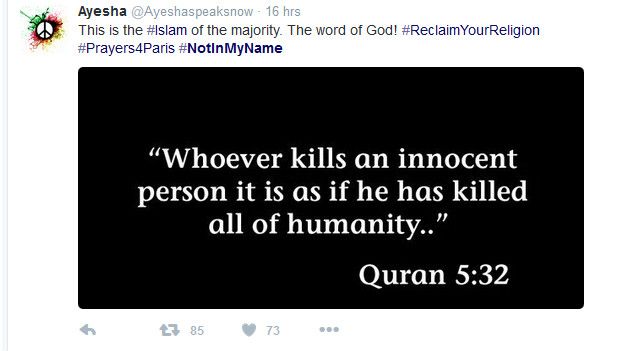
Hi, it's Manal, today in social sciences we haven't studied Spain in the 18th century, we have dedicated the class to debate and give our opinion about the attack in Paris.

All my clasmates have the same opinion, people think that the attack is related with the Muslims, but we think that it is not related with them,because they belong to a religion called Islam, and the meaning of this word is peace,so the people who have caused this attack aren't Muslims. 


 source::http://ichef.bbci.co.uk/news/ws/624/amz/worldservice/live/assets/images/2015/11/14/151114200716_not_in_my_name_624x351_twitter_nocredit.jpg


I think that the reasons for  this attack are political, economic and geo-strategic reasons and I guess that it  also is related with the state and the government.

We think that they are bad people, but we are bad as them, because Spain sell weapons to other countries, and this is not good, so we are participating in the attacks.


In class we have also debated about how we can change this? For example:

I can't change anything alone, but I can change my own life, then

I have to try that my friends and classmates also change themselves, and in this way we can change a small thing. Evenit  is a small thing, a lot of small things make a big thing. 

But people don't think like that.

When you ask people about the terrorism, about how to change it, they answer you many things.And there are three types of answers, three types of people:

-"I want to change the world and I will try it"

-"I can't change the world alone"

-"I don't care about it, my country doesn't suffer terrorism"

If we have this attitude we won't do anything.

I have found this picture about terrorism, what do you think?

source:https://blogger.googleusercontent.com/img/b/R29vZ2xl/AVvXsEi9r6SNmAjmfy65BSxwEA-OmiDNGNpNT9LqgycIcQIPJHCslQLvlOmCSs3_y5oSAjwP430zERoyvy1Rfpsn_V1xMOB4U-9JlZjTM5eF8AMxvAMEoCgPHrdQad-aDIJj-EIV6g9zvC_XOG7A/s1600/joven+siria+meme.png

After talking about terrorism, we have debated about the education.

We think that our education at high school is not good, the way that we study is not good. Teachers explain us the unit, then, we have to study a lot o things by heart maybe we don't understand some of these things, and finally we throw them up in the exam. Then we forget all the content about the unit.

Do you think that this is a good way to learn?


Resultado de imagen para gente feliz aprendiendo

source:http://www.google.es/imgres?imgurl=http://cdn2.upsocl.com/wp-content/uploads/2014/04/Captura-de-pantalla-2014-04-08-a-las-9.57.53.jpg&imgrefurl=http://www.upsoc.com/inspiracion/los-21-habitos-de-la-gente-feliz/&h=805&w=1270&tbnid=ovDcve8NKA-4TM:&docid=xKCsgcoK8ipRAM&ei=q2xLVo7CBoP2PZ7nvbgI&tbm=isch&ved=0CB8QMygAMABqFQoTCM7Dl5eGmMkCFQN7DwodnnMPhw


We don't have to study by heart, teachers have to teach us,but in a different way, not only copying, and we have to understand the content.

We have to be interested in learn.In this way, we learning and we don't forget the content.After this, we can do different projects, and we learn in a funny way.


true?


Geoestrategic=geoestratégico
Geostrategy,a subfield of geopolitics, is a type of foreign policy guided principally by geographical factors as they inform, constrain, or affect political and military planning.
Bye!

Monday, November 16, 2015

16th November

Hi everyone. It’s Lorena. I’m going to talk about what we have studied in today’s lesson. At the beginning we were a little bit nervous about the incident of Paris. Paqui has said that if we had time, we’d talk about it at the end of the lesson, so that’s what we’ve done, but first I prefer to focus on the content of the unit that we’ve studied today.
As always, we’ve started reviewing the content of the last lesson. We have reviewed the USA independence, the ten amendments and the constitution, the date of its creation, which was not in 1776, but in 1787 (we have confused it with the signature of the Declaration of Independence), the organization of the USA (federal states), etc. I think it’s clear, but reviews are never bad for us.

Source: http://www.scottsvalley.org/images/July4.jpg

Source: http://www.archives.gov/espanol/images/constitucion-partial-es-large.jpg

When we have finished the review, we have started with point 4 of the unit: Spain in the 18th century. While Paqui was explaining the points of the history in this part of the history, she was writing everything in the blackboard. It was a kind of scheme, but with more content than a brief summary.

Everything started because Charles II didn’t have any successor. It doesn’t surprise me due to his bad health of him. Anyway… In his testament, he wrote down the people he wanted to be the king of all the Empire. The first one was Joseph Ferdinand of Bavaria, but he died, Philip of Anjou was chosen to reign. He was a French prince; Louis XIV’s grandson. The Habsburgs didn’t like the idea. They had an alternative to change Philip for Archduke Charles of Austria, but when Charles II died, the Bourbon ascended to the throne. Great Britain, Austria, Portugal and the Low Countries didn’t like the idea. In the Peninsula, Aragon wasn’t either happy with all this, so for that the war of Spanish succession started in 1700. People from Aragon were scared because they didn’t want Absolutism.

Archduke Charles
Source: http://www.laalcazaba.org/wp-content/uploads/2012/09/Archiduque-Carlos-Palacio-Real-mMdrid.jpg

Philip V
Source: http://quhist.com/wp-content/uploads/2012/01/felipe-v.jpg

Joseph Ferdinand of Bavaria
Source: https://upload.wikimedia.org/wikipedia/commons/0/07/JosephFerdinand.jpg

Louis XIV
Source: https://upload.wikimedia.org/wikipedia/commons/5/5f/Louis_XIV_of_France.jpg


In 1707 the Aragonese were defeated by the troops of Philip V in the battle of Almansa, and they occupied Valencia and Aragón. Great Britain occupied Gibraltar and Minorca.
In 1713, the Archduke became the emperor of Austria, so for that his allies started thinking. They didn’t want absolutism, but if the Archduke won, they would have a reenactment of Charles V's Empire and they didn't like this. They ended the war with the Treaty of Utrecht in 1713.

The Battle of Almansa
Source: https://upload.wikimedia.org/wikipedia/commons/0/0b/Ligli-Batalla_de_Almansa.jpg

Treaty of Utrecht
Source: http://upload.wikimedia.org/wikipedia/commons/c/c7/The_Treaty_of_Utrecht.jpg

Philip V became the king of the Hispanic Monarchy, although some territories of the Empire were distributed among Austria and Savoy. Flanders, Luxembourg, part of Milan, Naples and Sardinia became Austrian territories, and Savoy received Sicily and part of Milan.
Great Britain kept the territories it took and they also broke the Castilian monopoly in the Indies. Due to this, they could sell black slaves there and also their products.

Source: http://www.rootsweb.ancestry.com/~wggerman/map/images/treatyofutrecht.jpg

The war ended on the 11th September, 1714, when Philip V’s troops finished bombing Barcelona.
This was everything we have studied. After the explanation, we have started a conversation about ISIS, the reaction of France towards the Jihadists attacks, people’s opinion, etc.


I agree with Paqui. I really like the way she explains her view points, perhaps because they’re the same as mines. In my modest opinion, I think all this is going to end up in the same place as every war finishes. It’s sad how people act and it’s even sadder how they think about this: they think that every single Muslim acts in that way, and they offend innocent people just because they’re not educated and they have no information. The trouble with this is that people with close minds have their mouths open. We all try to blame someone when all this is due to everybody, and I don’t know how long this going to last is. The only thing I know is that if this continues like this, we all are going to be dead. Sooner or later.

About Islam, violence and solutions

You should watch this video. It's subtitled in Spanish:


Here you have a podcast in Spanish about the roots of violence and despair:


This is a cartoon in Spanish I've already seen, that summarizes  how we should fight terrorism: 


  Source: http://www.republica.com/2015/11/15/la-vineta-solucionando-2/

Not with bombs, hate, scapegoats or more fear, but with EDUCATION AND OPPORTUNITIES: 


And a leader willing to embrace tools that will empower the many strikes fear into the few who lead by violence and intimidation.


Thursday, November 12, 2015

Songs to learn about the USA Constitution and its amendments

Here you have the videos we've seen this morning and some others I've found about the amendments. Some of them are school projects and they can give you ideas for your song projects:

BORN YESTERDAY

Melanie Griffith teaches the 12 interesting amendments to a group of very important people:


And this is the link with the lyrics:

The 12 Interesting Amendments”* - Hawes' History Class

THE AMENDMENT SONG ( by Rachel Clayton) 


BILL OF RIGHTS 

School version of Taylor Swift's song Shake it off:


27 AMENDMENTS

This has been written by Mr.Crabtree, a USA middle school teacher from Murfreesboro, Tennessee. Yes, it seems that there are crazy history teachers on both sides of the Atlantic Ocean: 


BILL OF RIGHTS SONG

Hip- Hop style, from "Rhythm, Rhyme and Results"


BILL OF RIGHTS RAP


By Smart Songs


BILL OF RIGHTS (Disney version)

These are extracts from different Disney film, from which you can learn about the first ten amendments: 


RIGHTS RIGHTS, BABY!

And finally, another very funny school project from McAlpine Elementary School in Charlotte Mecklenburg, North Carolina, USA: 


I hope you enjoy them!

Thursday, 12th November 2015

Hi! Today I want to show you what we’ve done this morning in Social Sciences lesson. At the beginning of the lesson, we’ve reviewed what we did on Tuesday. Paqui has made a short summary which included: the Reasons for  the discontent, how they declared independence and the American War of Independence.

Then, Paqui has explained us the ‘First Representative Government of USA’. 
George Washington was the first president of the USA. This is  the only Constitution have had and it was written in 1787 and it included:
It had only 7 articles. These articles were based on the principles of political liberalism.

The USA is a presidential Republic ( the president holds the power) and federal State (every state has important powers)

A big part of the population was excluded from these rights. They didn’t write any more Constitutions, but they have reformed it 27 times.


This is an image of the first Constitution of the USA

After 4 years they added the Bill of Rights to the 1791 Constitution which  has been amended several times. Now it includes 27 amendments. Some of them done included the abolition of slavery, the right to vote for women, for black people and the prohibition of alcohol. The 10 first amendments are:


The First Amendment of the Constitution says . . . . 
Freedom of Expression, 

The Second Amendment of the Constitution says . . . . 
Right to bear arms, 

The Third Amendment of the Constitution says . . . . 
No housing soldiers, 

The Fourth Amendment of the Constitution says . . . . 
Where’s your warrant please? 

The Fifth Amendment of the Constitution says . . . . 
Don’t rat on yourself, 

The Sixth Amendment of the Constitution says . . . . 
Right to a quick trial, 

The Seventh Amendment of the Constitution says . . . . 
Jury of your peers, 

The first part of the Eighth Amendment says . . . . 
They can’t raise your bail, 

The second part of the Eighth Amendment says . . . . 
The cops can’t hurt you, 

The Ninth Amendment of the Constitution says . . . . 
We have lots of rights, 

The Tenth Amendment of the Constitution says . . . . 
We the people have the say,


Finally we have watched a video of the 

'12 Amendments Song from Born Yesterday'.


For homework we have to write a scheme about the constitution of the USA.


NEW VOCABULARY:

Mashup- song made by other songs, but about the same topic

France- (country) Francia

French- (people born in France)

Spaniard-(from Spain)

Spanish-( language or adjective)

Amendment- enmienda

Novelty- novedad

Oil- petróleo

Fulfill- cumplir

BYE!!

Tuesday, November 10, 2015

Baroque art travel journals

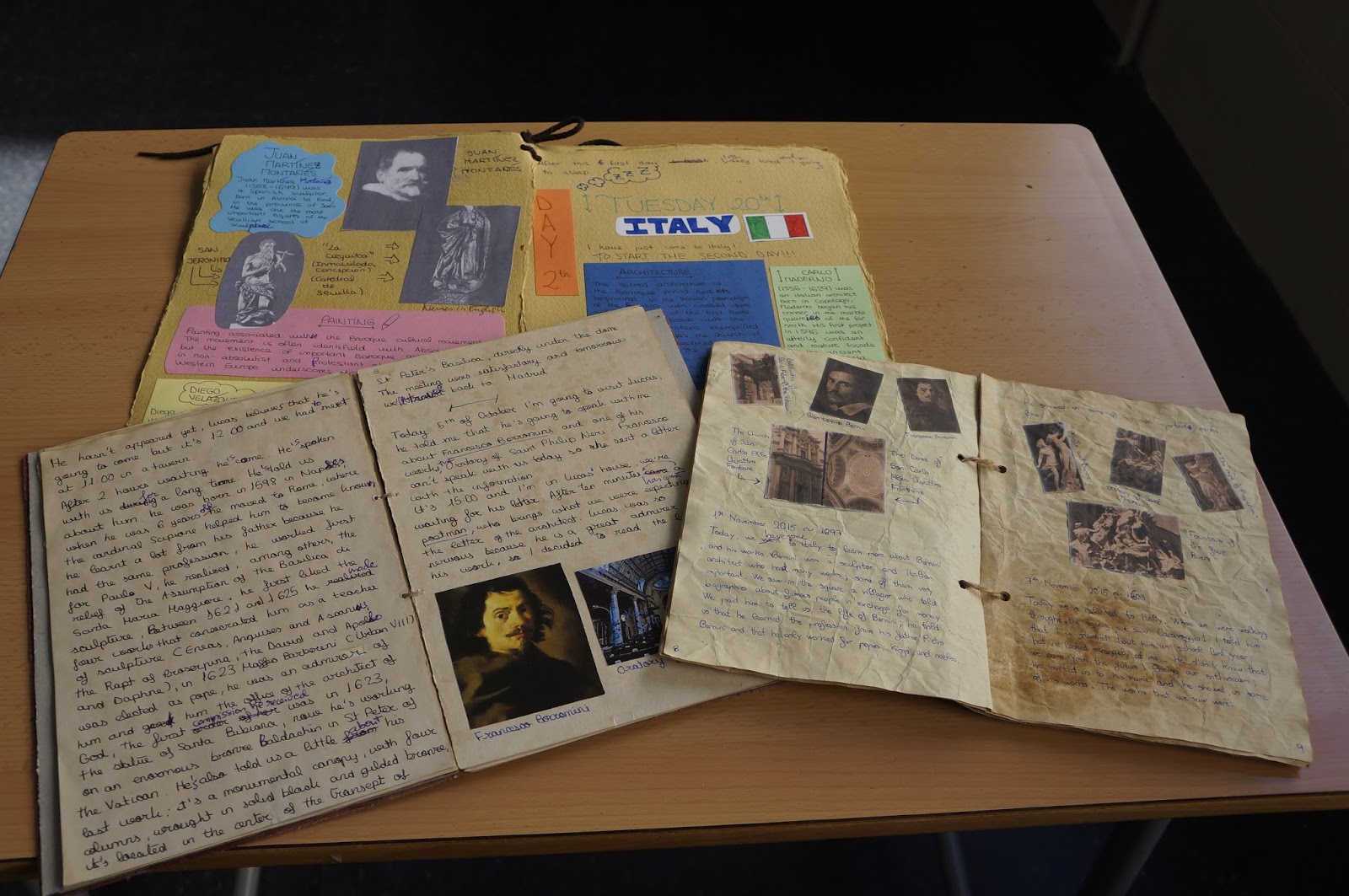
Here you have the pictures of your travel journal I've taken this morning. I hope you will find some time to have a look on your classmates journals and also that you try to improve them. I'm sure that the next project will be better. 


The last four pictures correspond to María Pérez's travel journal. In my opinion it combines both a good design and almost complete content. 


Tuesday, 10th November 2015

Hello, I,m Lidia. Today I will explain what we have done in social sciences class. At the beginning of the class we have continued with the theory, we started with Independence of the brithish colonies of North America and we have learned: The English has created 13 colonies on the coast of North America. 
Reasons for the colonist discontent:

  • No representatives in the British Parliament: they couldn't express their opinion or oppose the laws against their interest
  • Constant tax increase
  • British trade monopoly over the colonies: they couldn't buy or sell their products to other places
Paqui then explained to us with an outline on the blackboard the American War of Independence Revolutionary War (1775- 1783) and explained us:
  • First confrotment: Battles of Lexiston and concord. The British were defected. The colonist got France and Spain support
  • 2nd Continental Congress (1776): Declaration amplia difusion of Independence of the USA(  (4th July 1776)
  • Leador of the Colonist army George Washington
  • Man battles: Saratoga (1777) and Yaktown (1781). Finally the Brithish were defeacted
  • 1783: Treatry of Paris

We ended up completing the scheme in the notebook on American War of Independence Revolutionary War (1775- 1783) and we continue with the declaration of independence ( 4th July 1776) 

Declaration of independence-> During the 2nd Continental Congress of Philadelphia the delegates of the 13 colonies decided to the declare the independence from Great Britain.

Declaration of independence: CONTENT-> 

  • All men are equal and free and have some unallenable rights. The govermmet's role is to guarantee these rights.
  • King George hasn't fulfilled his role with respect to the North American colonies
  • The colonies have decided to break their political connection with GreatBritain and became an independence nation.


When finished Paqui explain the declaration of independence, we put in Benjamin Frankish internet to teach a picture of the, for us to know who he is.
Benjamin Frankish is a politician, scientist and inventor.


And in the last 10 minutes Paqui class explained as should have been the work of my travel journal, she told us what most people failed, and gave him to see notos and to see the faults we had. And at the end of the class we left on a shelf

NEW VOCABULARY

Trade: comerciar
Widespread:  amplia difusión
East India Company: Compañia de las Indias Orientales
Poth: Camino


Monday, November 9, 2015

Monday, 9th November 2015


Hello,  I'm Jaime. Today it's my turn to do the review of the class. So, Come on. At the beginning we have watched a video about Enlightened thinkers. This onetalked about philosophers who wanted to illuminate the darkness of the world with the light of reason. One example of this was the challenge promoted by the philosopher Immanuel Kant. Jean Rond D'Alembert and Denis Diderot developed the yearning to know and created the Encyclopedia. The first edition was published in 1751.
The thinking of the Enlightenment can be divided into:
-Political Thinking:

  1. Voltaire: he defended that the power of the king had to be limited by the Parliament, a universal tax system and religious tolerance.
  2. Montesquieu: he defended the division of powers into three institutions ( executive, legislative and judicial)
  3. Jean Jacques Rousseau: he defended the social contract and the general will.

-Economic Thinking:
Mercantilism had been the predominant economic policy in the 16th  and the 17th centuries:
the wealth of a country depends on the quantity of precious metals it accumulates and exporting more than importing was the best way to achieve this
Physiocracy was the new economic trend. They considered agriculture the most important economic activity.

You can find this information on a video of the blog.

After the video, we have done a review of the last class. Then Paqui has explained the Enlightened Despotism and the Independence of U.S.A. with a scheme on the digital board andthe blackboard

Enlightened Despotism
-Definition: Absolutism plus the Ideas of Enlightenment
-Reforms made: Educational, Economic and Administrative reforms
- Enlightened Despotism motto: " Everything for the people, but without the people”
-Limits of the reform: They didn't touch (of) the structure of absolute power and privileges(estate- based society). Reforms were insufficient
-Examples of enlightened monarchs: Catherine II of Russia (for the people , but without people.)

Independence of the USA
-Eastern Coasts of North America
-The north American colonists didn't have representatives in the British Parliament, the British government constantly increased the taxes and had the monopoly of trade with the North American colonies

The main features of the U S A.:
-The Constitution and the Bill of the Rights
-A government chosen by the citizens: A republic
-Division of powers
- USA is divided into different states


Finally Paqui has given us to complete the scheme of the Independence of the USA. While we were finishing the scheme, she has set the date of the Exam of the unit about 17th century.


You can find this information on a presentation and in the book of 4th of Eso

NEW VOCABULARY

-Motto: Lema
-Tea Tax: Impuestos de Tasas
-Staple production: de 1º necesidad


Sunday, November 8, 2015

Video in Spanish about the enlightened thinkers

I'm taking a course to improve as teacher and I had to prepare a video with questions for one of the activities. It's in Spanish, but I think it can also be interesting for you. Here you have it. We´ll do something similar with another project, so start preparing your Velleda markers ;)


The video with the questions is here. Challenge yourselves and try to answer without studying: