Friday, June 7, 2013

NEW DEAL: ROOSEVELT AND KEYNESIANISM

NEW DEAL: ROOSEVELT AND KEYNESIANISM

Hello everybody!

Today, when we have arrived to the class, Paqui had copied a scheme on the blackboard about the New Deal. The New Deal was the program of the Democrat Franklin Delano Roosevelt to solve the crisis of the Great Depression. He won the elections in November 1932. The New Deal was based on John Maynard Keynes' ideas.


As we saw the other day Keynes was a British economist who proposed different solutions to go out from the Great Depression. He said that the State had to intervene in economy and increase public expenses, even if this meant increasing the State deficit. The State can intervene in economy investing in public works to create jobs and reduce unemployment, and he also said that the State can intervene stimulating production and consumption and reducing stocks.

As we are studying functions in Maths, I have added an image of the aggregate demand function invented by Keynes to increase consumption and recover economy:


Then we have talked about the elections in the USA. Paqui has said that the presidential elections of the USA are celebrated every month of November of the leap years in the correspondent Tuesday between the 2nd and the 8th day of this month. Then she has explained that an American president can't be in office of the government for more than two terms (in this case term is equal to four years) in charge of the government. It was written on the Constitution after Roosevelt's term in office. He was in charge of the executive power for twelve years. As I have said before, he was elected in 1932 and he left power when he died in 1945. He was replaced by his vice-president, Harry Truman, until the next elections. Truman continued to be the president because he won those elections. Truman was in charge of the Presidency of the USA until 1953. Fernando García has asked who the next one was and Paqui has said all the men who have been the president of the USA from Truman until Obama. 


Presidents of the USA

There you can see the presidents of the USA from 1885. Maybe you remember Theodore Roosevelt (maybe you remember the Roosevelt Corollary), Wilson (he proposed the Fourteen-Point Plan to maintain peace after WW1 but his ideas weren't taken into account in many cases), Hoover (the strong defender of laissez-faire, who was in charge of the executive power before F.D.R.).

You can also see the presidents between F.D.Roosevelt and Obama. They are Truman (vice-president of Roosevelt), Eisenhower (he was a famous general and he commanded a lot of USA troops during WW2), Kennedy (he was killed when he was visiting Texas), Johnson (he replaced Kennedy and he continued, as Paqui has said, with the social reforms of F.D.Roosevelt), Nixon (he resigned because of the Watergate scandal), Gerald Ford (he appears in one chapter of The Simpsons), Jimmy Carter (he appeared on The Simpsons too), Ronald Regan (he promoted, together with Margaret Thatcher, economic liberalism, in crisis since the Great Depression. This new conception of economy was called economic new-liberalism and it consists of reducing the intervention of the State in economy. We can say that our economic system is based on their ideas and it's the cause of the new "Great Depression"). 

And finally, George H.W. Bush (he also appeared on The Simpsons), Bill Clinton (his wife is Hillary Clinton. Paqui has said that maybe she will be the next candidate of the Democratic Party in the elections of 2017), George W. Bush (his father was president too. Bush provoked a war against Iraq because he said that Iraq had nuclear weapons. Finally, the world discovered that this wasn't true. There is a very good documentary about this, it is called Fahrenheit 9/11), and Barack Obama (he is in charge of the government at this moment and he will be known as the first black president and also because he has made some social reforms like making a law of Health Care System for the poor North American people which is called with an Acronym (PPACA) too, but the opposition of the republicans and bureaucracy linked to its implementation will make its effectiveness very difficult).

Presidents from the Democratic Party (liberals) are in blue and presidents from the Republican Party (extreme-liberals and conservatives) are in red.

I think that the main features of the last presidents of the USA are interesting.

Here I have added some pictures of some of the USA presidents that appeared on The Simpsons:


Gerald Ford in The Simpsons


Jimmy Carter             George H.W. Bush 


Bill Clinton
Source: www.tumblr.com

Coming back to F.D.Roosevelt, Keynes and the New Deal, after this interval, Paqui has written on the blackboard that the New Deal was based on a Three R Program: Reform, Relief and Recovery. She has said that the Keynesian program of Roosevelt included a lot of laws to reactivate economy and improve the living conditions of the poor. They made such a big amount of agencies to recover economy, written with acronyms, that all the names together looked like an alphabet soup.


The laws they did can be divided into three groups:
  • ECONOMIC LEGISLATION. 
-They gave subsidies to farmers who destroyed their stocks in order to reduce prices. As we saw other days, the overproduction of the Roaring Twenties gave origin to an accumulation of products that couldn't be sold. She has also said that this measure has been done in many places like Brasil. We have asked Paqui why they destroyed the stocks and they didn't give them to, for example, poor countries of Africa. She has said that the destruction of stocks was related to save the internal economies of every country adapting supply and demand. It was a period of strong protectionism. Every country focused on their own survival, tried to protect their economy and forgot about co-operative solutions. She has said that every country tried to "save their ass".
-They established minimum prices to reduce deflation.
-They created the Public Works Administration, to build big infraestructures with public money and create jobs.

  • SOCIAL LEGISLATION.
-Social Security Act: pensions for retired workers and assistance for orphans and the disabled. It also created unemployment benefits.
-National Labour Relations Act, which gave the unions the right to organize and represent workers in collective bargaining.
-National minimum salary.
-Child labour was abolished.

I have asked Paqui that if giving food to the poor people can be a measure to recover economy. She has said that this was an emergency measure and that the government gave food to the poor people but they continued to have a lot of stocks.

I have also asked that if a social measure can be also a measure to recover economy. She has answered yes because spending money in consumers led to more demand, and she has said to me that she thinks that I am so liberal. I have asked because logic says that liberalism increases wealth (GDP) of a country while it increases injustices, and socialism reduces the GDP while reducing injustices. I have to answer that I'm not in favour or against any economic system. I'm only 15 years and I am learning. I want to learn as much as possible about Economics always viewing all types of points of view. Apparently, keynesian ideas are very good, but there are economists who don't like keynesian ideas and maybe they have good arguments against it. Maybe when I finish studying I will have an ideology in this topic, but now I'm a student.


Smith        Marx    Schumpeter     Keynes

We have also talked about Keynesian Zapatero's Plan E. Paqui has said that it hadn't good results because it was small and because Spain is submitted to the European Union. I think Spain mustn't have more than three percent of deficit, however, we have reached more than eleven percent. The European Central Bank and the European Union also obliged Spain to apply the austerity.

  • FINANCIAL LEGISLATION.
-Banking reform: strict control of banks in order to avoid another bankruptcy and government help in exchange for cheap credits to recover investment.
-Creation of the SEC (Securities and Exchange Commission), to supervise the Stock Exchange Market and protect investors. She has said that it is like the Comisión del Mercado de Valores in Spain.

Then, Paqui has said that during the recovery of the economy in the USA, the country suffered a small crisis because some of the New Deal decisions were declared unconstitutional by the Supreme Court of Justice. The Court argued that the Federal Government had imposed these decisions over the states. We have seen a cartoon about this. There Don Quixote (New Deal) appeared fighting against the Supreme Court (windmill).


She has also said that the government of Roosevelt left the gold standard. She has said that the idea of relating the gold reserves with the money you can print is a stupid thing, and Fernando agrees with her. This allowed the government to print money and, this have given origin to questions to Paqui about the new banknotes of five euros. She has said that they made this because the new ones are safer than the other ones. She has also explained that gold standard comes from Mercantilism and the first country to link their currency to gold was Great Britain. 

After that, we have seen another slide that explained that all the decisions of Roosevelt reduced unemployment and production recovered:

MORE WORKERS --> MORE DEMAND --> MORE CONSUMPTION --> MORE PRODUCTION

However, the crisis didn't finish until the outbreak of WW2. Paqui has said that during WW2 the USA got full employment because they sent around 16 million soldiers to fight in Europe and the Pacific and they also produced weapons and resources to help the allies.


"Greetings to the only front of the peoples who love freedom against the fascist invaders".

GLOSSARY

-Gold standard: patrón oro.
-To deepen/ to make something deeper: profundizar.
-New Deal: Nuevo reparto.
-Badge: insignia, chapa (policía).
-To relief: aliviar.
-What a relief!: ¡Qué alivio!
-Dam: pantano.
-Dammit: maldita sea.
-To leave/ abandon the gold standard: dejar el patrón oro.
-Banknote: billete de dinero.
-Purchasing power: poder adquisitivo.
-Widow: viuda.
-To merge: fusionarse.
-Saving bank: caja de ahorros.
-Alphabet soup: sopa de letras.
-Function: función.
-GDP: PIB.
-Full employment: pleno empleo.

That's all! Study for the exam and have a nice weekend! See you on Monday!

Breaking news: The IMF recognizes serious mistakes on Greece bailout

The International Monetary Fund (IMF), the institution created after WW2 to help solve international economic crises, has admitted today that the measures imposed to Greece in exchange for their bailout have made the situation worse: austerity has deepened the crisis. The decisions made by the Troika ( the IMF, the European Central Bank and the European Commission) were slow and wrong. The Greek debt has increased, unemployment too (it will reach 28%), poverty has spread throughout the country and the economic growth of the country continues to be negative. 

Here you have some more information in English and Spanish about the IMF report on Greece: 


Resultado de imagen de global justice now cartoon ben jennings bailout greece


Austerity has also had other unpleasant consequences, like the growth of the extreme-right party Golden Dawn

http://www.huffingtonpost.com/2013/05/17/greek-politicians-heil-hitler_n_3293240.html

And this is a recent report about Golden Dawn. It was broadcasted on En Portada last week: 


Hitler was also a son of WW1 and the Great Depression.

Thursday, June 6, 2013

Currency wars

currency-war_cartoon


Currency war was one of the effects of the Great Depression. In order to protect their own economies from foreign competition and make their products more competitive in the international markets, many governments increased tariffs, abandoned the gold standard (the correspondence with the gold reserves they had and the circulating money in their countries) and devalued their currencies. The governments tried to save their economies to the detriment of the other countries. This policy was known as "beggar thy neighbour" (impoverish your neighbour). The main fighters in this war were the former allies in WW1: the USA, France and the United Kingdom. The government of the UK decided to take the sterling pound out off the gold standard in September 1931, because their gold reserves had reduced and they decided to suspend the exchange of pounds for gold. Other countries like the Scandinavian ones and Japan did the same in 1931. The USA left the gold standard in 1933 and France and Belgium stayed on the gold standard until 1935. The studies about the Great Depression confirm that the economies of the countries which left the gold standard first recovered earlier and the depression was longer in the countries which left standard later. The 30s currency war ended with the signature of the Tripartite Agreement in 1936.

In the current crisis there is also a non declared currency war between different countries. The US dollar and the Japanese yen have been devalued several times since 2009 and the Chinese yuan has appreciated a little bit under the USA pressure. It seems that the euro is losing the war up to now. Here you have more information about this war: 


This chart summarizes the basic information about what a currency war is and its consequences: 


And here you have some more cartoons about the current currency war: 


Source: http://www.marketobservation.com/blogs/index.php/2010/11/13/title-239?blog=10

Currency_Wars_FedRes_BOJ_BOE_Cartoon


Currency Wars


MUSIC DURING THE GREAT DEPRESSION

During the 20s, the time of the great depression, the most famous music was jazz.

It is defined as a way of musical art which its origins came from USA between the confrontations of the black people with the European music. The instrumentation, melody and harmony of the jazz are derived from the Occidental music.


The record in 1917 of "La Original Dixieland Jass Band" (Jass with two “s”) opened the first records of the jazz record companies.  In spite of the technical deficiencies of sound of the first jazz records, it allows us to observe how in few minutes that artists could create great masterpieces of music.


Wednesday, June 5, 2013

WEDNESDAY 5TH JUNE

Hello !!

   Today, in the class of Social Sciences many people have arrived late, including me. Paqui has reviewed USA after WW1:

   USA had a privileged economic position and they developed consumer society and continuous growth based on easy credit and instalments: real state and Stock Exchange Bubble.

   When Europe's recovery started, there was less demand for USA products and economy contracted. This happened in 1927.

   The beginning of the crisis was on the 24th October 1929, this day the Stock Exchange crashed.
   Paqui has shown us a graphic where the prices in the US Stock Marcket were increasing until 1929, in 1929 prices started to decrease. The lowest prices were in 1932. The extension of the crisis provoked:

     - Many banks went bankrupt because they couldn't recover the loans they had given.
     - Consumption reduced: farmers were ruined and many industrial workers lost their job.
     - Deflation: prices decreased because there weren't buyers for the products.

Paqui has told us that there is a book called The Grapes of Wrath that tells the story of a family of farmers who lost their farm and had to emigrate to the city.


   The crisis coincided with a big drought.
   Paqui has shown us some photos that shown the line of a group of unemployment people with a sentence behind them: "There is no way like America way".


   She has also shown us another photo of two men with a poster offering themselves towork or for work.
   Then Paqui has recommended us to see Cinderella Man, a film that shows the shanties in Central Park.

   In the unemployment rate, the first years of the crisis were catastrophic. From 1929 to 1932 unemployment increased to 25% . From 1932 to 1937 it decreased again.
   The crisis became more serious due to:
     -Economic liberalism orthodoxy
     -Deflationist policy
     -Protectionism
     -The crisis quickly extended to Europe because the USA was the main Europe's creditor.

   In 1932 there were elections and there were different candidates. John Maynard Keynes wasn't a candidate for the elections, he was an economist who had studied the reasons for the crisis and proposed some measures:
       -The State had to intervene in economy and increasee public expenses, even if this meant increasing the state deficit:
        -Investment in public works to create jobs.
        -Stimulation of production, consumption and reduction of stocks.
   Keynes said:
     "Expend money in bad times and not increase taxes in periods of crisis and being austere and increasing taxes in periods of prosperity"


   Here you have some links to know more about Keynes:


  And here you have a song made by Paqui:


The candidat who won the elections was F.D. Roosevelt, he launched an economic program based on Keynes ideas: NEW DEAL.


http://www.biography.com/people/franklin-d-roosevelt-9463381

The new words that we have learnt today are:

Deflation: deflación
Inflation: inflación
VAT (Value Added Tax): IVA
The Grapes of Wrath: las uvas de la ira
Drought: sequía
Labour force: población activa
To lower: bajar
Tariffs: aranceles (taxes that have to be pay for introducing foreign products in a country)
Gold standard: patrón oro

Bye bye !! See you tomorrow :)

Monday, June 3, 2013

FOREX and some stories of money speculation and currency devaluation


Here you have the link to the FOREX, the Foreign Exchange Market, where the price of all the world currencies is established every day. The value is fixed with respect to the strongest currencies (mainly the euro, the dollar, the yen and the sterling pound). The FOREX  is a decentralized, continuous (it operates 24 hours a day from Monday to Friday) and online market which moves around 3 billion dollars (3,000,000,000,000 dollars) a day. As every other free market, the price of the "products" depends on supply and demand. Most of the transactions are between banks or between banks and other financial companies. 


This is a link to an online game based on the Forex market. You can download it and play the game to learn how your decisions can affect the evolution of the market. I haven't played it. If any of you does, please, tell your experience: 


And this is George Soros' story and how he became very rich attacking the British pound: 

In September 1992 Soros sold 10,000,000,000 sterling pounds and bought German marks and he also spread the rumour that the British pound would lose value. Many other investors sold their pounds and the Bank of England had to spend a lot of money trying to defend the pound from the speculators' attacks. They had to spend 15,000,000,000 pounds to avoid the fall of the value of their currency. Finally, on the 16th September (known as the Black Wednesday in the United Kingdom ), the British government surrendered and left the pound fluctuate in the markets. The pound lost 15% of its value with respect to the German mark and 25% with respect to the US dollar. When the pound was devalued, George Soros used his German marks to buy pounds and earned 1,000,000,000 pounds (1,100,000,000 dollars) with the transaction. This attack to the sterling pound also obliged the UK to leave the European Exchange Rate Mechanism (a system designed to achieve monetary stability in the European Union and prepare the ground for the monetary union). Other European currencies had to be devalued as a consequence of the monetary storm started by Soros: the Italian lira, the Spanish peseta and the Irish pound. 


Source: 

If you want to learn more about this story, here you have a link to a file in Spanish: 

http://webcache.googleusercontent.com/search?q=cache:24XGavUXhNEJ:edu.jccm.es/ies/cifuentes/attachments/EL%2520ATAQUE%2520ESPECULATIVO%2520DE%2520GEORGES%2520SOROS%2520CONTRA%2520LA%2520LIBRA%2520ESTERLINA.doc+&cd=1&hl=es&ct=clnk&gl=es

And here you have a short history of the different devaluations of the peseta until 1992. After this date, the peseta was devalued two more times (in 1993 and in 1995):

http://elpais.com/diario/1992/11/22/economia/722386813_850215.html

And finally, here you have a short summary about what happened in Argentina after the so-called corralito in 2001: 

As many Argentinians were sending their savings abroad (flight of capital), the Argentinian government decided to restrict the money withdrawals from banks to 250 dollars per week. This meant that all the bank accounts were frozen and people couldn't have access to their money freely. 

The situation became more serious when the government decided to change the convertibility of the peso with respect to the US dollars in January 2002. Since 1991, 1 peso was equal to 1 dollar. If someone went to the bank and exchanged pesos for dollars, he/she received the same amount of dollars. This meant that if you had 10,000 pesos in the bank, you could exchange them for 10,000 dollars. When the government approved the Convertibility Act in January 2002, the convertibility of 1 dollar was established in 1.40 pesos. As the corralito continued to exist, people couldn't have access to their money. The peso devalued and in March its value was 1 dollar=4 pesos. This meant that your 10,000 pesos, which were equal to 10,000 dollars until January, had become 2,500 dollars. When the corralito ended in December 2002, people had lost 3/4 of their savings. But as the peso had lost a lot of its value, the merchants and providers of services like electricity, water and phone companies had increased their prices or asked for the payments in dollars. This meant that the people became poor overnight. 

At the moment 1 peso= 5.28 pesos in the official market, but as many Argentinians don't trust the economic policy of the government and are afraid of a new corralito, the price of the dollar in the black market is more than 10 pesos. Many Argentinians cross to Uruguay to exchange pesos for dollars (they can buy 1 dollar for 6.5 pesos) and they sell them later in the black market in Argentina. Here you have more information about this; 

http://www.elmundo.es/america/2013/05/15/noticias/1368642887.html

All these stories show that the big figures hide a lot of individual stories behind. The so called "markets", that is, the individuals who make decisions to earn more and more money, influence the real people's lives and speculation condemns many people to poverty. For those who like Ethics, this is an example of how what is good for some can be very harmful for most people. 

Prohibition and the consolidation of the mafia in the USA


Sources:


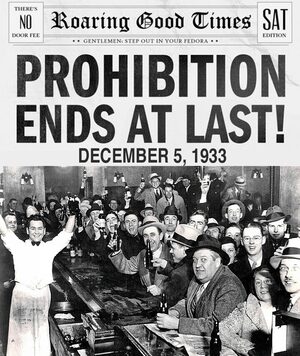
The Prohibition era was a period in which producing, transporting and selling alcoholic beverages was forbidden in the USA. This period extended from January 1920 to December 1933. Two amendments to the Constitution of the USA were necessary to approve prohibition first (18th Amendment) and  to repeal it later (21st Amendment). The alcohol prohibition was related to the campaigns launched by temperance leagues across the USA. These associations were related with religious groups in many cases and their main argument was that alcoholic drinks contributed to the depravation of the consumers and were linked to prostitution, criminality and other morale sins. Those who supported prohibition were called "dries" and were linked to pietistic Protestant groups, such as Methodists, Baptists, Presbyterians, Disciples of Christ, Congregationalists, Quakers and Scandinavian Lutherans. Those who opposed prohibition were the "wets", identified with Roman Catholics and liturgical Protestants (Episcopalians and German Lutherans). These two opposed factions also represented the division of the country into two different areas: the rural and the urban places. And it also showed different opinions about the limits of the power of the government. The question was: can the government legislate on morale matters? Anyway, the Prohibition came into force when 36 of the 48 states of the Union  (75% of the states) ratified the 18th Amendment in January 1920. 

Although consuming alcohol was officially forbidden, people were not persecuted for consuming or possessing alcohol. The population easiliy found ways of producing and consuming alcohol: fermenting grape juice or making their own drinks with home stills they could easiliy buy in shops. In fact, alcohol consumption increased a lot during the Prohibition. People also took advantage of some exceptions to the law. For example, pharmacists could sell whiskey by prescription, because it was recommended to treat some illnesses. Pharmacies became the perfect cover for bootleggers. The number of pharmacies tripled in New Yourk City during Prohibition. Another exception to the law was wine consumption for religious purposes. Churches and synagogues could buy wine to use it in ceremonies. This led to the growth of the number of people who pretended to be rabbis or priests to get wine for their "congregation". 


The Prohibition had an important impact in the industries related with alcohol. Many people lost their jobs. There was also a decline in amusement and entertainment businesses (reataurants, saloons, theaters...). The worst effect of Prohibition was the development of the mafia. Gangsters found a new source of incomes with production and contraband of alcoholic beverages. Big mafia gangsters like Al Capone (also known as Scarface), Meyer Lansky, Bugsy Siegel and Lucky Luciano started becoming legend during Prohibition. The HBO  TV series Boardwalk Empire tells the story of the origins of the mafia in Atlantic City during the Prohibition years. 

Link to Boardwalk Empire´s website:

http://www.hbo.com/boardwalk-empire/index.html

If you want to learn more about Prohibition, visit this PBS link: 

http://www.pbs.org/kenburns/prohibition/

You probably heard about the Prohibition for the first time in your life on The Simpsons.  Here you have the episode called Homer versus the 18th Amendment: 

http://en.simpsons-live.net/season-8/episode-18_Homer_vs_the_18th_Amendment/smotri

And these are some good films about Prohibition and the rise of the mafia: 

THE PUBLIC ENEMY
The Public Enemy 1931 Poster.jpg


Based on the book Beer and Blood, this 1931 film tells the story of a small criminal who joins a gang during the Prohibition and works as bootlegger until things become complicated. This was the first film with James Cagney in a leading role. 

SOME LIKE IT HOT


This comedy is one of my favourite films. It tells the story of two musicians (Jack Lemmon and Tony Curtis), members of a jazz band, who witness the Saint Valentine's Day Massacre in Chicago, the killing of seven gangsters during the war between Al Capone's gang and Bugs Moran's gang. The musicians have to flee from Chicago and they decide to dress as women and join a women's band. The band is going to Florida and the musicians think that it would be the perfect cover for them.One of the girls of the band (Marilyn Monroe) and a millionaire interfere their plans and everything becomes more complicated. The name of this film in Spanish is Con faldas y a lo loco. 


THE UNTOUCHABLES


This 1987 film tells the story of Al Capone's persecution by a group of FBI agents headed by Eliot Ness, the Untouchables. Capone was finally caught and sentenced to 11 years prison by tax evasion. Eliot Ness was performed by Kevin Costner and Robert de Niro performed Capone's role. 

This film includes a very famous scene at Chicago Union Station, inspired on Sergei Eisenstein's masterpiece Battleship Potemkin. 


http://www.denofgeek.com/movies/18343/iconic-movie-scene-the-untouchables%E2%80%99-union-station-shoot-out

Monday, 3rd June.

Hello everybody!

Today in Social Sciences, Paqui has said that she has checked all the journals! 
We have started reviewed the USA. Gema has participated and Paqui has called the attention to Pilar and Javi. Then, Paqui has explained a bit all that we saw on Wednesday. 

Then, Paqui has continued with the powerpoint and she has written some words on the blackboard and she also has looked for some words on the dictionary. She explained the point about "Investiment euphoria and speculation". This point talks about many people went into debts and they boutht houses or stocks in the Stock Market and It also talks about the Real estate bubble and the Stock Market bubble.


Paqui has explained what is a "burker" and Salva has said that is the same in spanish. It is someone who buys or sells stocks on someone's behalf.

Raquel has asked Paqui if she has been on the beach and Paqui has ignorated her! jaja :)
Then, we have spoken about the symptoms of the crises. Paqui has changed a scheme and this is the scheme:
Raquel has interrupted the lesson again saying that on blogger there is a Paqui's photo and she is very good looking girl. 
Paqui has explained another scheme about the economy contrated:
Then, Paqui has explained us an example. 
1 litre milk = 1€ (if you devaluate, next day it would be 1.20€)
Raquel has asked Paqui if she prefers the dollar or the euro and she has answered that she like the euro but it could be more flexible! Then, we have talked about George Soros, a multimillionaire that attacked the British pound.


Pilar has explained what happened in Spain when the peseta changed instead of the euro.  A man went to the bank and he said " Change me all the pesetas in euros" and he won a lot of money. Paqui has explained that 1€ is 166.386 pesetas. She has said that there are many countries  such as Greece, Portugal, Spain and Italy that agree with going out of the euro but Europe depends of fifeteen countries and there are a lot of them that are in desagreement with this. Then, Paqui has said us an example about the USA and Asia. They were agree and they went out of the euro. Paqui has continued with the power point and the bell has rung!

Glossary:

-Real estate bubble: burbuja inmobilaria
-easy loans: créditos fáciles
-guarantee: aval
-Stock Exchange Market bubble: burbuja bursátil
-do the pools/bet in the pools: echar la quiniela
-the pools: la quiniela
-broker: someone who buys or sells stocks on someone's behalf
-in isntalments: a plazos
-overproduction: superprodución
-foreclosure: embargo, desahucio
-to go bankrupt: ir a la bancarrota, hundirse

Pd: (I have counted all times Paqui has said "SILENCE").
Result: 15 times :):):):):) ¡Olé Paqui!)

I hope you like my journal! 
See you! :)

Sunday, June 2, 2013

Recent news about Coca-Cola formula

As some of you were interested in the story of the formula of Coca-Cola the other day, here you have some   more information and recent news about it: 

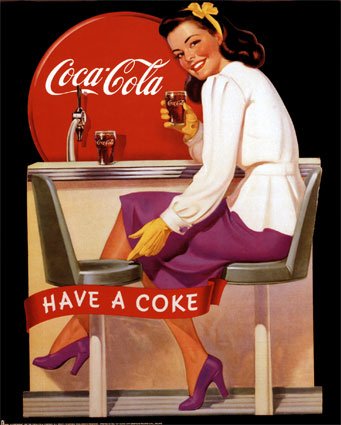
Coca-Cola was invented by a pharmacist from Atlanta (Georgia) called John Pemberton in May 1886. The name was suggested to Pemberton by his bookkeeper  Frank Robinson, who also designed the famous logo of the brand, with the flowing letters everybody knows.  Originally Coca-Cola was sold as a medicine. Pemberton claimed that it was good to cure many diseases, such as headache, dyspepsia impotence, nerasthenia and morphine addiction. In 1887 another pharmacist, called Asa Candler, bought the formula to Pemberton and they started producing the beverageon large scale.  At the beginnig Coca-Cola was sold at soda fountains. Later it started being bottled and this way production and distribution could increase and expand to other parts of the country and the rest of the world. 


File:Coca cola Bottle.png

The original Coca- Cola bottle

Coca-Cola includes extracts of cocaine (from coca leaves) and kola nut, which contains caffeine. This composition caused some problems with the Food and Drug Administration in the past and the company had to prove that the quantities didn't create addiction. The current ingredients are carbonated water, sugar (sucrose or high -fructose corn syrup, depending on the countries), caffeine, phosphoric acid, caramel colour and natural flavourings. In 1985 Coca-Cola company launched a new formula, known as New Coke, but the public rejected it and the company had to come back to the classic coke. The original formula of Coca-Cola is placed in an air-conditioned vault at the World of Coca-Cola interactive exhibit in Atlanta, Georgia. 


File:Newworldofcocacola.jpg

World of Coca-Cola building

The legend says that only two executives of the company have access to the formula at the same time, but in fact there are other people who know all the production process. 

There have been some recent news about the secret formula of Coca-Cola: 

- A historian called Mark Pendergrast has recently published a book, where he states that Frank Robinson's family gave him the secret formula. The book's name is For God, Country and Coca-Cola: The Definitive History of the Great American Soft Drink and the Company That Makes It and tells the story of the origins of the company. 

At the same time, an antiques dealer from Georgia called Cliff Kluge has tried to sell  another formula on E-Bay. He started the auction with 5 million dollars and wanted to sell it for 15 million dollars, but no one bid for the formula. 

Here you have the complete story: 

http://www.independent.co.uk/news/world/americas/the-real-thing-historian-publishes-cocacolas-secret-formula-8619076.html

- And here you have the experiment The Independent made with Mark Pendergrast's formula. They tried to concoct Coca-Cola following the recipe included in his book and this was the result: 

http://www.independent.co.uk/news/world/americas/not-quite-the-real-thing-cocacolas-secret-formula-is-out-of-the-bottle--but-can-the-famous-flavour-be-recreated-at-home-8621636.html

Wednesday, May 29, 2013

Wednesday 29th of May

Hello Everybody!!! :)

Today in Social Sciences, we have started the class talking about the yesterday's trip and the post that Paqui wrote, in which we have to complete putting photos and comments about the trip to Madrid.

After that, we have started the Unit 8: The interwar period. The teacher has put the index on the blackboard and we have completed it with information from the powerpoint.

Unit 8 index:
  1. The USA: from the Roaring Twenties to the Great Depression.
  2. Fascist Italy.
  3. Nazi Germany.
Today we have only up to half of the first point.

1.a) First World Industrial Power: 
  • During WW1 the USA supplied the belligerent countries with raw materials, industrial products and weapons.
  • The European countries owed a lot of money to the USA.
  • Intact productive system after the war.
  • Small human losses with respect to other countries.
  • Owners of half of the world gold reserves.
  • The dollar became the predominant currency in international trade.


1.b) American Way of life:
The USA became a dream for thousands on immigrants of all over the world.  

After the teacher explained this section, my classmate, Mónica, has asked if the creator of the coke was still alive, and the teacher has said no, he died many years ago, and she has explained that only he and other person knew the secret ingredient. Apart, we have also been talking about that the coke takes a small dose of cocaine and that many people are addicted to it.


After this subsection, we have continued with section "C".

1.c) Prosperity and consumer society:
In this point we have told about that the industrial production growth and was stimulated by the payment in instalments and the baking loans.
Also we have said that the prosperity had an other face, the prohibition of producing, selling and consuming alcoholic drinks contributed to the extraordinary developmente of the mafia. On this part we have speaked about the famous actor Charlie Chaplin, because it was an alcoholic and that it was forbidden in USA.


Here we have a photo of an illegal bar in USA, known as Speakeasy.


Today's Glossary:

-Cover: portada
-To roar: rugir
-The Roaring 20's: los felices años veinte
-War loans: créditos de guerra
-Currency: divisa
-Loan: crédito
-Quarantine: cuarentena
-Iron: plancha
-Consumer society: sociedad de consumo
-Silent movies: cine mudo
-Tramp: vagabundo
-To be in force: estar en vigor
-To come into force: entrar en vigor
-Prohibition law: ley seca
-Income tax return: declaración de la renta
- Speakeasy: bar ilegal

This is all for today! Bye Bye mates, see you!! :)