Showing posts with label Fernando Manzaneque. Show all posts

Sunday, June 14, 2015

Tuesday, 9th June 2015

Hello everybody!

Today we have had the last exam of the subject of Social sciences!
The exam has been about the Russian revolution, the Great depression in the USA and fascist Italy. It has been very simple, it has consisted in only two parts:

-The first question has been a development question, and you could choose between two themes of the Russian revolution to explain: To explain the 1907 revolution in Russia or to explain Stalinism. This part was 2.5 points.

- The second part has consisted in complete with words or developing different questions about all the themes I have named before. For example there was a definition and you had to put the correct word. This part was 7,5 points.


I hope all of you pass your exams!

Bye, and sorry for the delate.

Tuesday, April 28, 2015

Tuesday, 28th of April, 2015

Hello everybody!


Today in the class of social sciences teacher Paqui has explained us about the projects that we have to do for last week and then we have corrected the scheme for today which is about the different stages of the first world war. It has four stages:


-1st stage: War of movement: The armies moved towards the enemy. In the western front, the German armies attacked France through Belgium And Luxembourg and arrived 40 km close to Paris. But the French and the British armies could stop the Germans at the BAttle of Marne.


-2nd stage War of attrition: In the western front the armies dug trenches from the North Sea to Switzerland and the front changed little until 1918. A few meters caused a lot of deaths and war became a torture for the soldiers.
New countries joined: Italy joined France and Great Britain. Bulgaria and the ottoman empire joined Austria-Hungary and Germany ( the central powers) A new front opened in the Balkans. The Central powers occupied Serbia and Romania. The British attacked the Ottoman Empire from Egypt and occupied Palestine, but they were defeated at Gallipoli.

-3rd stage 1917 crisis: This was the critical year for all the belligerents: soldiers' mutinies in all the fronts, the Eastern Rising in Ireland and a revolution in Russia. When the Bolsheviks tood power in óctober, They signed an agreement with Germany to stop fighting.
In the Ottoman Empire The Arab tribes revolted against the turks and the Bristish got a lot of territory Lawrence of Arabia had an important role in this uprising. The Usa Joined the war because the German naval damaged trade and the German submarines sunk the Lusitania.

Sunk of the Lusitania.
Source:http://es.wikipedia.org/wiki/Hundimiento_del_RMS_Lusitania

In this moment the bell has rung and we haven't had time to correct the last stage, the end of the war.

We have also copied some new words in the glossary:
- Optimistic: optimista
- Central powers: poderes centrales
- To dig: cavar
- Trench: trinchera
- Trenches warfare: guerra de trincheras
- Hand to hand combat: combate cuerpo a cuerpo
- Sniper: francotirador
- Lause/lice: piojos
- Slaughter: carnicería
- Easter Rising: levantamiento de Pascua
- Sinking: hundimiento
- Ocean liner: transatlántico

This is all!


See you tomorrow

Tuesday, March 17, 2015

Tuesday, 17th of March 2015

Hello everybody!

Today in Social Sciences we have learnt about the types of colonies that exited during the second half of the 19th century. There were three types of colonies:

- Colonies of exploitation: they totally depended on the metropolis.
- Colonies of settlement: The had an autonomus goverment, but their froeign policy was controlled by the metropolis.
- Protectorates: In theory they were independent, because they had an indigenous origin, but they didn't have an independent foreign policy.

Then we have continue with the point D of the 2nd point of the unit "The scramble for África and Berlín Conference":

In less than 30 years all África was distributed among several Euroean countries. As there were opposed proyects of expansion there was a risk of confrontation in Europe and a conference in Berlin was called in 1885. The main decisions were:

- The country that occupied the coast of a territory could also seize the interior.
- Free navigation of the African rivers.
- Creation of the Congo Free State, given to king Leopold II of Belgium.

The consequences were:

All the continent was distributed between the Europeans. Only Liberia, Abyssinia and Morocco remained free.
That's all.
Colonies in Africa during this period.
Source: http://www.itiscannizzaro.net/Ianni/booksweb/sitodarkness/papers/fabrizioanna.htm

We have also copied some words on the glossary:

- Colonies of settlement: colonias de poblamiento.
- Belligerent: beligarante.
- Suez canal: Canal de Suez.
- Scramble: barullo, lio...
- Coveted: codiciado.
- Clumy: torpe.
- Rubber: caucho.
- Massacre: masacre.
- Heart of darkness: El corazón de las tinieblas.

Remember for next thursday to write on the notebook the name of the colonies included in every empire in this period and to do exercises 9 and 10 from page 41.

See you soon!

Thursday, February 12, 2015

Thursday,12th February 2015

Hello class!

Today in class of Social Sciences we have done many things.
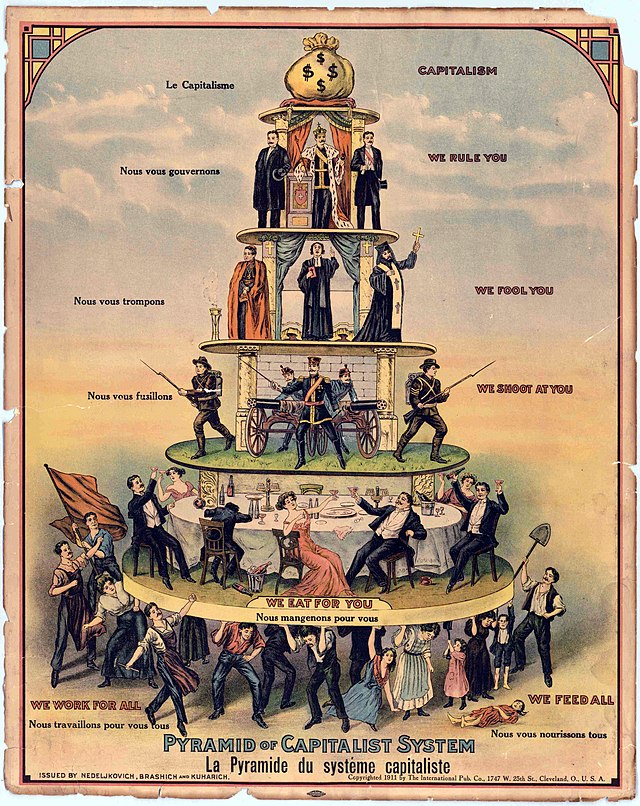
First Paqui has showed us a post she wrote yesterday about the economic system. This has created a discussion in the class about different questions. For example inequality in the world, as you can see in the post next year 1% of the population with own more wealth than the other 99%. Do you think this is fair? There are also other questions to think about it, for example poverty, privileges... We have dedicated part of the class talking about this, but it has been very interesting and we have learnt a lot.
Afterwards, we have continued with the unit and we have talk about:

-The development of the banks: loans, direct investments, owners of companies shares and facilitation of payments.

-The development of public limited societies to share risk; As companies needed more money and it was difficult to find inventors who could provide with all the capital they needed, public limited appeared to divide the risk between all the stockholders. With that we have finished with the first industrial revolution.

Capitalism in the industrial revolution
Source: http://en.wikipedia.org/wiki/Capitalism#mediaviewer/File:Anti-capitalism_color.jpg

The words we have copied on the glossary are:
-GDP: producto interior bruto
-To be left behind: ser dejado atrás
-Decent: digno
-Eviction: desahucio
-To evict: deshauciar
-Mortgage: hipoteca
-One out of...: uno de cada...
-Burden: carga
-Professor: profesor de universidad
-To owe: deber
-To own: ser dueño de
-Public limited company: Sociedad anónima
-Partner: socio
-Share stock: acción o participar.