Showing posts with label Charles V. Show all posts

Saturday, October 1, 2016

Some advice for Charles I and Philip II's comic strip


Resultado de imagen de sello gallego y rey carlos V


   Resultado de imagen de caricatura felipe II


Here you have some orientation for your comic strip about the Austrias in the 16th century:

- As the project consists of an autobiography told by both monarchs, you should make a research about Charles I and Philip II's lives to add some personal information about these two figures: their family, their children, their loves (if they had them), their hobbies, some anecdotes... Here you have some links in Spanish about Charles I and Philip II: 

http://www.abc.es/espana/20150430/abci-carlos-depresion-jubilo-201504291805.html

http://blogs.ua.es/vidaprivfelipesegundo/

http://blogs.ua.es/vidaprivfelipesegundo/2012/01/16/un-rey-apasionado-sus-numerosas-aficiones/


- As for the content, it has to be historically accurate. This means that you can't forget about the historical facts and the main events and problems of each reign. You have to include them. Include also the main facts about the Indies in each reign: 

  • Charles I's reign: a short summary of the discoveries and conquests done during the Catholic Monarchs' reign and after this, the conquests of the Aztec and Inca empires, the explorations developed during his reign, the creation of the main administrative institutions (vicerroyalties), the New Laws of the Indies to protect the natives from exploitation after Bartolomé de las Casas complaints...
  • Philip II's reign: here you should include the addition of the Philippines (called this way to honour Philip II) and you could also explain the exploitation systems and colonial society in the Indies. 

Historical accuracy doesn0t mean that the script has to be boring. You can introduce humour and some jokes to make it funnier. 
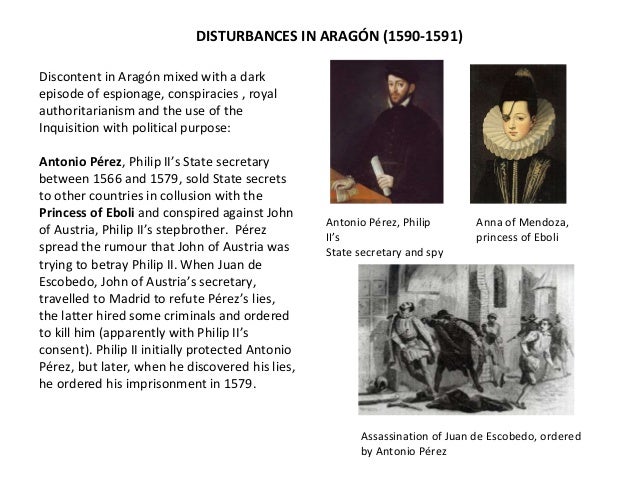
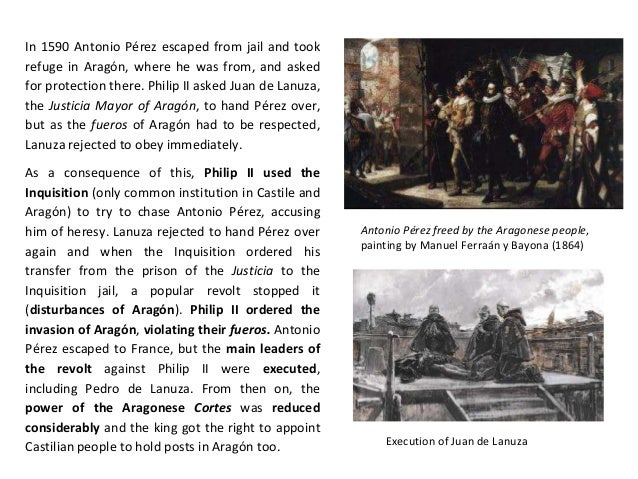
- In Philip II's reign there was a dark episode with his secretary Antonio Pérez. Here you have some extra information from the presentation I prepared for 2nd Bachillerato. You don't have to add all this, but summarize this episode in Philip II's reign:


DISTURBANCES IN ARAGÓN (1590-1591) 
Antonio Pérez, Philip 
II’s 
State secretary and spy 
Anna of Mendoza, 
princess of Eb...
In 1590 Antonio Pérez escaped from jail and took 
refuge in Aragón, where he was from, and asked 
for protection there. Ph...


- Look up for paintings where Charles I and Philip II appear in order to keep some physical similarities with the characters you draw. These paintings can also be useful for you to draw the scenes' decoration.  

- You don't need to make perfect drawings. Here you have some examples and advice about how to draw comic strips with stickmen


Picture


- Write a storyboard  with sketches with the content you want to explain before starting to draw. Here you have an example:
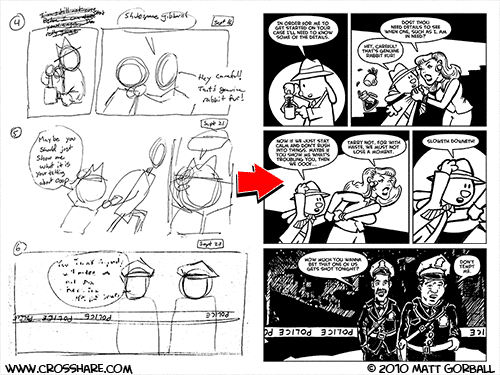

Resultado de imagen de comic strip sketches

- You can make the paper you use look older, as if it was a parchment. Here you have some techniques: 

http://www.wikihow.com/Make-Paper-Look-Old


Using coffee or tea is the easiest way. Here you have a short video that shows how to do it:


And finally, don't forget to show me the text before writing the definitive version. This way I will be able to correct the grammar mistakes before.

The deadline for the project will be Friday, the 14th of October.

If you have any doubts. ask me. 


Friday, October 23, 2015

This day in history: Charles I's coronation and the end of the Revolt of the Comuneros


Hey friends! It's Lucía. Today is my turn to explain what happened years and years ago. Yes! This is a new chapter of... THIS DAY IN HISTORY! And as you have seen in the title, today we have double event.

FIRST EVENT: CHARLES I'S CORONATION.
Today but in 1520, Charles was crowned as Emperor in Germany (by the Pope Clement VII). Three years ago, in 1517 he started to be(en) King of the Hispanic Monarchy, but in 1519 he left the Iberian Peninsula to be elected emperor, and because of that the Revolt of the Comuneros started.

                         
                               Source: http://gallery.enciclonet.com/gallery/docs/comun/per/ptitia54.jpg
But Charles I actually was named the heir of Emperor Maximilian when he was 6, when his father Philip the Handsome died. His grandfather died in January 1519 and Charles was elected Emperor by the German electors in July 1519. In Germany there was a tradition: when a new Emperor was elected, they had to celebrate three ceremonies. The first was in the Palatine Chapel of Aachen second one was a coronation to name Charles "The king of Burgundies" and the third one was in Rome. this one didn’t take place until the 23rd February 1530, when Charles V was crowned Emperor by the Pope Clement VII.

Here you have a documentary of his entire life, if you want you can watch it (it's long, and in Spanish).

     
                    Source: https://www.youtube.com/watch?v=3AWhoBtXpA0

This is the link to Charles V's video in English: 
https://www.youtube.com/watch?v=MRYzW3BSj0I 

SECOND EVENT: THE END OF THE REVOLT OF THE COMUNEROS WITH THE SURRENDER OF THE LAST CITY, TOLEDO. (1521)
Joanna the Mad, Isabella's daughter, inherited the throne with her Burgundian husband King Philip I. However, Philip died two years after the beginning of their reign, and their son Charles was only six years old. Due to his youth and Joanna's mental instability, Castile was ruled by the nobles and her father, King Ferdinand II of Aragon, as a regency. After Ferdinand's death in 1516, the sixteen-year-old Charles was proclaimed king of both Castile and Aragon. In 1519, Charles was elected HolyRoman Emperor. He departed to Germany in 1520, leaving the Dutch cardinal Adrian of Utrecht to rule Castile in his absence. Soon, a series of anti-government riots broke out in the cities.


Two men and a priest stand in the center, overseeing the proceedings. A dead body lies on the ground; a man triumphantly lifts up his severed head in the background. A bearded man with hands bound is being brought forward to be executed next.
Source: https://commons.wikimedia.org/wiki/File:Comuneros.jpg#/media/File:Comuneros.jpg

  On 23rd of October 2015, we celebrate when the towns of northern Castile soon succumbed to the king's troops, with all its cities returning their allegiance. Today also Toledo, the last city where the revolt continued, declared surrender.                                     

BatallaDeVillalar.jpg
"BatallaDeVillalar" by The artist is Manuel Picolo López, born in 1851 and died in 1913 (source: https://commons.wikimedia.org/wiki/File:BatallaDeVillalar.jpg#/media/File:BatallaDeVillalar.jpg)
                                           

Wednesday, October 21, 2015

This day in history: a decisive marriage

On the 21st October 1496 a decisive marriage took place in the city of Lille, in Burgundy: Joanna of Castille and Aragón, later known as Joanna the Mad, married Philip of Burgundy, later known as Philip the Handsome. This marriage, together with another one between John of Castile of Aragón and Margaret of Austria in 1497, sealed the double alliance between the Catholic Monarchs and the Habsburg dynasty. In 1500 Joanna the Mad and Philip the Handsome had a baby called Charles, who would later become king and emperor: Charles V.


On this link you have some more information about Joanna's trip to Burgundy and the love at first sight Philip and her had the first time they met: 


And here you have a short video from the TV series Isabel with some curiosities about Joanna's trip to meet her future husband and the first time they saw each other: 

Sunday, October 14, 2012

Presentations to study the Hispanic Empire in the 16th and 17th centuries

Here you have two presentations: 

-  the presentation we used last Wednesday to study Charles I´s Empire. We´ll also use it  tomorrow to study Philip II´s rule. 

- another presentation we´ll use to study the decline of the Hispanic Empire in the 17th century. It also includes contents about Absolute Monarchy, the Thirty Years´ War and the English Revolutions. 

As I always tell you, have a look on them to complete your notes..


Charles V and beer


Yuste Monastery

Last day we learnt that Charles V decided to abdicate in 1556 and retired in Yuste. As he liked eating and drinking well, he settled down in the monastery with 20 servants. One of them was a master brewer, in charge of producing beer in the Flemish style, as the Emperor liked. This was the origin of the first beer factory (rather manufacture) in the Kingdoms of the Iberian Peninsula. 

The brewery continued to exist in the monastery in the following centuries. Nowadays Heineken, the big beer producer, has supported the production of a craft beer called Legado de Yuste. They follow the same craft process the monks used in the 16th century. If you want to learn more about the production process, click on the following link: