Wednesday, November 19, 2014

MAIN SQUARE IN MADRID, GÓMEZ DE MORA

This Square was made in Madrid in the 16th century and it was commissioned by Philip II.

This is a very big square in Madrid, with rectangular floor plan. It is surrounded by buildings. It has ten accesses. It is 129 metres long and 94 metres wide. In the center of the square there is a Statue of Philip III. The first name of the square was "Square of Arrabal", after receiving many names, finally the name of this square is Main Square.
The House of Bakery is the most important building and it was the first to start to built.

The Shield of Arms of Charles II is in the House of Bakery. It is formed by the arms of Castile and León, the arms of Aragón and Sicily, the arms of Austria and the Modern Burgundy, the arms of Old Burgundy and Brabant, the arms of Flandes and Tirol and in the center the symbol of Granada. Here are the legacy of the Middle Ages workshops.

The Baroque idea of adapting urban design to the requirements of human life is present here.The Main Square was used as a market place and to celebrate public events. Nowadays the Main Square is an important tourist spot. All the months of December a Christmas market is celebrated there.

INFORMATION SOURCE:
- http://en.wikipedia.org/wiki/Plaza_Mayor,_Madrid
- http://objetivomalaga.diariosur.es/fotos-ToniMolero/madrid-panoramica-plaza-mayor-193771.html
- http://espanaeterna.blogspot.com.es/2011/01/la-curiosa-historia-de-la-estatua-de.html
- http://artetorreherberos.blogspot.com.es/2012/03/la-plaza-mayor-como-concepto.html


This is a video which explain the history of Main Square in Madrid:


Tuesday, November 18, 2014

Tuesday, 18th of November 2014

Hello, it's Pablo again!

Today in Social Sciences we have had a very interesting lesson.
Firstly Paqui has solved some doubts about the project about Baroque art, so now we should do it in a very good way.
Then Paqui has checked if we had our schemes about the Enlightenment which we had as homework for today. She has explained it, but we have focused mainly on the Political Thinkers (Rousseau, Voltaire and Montesquieu) because it has been the most confusing part of the scheme.
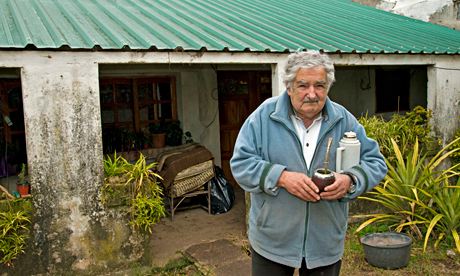
When we have arrived to the general will (the power lying on the people, who should use it directly) we have had a little debate about politicians and corruption. Does the power corrupt you? If we were politicians would we be corrupted? Everyone has had its own opinion, but finally we have reached a conclusion and it's that it depends on the individual. There are people with power who are not abusing it, such as José Mujica (Uruguay's president), who lives in his house, with a normal car and so on.

José Mujica in his humble house

We have made a correction on the book, where it said "power which they use in the elections, when choosing their representatives" we've changed it into "and the should use it directly."

We have copied a little scheme about how does social contract works.

Jean Jacques Rousseau

Finally, here you have today's glossary words:
  • To compile - compilar, recopilar
  • Social contract - Contrato social
  • General will - Voluntad general
  • To weaken - debilitar
  • Sovereignty - Soberanía
  • Participatory democracy - Democracia participativa
  • Representative democracy - Democracia representativa
  • Freedom of speech - Libertad de expresión
Goodbye and...
REMEMBER to post your projects about the Barroque Art on Thursday!!

18th November of 2014 (Tuesday)


Hello everybody!
Today in the class of Social Sciences the teacher Paqui has checked if we had the scheme about the Ancien Régime, the first point of the unit 2 "The 18th century". Only three people had done the homework. Then we have corrected the three parts of the scheme:
-Definition: It was a term used by the French revolutionaries to define all they wanted to get rid of.
-Main features: Absolute monarchy was the predominant system in politics, and the society was divided into privileged and unprivileged people.In economy the most important activity was agriculture based on the three year system of Crop rotation.
-Changes in the 18th century: It was a period of relative peace in Europe, there were less big epidemics, mortality decreased...
Then we have started with the second point of the unit "Enlightenment".
Enlightenment was an intellectual movement developed in Europe in the 18th century that questioned all the Ancient Regime Principles. The enlightened Philosophers defended the use of Reason as the best way to know the world and transform it.
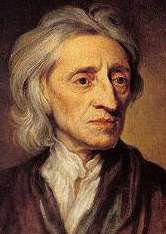
John Locke and Isaac Newton are considered to be precedents of Enlightenment. They lived in the 17th century.


Jhon Locke
Source:http://www.portalplanetasedna.com.ar/hombres_ilustracion5.htm

We have studied the main features of Enlightenment, for example, the absolute faith in reason as the best way to understant the world or knowledge as the basis of happines. The last thing we have studied is the creation of the encyclopedia by Denis Diderot and Jean Rond D'Alambert. The encyclopedia was created to compile all the knowledge of their time. The first Encyclopedia appeared in 1751 and it had 35 volumes.
la_enciclopedia.gif
The first encyclopedia
Source:http://dhpedia.wikispaces.com/La+Enciclopedia+o+Diccionario+razonado+de+las+ciencias,+las+artes+y+los+oficios.
The words that we have included to the glossary are:
Rudimentary: rudimentario.
Demand for: demanda de
Enlightenment: ilustraciòn.
Enlightened: ilustrado.
To gather: reunirse, juntarse.
Gathering: reunión
Brain wash: lavado de cerebro.

Monday, November 17, 2014

Monday, 17th of November 2014

 Hello everyone!

Today in Social Sciences lesson, the first thing Paqui has done has been to review if we had the scheme about The Ancien Régime: Main features and changes in the 18th century.

After that we have corrected the scheme and highlighted some important things about it. The scheme was divided into three parts: definition, main facts and changes into the 18th century.


  • DEFINITION: expression used by different French revolutioners to describe all they wanted to destroy.
  • MAIN FACTS: -Absolute monarchy. -Society divided into estates: population and power. -Low production economy: subsistence agriculture and a lot of limits to the development of economic activities. -Demography: population doubled, high birth rates, high mortality rates, low natural growth.
  • CHANGES INTO THE 18th CENTURY: -Less wars. -Less epidemics. -New techniques and crops. -Changes in trade.
Then we have told her the words we didn't understand from the point about Enlightenment. Here are some example:

ENLIGHTENED: ilustrado.
GUARANTOR: garante.
SOCIAL GATHERING: reunión social.
TAX SYSTEM: sistema fiscal, tributario.
DESPITE: a pesar de.
TO COMPILE: recopilar.
DESPOTISM: despotismo.
ELITIST: elitista.
TO TRUST: creen en, confiar.

And so on, and when we finished this she has begun to explain the definition of Enlightenment, the precedents of the 17th century, the main features and the origins of the encyclopedia.

Finally, she has gave to us for homeworks to do a scheme about the point of Enlightenment and to write the definition of Encyclopedia. It has been a very interesting lesson.

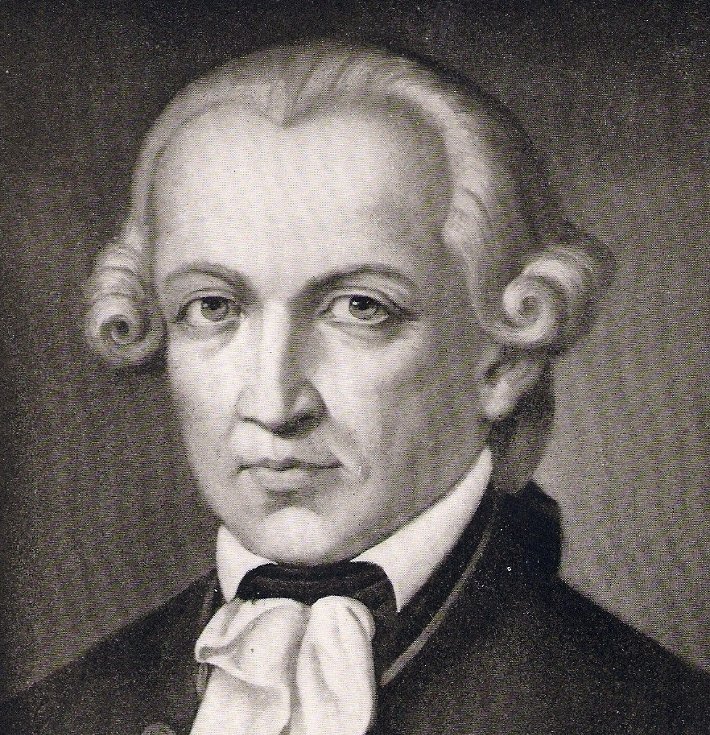
Innamuel Kant

IMMANUEL KANT (Philosopher)


Friday, November 14, 2014

14th November of 2014 (Friday)

Today in class of Social sicience The teacher Paqui has wrote the index of unit 2 THE 18TH CENTURY. Then we have to copied it from the black board. We have to spoke a little bit of the problems of war , and why the people don't care abaut the life of Asian and Afican peple. This united its going to have 4 points:
1- The Ancien Regiment.
2- Englishment.
3- Politics in the 18th century.
4- The 18th century in Spain.
Then we have tooke the 4 ESO book and we have to read the introducction, abaut  the 18 th century. Then we have started to read The ancian regime, abaut the Economy, the main economic activity was subsistence based on the three-year system of crop rotation. Then the politics, it was an absolute monarchy and then society, there were privileged goup were nobles and the clergy, and underprivileged were bougeosie, workers and peasants.
 And for last we have to read the changes in the 18th century, it was a peace period in Europe, the popupulation grew and this led to a bigger demand for all type of products.Then we have to started whith a scheme and we have to finished it in our home.
Today we have to wrote some new words to the glossary like:
to broadeast(emitir)yield(redimiendo), fallow(barbecho) and tithe(diezmo).
 And this is all for today, nice weekend and see you on Monday!
source: http://bcrw.barnard.edu/event/women-and-community-in-the-ancien-regime/

Presentations of the 18th century: Ancien Régime, Enlightenment, the USA and Spain in this century

These are the two presentations we are going to use for this unit. As usual, you can use them to complete your schemes and notes


Thursday, November 13, 2014

To end with Baroque: Rembrandt's The Night Watch flash mob

This is a flash mob made last year in Amsterdam to commemorate the re-opening of the Rijksmuseum, where you can find many of Rembrandt's paintings. We watched this video in 4th ESO C-D the other day, but José Luis forgot to include it. I hope the people who didn't watch it can enjoy it now. 


Thursday, 13th November 2014

Hello everyone, I'm Fran.

      Today in the class of Social Sciences, the first thing we have done has been to copy the index of the new unit, and finally to start with the book of 4th of E.S.O.
      The index of the new unit is:
 
   1) The Ancien Regime.
   2) Enlightenment.
   3) Politics in the 18th century:
          a) Enlightened Depotism.
          b) The 13 colonies of North America on the Independence of the USA.
   4) Spain in the 18th century:
          a) War of Spanish Sucession and the Treaty of Utrecht ( 1700-1714)
          b) Centralized Absolutism: Philip V and Ferdinand VI's reigns.
          c) The Enlightened Reformism of Chales III's reing.
 
       After that Paqui has started to showing us the powerpoint of Baroque Art because she wanted to finish it, to start with the book of 4th of E.S.O and with the new unit.
       In today's class to finish with the PowerPoint presentation of Baroque painting, we have focused on Velázquez  as he was the most important painter of Baroque Art, and also Paqui has showed us his most important paintings. To start with the explanation Paqui has started saying that Velázquez focused his paintings in a special way: he painted the most important people in the background and the other people who weren't so important in the foreground.
      After this explanation she has shown us some of his paintings:
    -The Surrender of Breda, and Paqui has analyzed it a little bit  and she has said to us some details.
    -Equestian portraits of Count-Duke of Olivares, Philip III...
    -Baltasar Carlos on a horse, in this painting Nuria has asked Paqui why he painted the horse so
     fat and Paqui has said to her that Velázquez painted the horse like that because this painting was
   placed on the top of a door and when the people saw this painting it created an optical
     illusion and the horse seems to be thin and strong.
    -Pope Innocent's portrait (1650), this painting was almost perfect and the Pope became angry because it was too realistic.
              To finish with the PowerPoint presentation Paqui has shown us the two most famous paintings of Velazquez:
    - Philip IV's family or the Meninas (1656), here Velazquez also used the trick of painting the most
      important people at the background and the less important in the foreground ahead. Paqui also has said that this   painting was corrected by Velázquez when he became member of the order of Santiago, because he wanted to show the nobility of his work
    -The Fable of Arachne or the Spinners (1657), due to this painting Paqui has explained the Fable
     of Arachne.
               The two last paintings of Velázquez were.
    -Portraits of Infanta Margarita.
              Then we have started the new unit and we have read it on the book. Also Paqui has explained us the organization of the society in the 18th century and also the distribution of the powers in the 18th century.
         To finish with the class Paqui has given to us some homework: we have to read Enlightenment (point two in our index or the point 3 in the book) and to write all the new words we will see on the glossary.
                Like all the days we have written on the glossary some new words:
      -The Spinners: Las Hilanderas.
      -Probe: Sonda.
      -Trade: Oficio (in the context we have read it)
      -Craft: Artesanía.
      -Tapestry: Tapiz.
      -Spinning Wheel: Rueca.
      -Yield: Rendimiento.
      -Tithe:Diezmo.

Philip IV's family.

 The Fable of Arachre.

13th November of 2014 (Thursday)

Today in the class of Social Sciences we have studied the Painting of the Baroque in the Hispanic Kingdoms. After, Paqui has explained each painting of this period (characteristics, colours, artists/painters...) Some workers of the Baroque in the Hispanic Kingdoms were: José de Ribera, Francisco de Ribalta, Francisco de Zurbarán, Bartolomé Esteban Murillo, Juan Carreño de Miranda, Claudio Coello, Velázquez,... And some artists/painters were:

THE HOLY FAMILY WITH A BIRD, by BARTOLOMÉ ESTEBAN MURILLO


THE WATERSELLER OF SEVILLE, by VELÁZQUEZ


And one curiosity of the class was: CRINOLINE (miriñaque)


And finally, we have copied the glossary like every day:
lame-cojo
clubfooted-patizambo
refectory-refectorio (comedor, en un monasterio)
still-life - bodegón o naturaleza muerta
Golden Fleece-Toisón de Oro
decoration-con decoración
fig-higo
jester-bufón
dwarf-enano
oxidize/to become rusted-oxidarse
pentimiento-arrepentimiento (correction of a painting)
vindication/claim-reivindicación
spinner-hilandera
spinning wheel- rueca
waver-tejedor
to wave-tejer
crinoline/hoop skirt-miriñaque

See you tomorrow!


Tuesday, November 11, 2014

11th November of 2014 (Tuesday)

Today the class of social sciences have been so interesting, and a little diferent. At first, Paqui has copied a outline on the blackboard, and we had to complete. If we haven't finished, we have to complete at home. This outline sumarize the baroque art in the hispanic monarchy. There are three paragraphs: Architectures, sculptures and paintings. Here we have to complete with the main features and main architectures, paintings and sculptures, and examples. Also Paqui has explained in the digital board with a power point. ç
Also today Paqui has given us the exams that we did the last Friday. My mark was a 6.45. I'm happy with this mark because in 2ºESO I had less, but also I can do more so I will try improve in the next exam. In the exam there was five questions, or six if you failed the Renaissance art and you had to recover it.
And this is the today's journal. I hope that you like it.
This is an example of the San Esteban de Churrigueresque, in the sculpture of the Baroque Art.