Tuesday, November 11, 2014

Tuesday, 11th November 2014

Hello everyone!

Today the Social Sciences lesson has been interesting, in my opinion. I've really liked it. First of all Paqui has asked us if we had done the scheme about Baroque art in the Hispanic Monarchy. Then we have read what we had in our schemes and we have commented on some works of art. 

In architecture we have talked about many works. Some of them were:

  • Altarpiece of San Esteban in Salamanca by José de Churriguera. (His overelaborated style was called "Churrigueresque").
  • Old Hospice in Madrid by Pedro de Ribera.

  • Facade of the Obradoiro in the Cathedral o Santiago of Compostela by Antonio Casas Novoa. I have this work of art assigned for my project and I really like it.

Source: http://www.turgalicia.es/descricion-da-catedral-de-santiago?langId=en_US

  • Main square of Salamanca by Alberto Churriguera.
Sculpture in the Hispanic Monarchy was really interesting because the images were really realistic and dramatic. Some examples are:
  • Pietà by Gregorio Fernández. This work has differences with the work made by Michelangelo.

Resultado de imagen de pietà gregorio fernandez


Source: http://commons.wikimedia.org/wiki/File:Gregorio_Fernandez-Piedad.jpg

  • Processional floats for the Holy Week  by Francisco Salzillo.
And finally we have talked about painting. Realism and religiosity were the main features. We have seen many examples of painting, some of them were:
  • Saint Hugo of Grenoble in the Carthusians refectory and Still-Life with lemons, oranges and roses by Francisco de Zurbarán.
  • Martyrdom of Saint Philip and Clubfooted Boy by Jusepe Ribera.
  • The Holy Family with a bird by Murillo. Paqui has told us that the painter wanted to show the Holy family as a normal family, and he painted them as other normal families.
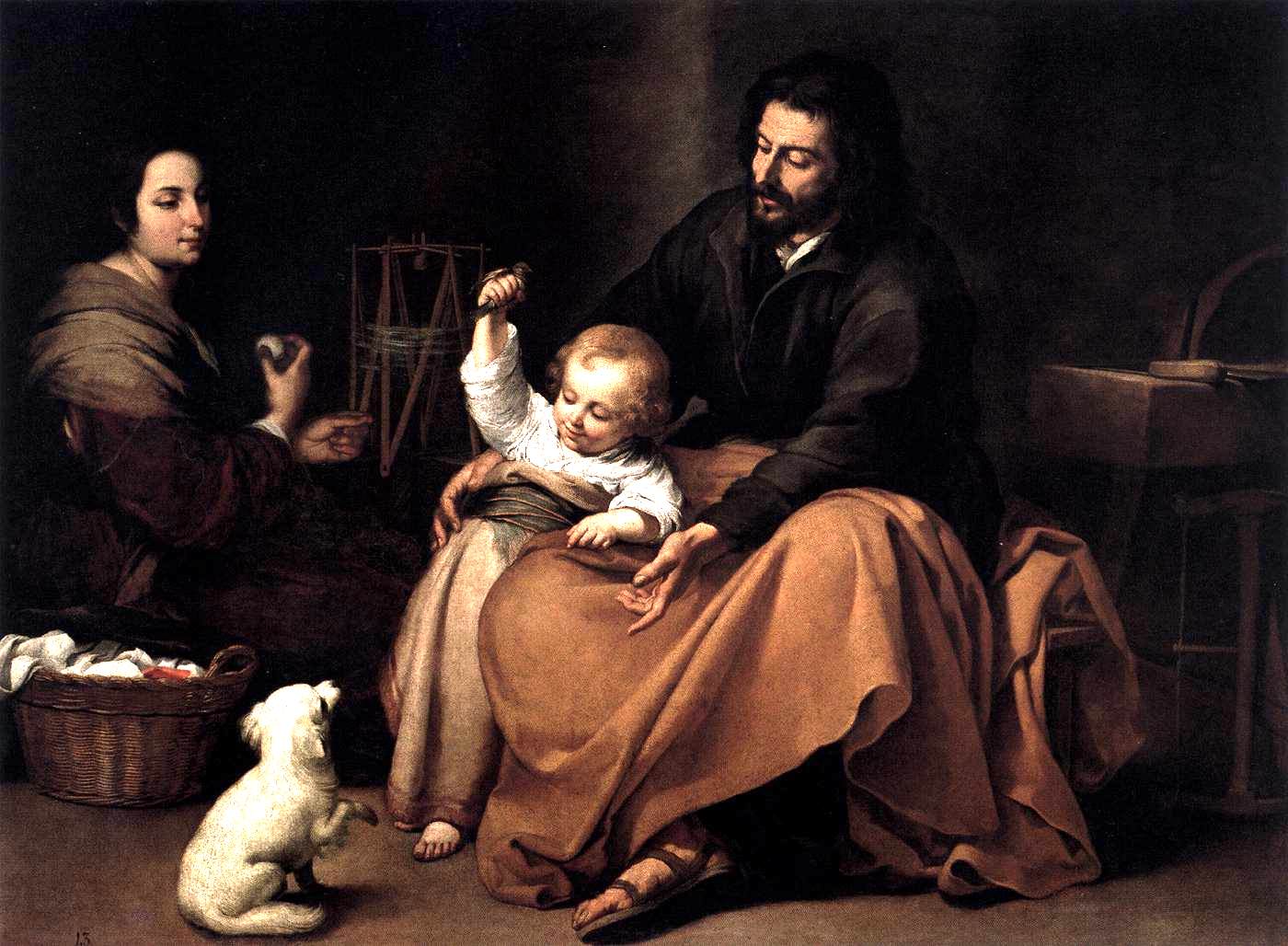


        Other works painted by Murillo were: Boys eating grapes and melon, Immaculate                   Conception...
  • Velázquez was the mos important artist of the Baroque period. He was a real genious. He made several works like: Christ in the house of Mary and Martha, the Waterseller of Seville, portraits of the Royal family of Felipe IV, The triumph of Bacchus, the Count-Duke of Olivares on horseback, The Surrender of Breda, The Meninas, Villa Medici...


                   Christ in the house of Mary and Martha.


As we can observe in this painting, Velazquez used to paint the main theme in a secondary ground and the less important in a first ground.

Today we have also copied some new words in our glossary:
Hospice: orfanato.
Broken pediment: frontón partido.
Lying Christ: Cristo yacente.
Clubfooted boy: El patizambo.
Refectory: refectorio.
Waterseller: aguador.

Monday, November 10, 2014

Monday,10 th November 2014

Hello everyone!
Today we had Social Science class at the 5th period. We were excited and nervous at the same time, because Paqui has said to us that she have the exams.
We have started the lesson after some jokes that Alfredo has made. We have started watching many paintings of the Baroque period:

  • The Conversion of Saint Paul on the way to Damascus, by Caravaggio.
Paqui has said to us that the painting present first of all big contrast of light and colours(chiaroscuro).
She also has said that it's not like the painting of the Renaissance art. The central character of the painting is not a Saint Paul, but the horse.
  • The Crucifixion of Saint Peter, by Caravaggio
We have seen that it represent movement, Its composition is  made as an X, The people who are in the painting are breaking the ground with this the painter wanted to create a sensation of background(perspective)


We have seen other paintings and Paqui has explained some characteristics of each one.
  • The Entombment of Christ, by Caravaggio
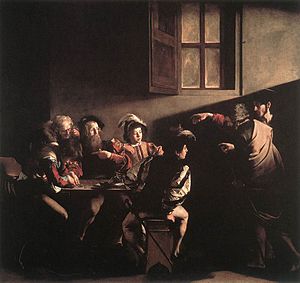
  • The calling of Saint Mattew, by Caravaggio
  • Death of the Virgin,by Caravaggio (This painting is a contradiction, because the woman as model was a prostitute, and she look younger than The Virgin)
  • The Descent from the cross, by Rubens
  • Anatomy lesson of Dr. Nicolaes Tulp, by Rubens
  • Girl reading a letter at an open window, Vermeer
  • Girl with a pearl earring, by Vermeer
:
One curiosity
 Caravaggio's paintings have 
the same structure( the light enter from the 
upper part) because he always was worked
in a basement.

Then we have spoken about The Three Graces, by Rubens. Paqui has told us that it represent the ideal of beauty of that period. Women like these ones, with wide hips, meant that they ate well, and as these three women didn't have the skin suntannedd ,this means that they didn't work(Working in that period was shameful and dishonest).This information in brackets refers only to the Hispanic Monarchy. The reason why this type of women was the ideal one was because they related health with not working and being able to have children. 
Paqui has said to us that the 17th century was the Golden Age of Paintingsin the Hispanic Monarchy, and there were many good painters in this period.


Then Paqui has written the scheme that we have to complete for tomorrow on the blackboard, it is about the Baroque Art in the Hispanic Monarchy.
We also have added some words to the glossary: 
Foreshortened figure:figura en escorzo
Basement:sótano
Ox:buey
Clack:capa
Golden Fleece:Toisón de Oro
At the end of the lesson Paqui has given us the exams, and I'm happy with my mark.
See you tomorrow!


Saturday, November 8, 2014

Friday 7th November 2014

Hi!
Today in the class of social sciences we have the first exam of the year, it consists of 5 questions for the people who pass the renaissance project and 6 questions for the people who failed the project.
The questions where a little bit long (I have written four sides of paper) and in this questions you have to explain:
-The Indies (all of them).
-Some contents about Phillip II or Charles I.
-Link some important people like kings, validos, etc. with what each of them did.
-Complete some gaps about reanaissance in the hispanic kingdoms, etc.
-Define the features, chronology and different styles of Renaissance art (for the people who failed the project)

I think that I will obtain a good mark, and I hope so, also I hope that all the students pass the exam.

Good luck!

Pd: I'm publishing the journal today because yesterday I have problems with Blogger.

Bye!

Thursday, November 6, 2014

Thursday, 6th november 2014

Today in the class of Social Sciences...
we have taken the first exam of the term. All the classmates have arrived at 8 o'clock but I have forgotten it and I have arrived at the same time that as any other day. 
In my opinion, and I have said it to Paqui today, the exam hasn't been so difficult for the people who have studied, obviously. 
The exam has consisted of 5 questions for the people who passed the Reinassence's work and 6 questions for the  people who failed this project. I passed the work so I have done 5 questions. The first question has been only definitions (Habeas Corpus, Absolute Monarchy, etc.); in the second question we had to choose 2 questions to explain. I have chosen the defense of Catholicism and the preservation of the empire of Philip II (with their consequences); in the third question we had to write the correct king or event to each decision, for example, the participitacion in the Thirty Year's War corresponds to Philip IV's reign; and finally in the last question we have to complete the gaps of the sentences. In this question the first gap has been bad for us because we haven't studied the Reinassance architecture, only a few people in the class have filled in this gap. The additional question for the people who didn't passed the work has consisted about Reinassance Art (main features, stages, etc.) And this is all. 
I hope that the marks will be good. Tomorrow the other class will do the exam. Good luck for them!
See you on Monday, kisses.
 

source: http://blog.cloudspokes.com/2012_06_01_archive.html

6th November ( Thursday )

Hello!!
Today in Social Sciences  Paqui explain the notes of the exam. Lucia ask  paqui for the Renaissance of the Hispanic Kingdoms because she thought that this part was not included in the exam but  Paqui answer that this point is also included in the exam, oh my goodness!!!!.

After Paqui continued with the point of the new unit Baroque art and explained different artist with their artworks, for example Rembrandt that drew and painted many works like:

- Self - portraits when he was 22 years old with two circles and when he was  63 years old
-Anatomy lesson of Dr Nicoloaes Tulp
-The slaughtered OX
-Syndics of  the drapers guild 

And other painter is Vermeer:
-The lacemaker
-Girl reading a letter
- The milkmaid
- Girl with a pearl earring 

And finally  Paqui has written some words on the blackboard:

Tanned bronceado
Stain    mancha
Reminder   recordatorio
Candle  vela
to attend   asistir
operation theater   quirofano
draper  pañero
The slaughtead OX  el buey desollado
Syndic  sindico
Lacemaker  encajera


                                   Source:  http://es.wikipedia.org/wiki/El_buey_desollado

God luck for  the exam class!!!

bye!!!

Tuesday, November 4, 2014

Tuesday, 4th November 2014

Today in the class of Social Sciences Paqui has explained us how to make the project and what we can include on it. We have to post it on the blog before the 20 of November. We have also corrected the other day’s scheme about Baroque art. First we have corrected the part of Architecture and Paqui has made a pause to explain us what a Solomonic column (Columna Salomónica) is and she has told us that it was used in the Roman Empire. She has also drawn on the blackboard the types of floor plan:
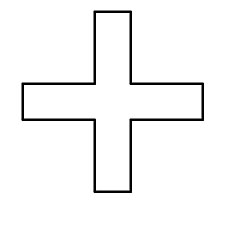
  • The Greek cross
  •  The Latin cross         
  • Oval floor plan (as the one that is inside the Church of San Carlo alle Quattro Fontane)
  •  Centralized floor plan
  •   Basilical floor plan


Christian cross.svg

                                                                                                                                                                                                                                                                                                   http://es.wikipedia.org/wiki/Cruz (Latin cross)


 http://es.wikipedia.org/wiki/Iglesia_de_San_Carlo_alle_Quattro_Fontane

 Oval floor plan
(Dome of the Church of San Carlo alle Quattro Fontane)


Then we have continued corrected the part of Sculpture and we have compared the main features with the Bernini’s sculpture “Apollo and Daphne”. She has told us that a famous sculpture called “Ecstasy of Saint Theresa” made by Bernini was very polemic and I think that it was polemic because it was misunderstood by the Church or something like that.


The Ecstasy of St. Teresa - Gian Lorenzo Bernini


http://www.wikiart.org/en/search/ecstasy%20of%20st.%20theresa/1


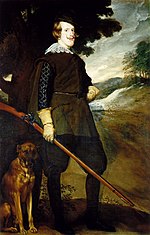
At the end we have corrected only one feature of painting: the use of oil painting. Paqui has said that it was a very good technique to paint, but it has a disadvantage, the oil gets rusted with time, and it can show the corrections that the authors of some paintings made. For example:


                              http://es.wikipedia.org/wiki/Felipe_IV_(Vel%C3%A1zquez)

You can see in this painting like a shadow next to the leg of Philip IV, this “shadows” are corrections that Velázquez made, with time , as oil gets rusted the corrections are visible.


Today I have learned that Baroque art use a lot of curved lines and that the use of movement (for example in the clothes in the sculptures) make the work of art more realistic and shocking and I have also learned that the Baroque's works of art were very expensive because some of them were built with materials that were difficult to obtain.

We have copied new words in our glossary:

Blackout/power outage: Apagón (we have copied this word because Paqui has said that in her house there was a blackout while she was working, and she loss it)

Oven: Horno

Floor plan: En arquitectura, planta

Mud: Barro

Baldachin: Baldaquino

Overwhelmed: Agobiado

To flee: huir (we have copied this word because it is referred to a feature of Sculpture, that the artists wanted to capture fleeting moments)

Fleeting: huir

Spell: hechizo

Newt: Tritón

Canvas: Lienzo


That’s all for today!!

4th November (Tuesday)

Hello!
Today in the class of Social Sciences Paqui explained us the instructions for the Baroque Project. We all have two works (that can be work of architecture, sculptures and paintings). This two works have been chosed by our teacher. We have to write an individual post on both works writing the information about they.After this Paqui has revised our homework for today, that was to complete a scheme from the Baroque Art with the book's contets.

When she finished to revise, we started to correct this scheme that have five parts:

Chronology: This style was developed in the 17th century and a part of the 18th century.

General features: This style had movement; realism representations; complexity; interest in surprising the audience; curved lines, concave and convex; and predominance of colour and light over drawing. And Paqui explained us that this style had just the opposite characteristics of the Renaissance Art.

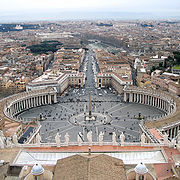
Architecture: The architecture in this style had curved lines, spirals, ellipticand oval floor plans, solomonic colums, contrast of lights and shadows... Paqui drawn the diferents componets of the architecture. And then we seen some examples of this, like the square and colonnade of saint Peter of the vatican by Gian Lorenzo Bernini, in Italy and the Versailles palace by Le vau, Mansar  and le nótre, in France.

                                           
http://www.arqhys.com/contenidos/versalles-palacio.html


http://fr.academic.ru/dic.nsf/frwiki/707863

Sculpture: The purpouse in this style was representing movement, capturing feeting movements, provoking surprise and emotion in the public. And we seen also examples, like Apolo and Daphne by Gian Lorenzo Bernini, Paqui us the history of this sculpture when Daphne flee from Apolo and become a tree. And Fontana Di Trevi, by Nicolas Salvi, where the people throw coins.

http://mitosandmyths.blogspot.com.es/2012/09/apolo-y-dafne-presentacion-de-los.html

Fontana di Trevi
http://sobreitalia.com/2008/05/08/la-fontana-di-trevi-encanto-historico-y-cinematografico/

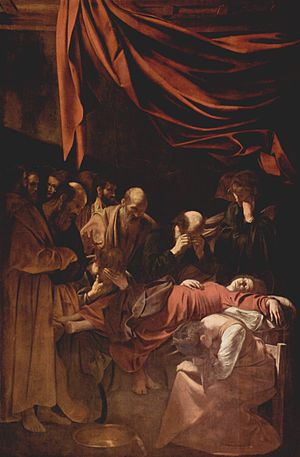
Painting: The features were use oil painting, predominance of colour over drawing use warm colours, contrast o light and shadows, realism, movement, complex, compositions in order to sock the audience...And also we seen some examples, like Death of the Virgin, by Caravaggio that was an estrange painting because the painter have used a young prostitute for represent the old Virgin, and The calling of Saint Matthew also by Caravaggio.
   Michelangelo Caravaggio 069.jpg
http://es.wikipedia.org/wiki/Muerte_de_la_Virgen_(Caravaggio)

CaravaggioContarelli.jpg
http://en.wikipedia.org/wiki/The_Calling_of_St_Matthew_(Caravaggio)

And we copied some words in the glossary:
to sock-impactar
solomic column-solomonica
baldachin-baldaquin
ball room-salón de baile
to flee-huir
fleeting-fugaz
solemn-solemne
fold-pliegue
cloth fold-pliegue de los tejidos
newt-tritón
oil painting-óleo
foreshortened figure-escorzo

And have an exam next friday so we have to study a lot!

Bye!