Sunday, September 22, 2013

Presentation to study Renaissance art

Here you have the presentation to study Renaissance art. You can use it to complete your scheme and enjoy the art works of that period.   


. 

P.S: I've just corrected the spelling mistakes some of you have found and re-uploaded the presentation. 

Friday, September 20, 2013

Friday, 20th September 2013.

Hello everybody!
Today has been the second day of Social Sciences class and we have done several thinks. First Paqui has reminded us that we must have a Gmail account to write in the blog: those students who don't have one will have to create it as soon as possible.
Then, she has explained us how to use the blog: publish posts, comments, add imagenes (these must include the source), etc.
Next, we have copied the index of Unit 1: Modern Era (a continuation of the second year). It has three different points: 1)Culture and art in 15th-16th centuries. 2) The 17th century. 3)The Iberian Peninsula during the 16th-17th centuries.
Later, Paqui has shown us a Power-Point Presentation about the Renaissance art and we have started copying some notes, belonging to point 1: 
At the beginning of the Modern Era there was a revival of Antiquity and interest for the culture of Ancient Greece and Rome. This interest was evident in art. The new art style of this period was  Renaissance art, inspired on Antiquity. Renaissance art appeared in the Italian Peninsula in the 15th century and it spread to the rest of Europe. It was the predominant style in the 15th and 16th centuries. Two styles: Quattrocento (15th century): Main development in Italy and the main centre was Florence. The main patrons were the Medici family. Cinquecento (16th century): Extension to Europe. The main centre was Rome. The main patrons were the Popes.
Architects used simple and classical elements such as rounded arch, columns with the classical orders (Doric, Ionic and Corinthian), pilasters, pediments, tympanum, frieze, metope, tryglyphs, etc. 
We have also included some new words in our Glossary: to bother, to scold, knowledge, antiquity, revival, Renaissance art, patron, to sponsor, The Pope, to commission, commissioner, austere, etc.
At the end of the class, Paqui has shown us some sculptures: the sculptors showed interest in representing human beauty and proportioned bodies.They were inspired by Greek and Roman sculptures. They sculpted different types of sculptures: busts, equestrian sculptures, portraits, tombs...


David by Michelangelo.
http://entertainment.howstuffworks.com/arts/artwork/michelangelo-sculptures7.htm

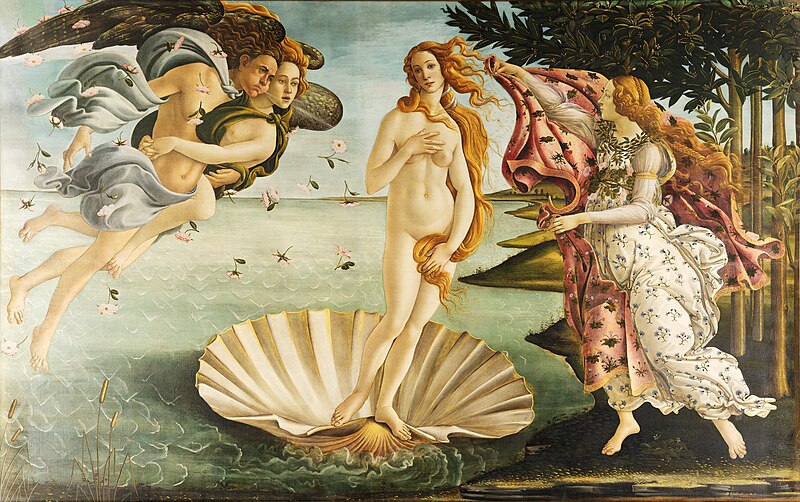
She has shown us paintings too: the main subjects were religious or mythological and drawing predominated over colour. Painters discovered how to represent the third dimension (depth) into a two-dimensional space. This was perspective.

File:Sandro Botticelli - La nascita di Venere - Google Art Project - edited.jpg

Birth of Venus by Sandro Botticelli.
http://www.abm-enterprises.net/venus.htm

Finally, Paqui has given us for homework to do a scheme about Renaissance art. We must include chronology and stages, main features, architecture (features, artists and works), sculpture (features, artists and works) and painting (features, artists and works). Today's class has been noisy, we should pay more attention.  
Have a nice weekend !! 

Tuesday, September 17, 2013

First Day of High School!

Hello everybody!

First , welcome to the new school year. Today in the class of Social Sciences, Paqui has given us the books and she has explained us the assessment criteria:

-50% of the mark will correspond to the marks of the exams.
-50% of the mark will correspond to the attitude of the student, the notebook, the participation in class and on the blog...

Then, she has told us how we'll have to organize our notebook. It will include theory, exercices and vocabulary. The notebook has to be clean and organized.

Paqui has explained us that this year there is a change: a diferent person will write the journal each day in the blog and the rest of the class has to comment on it.
Our class this year is really amazing. Paqui and Carmen Lázaro have painted a part of the walls with the different periods of history:
-Prehistory: Paleolithic, Neolithic and Metal Age.
-History: Ancient Era, Middle Ages, Modern Era and Contemporary Age.


Finally, Dani Carmona has brought his camera and Paqui has taken a photograph of all our class.

Bye!

A new school year

Come Back To School With Rubber And Pencil Scraps

Hello, students! 

This morning we´ve started the new school year. This is the fourth year of this blog and I hope that your work here will be as satisfying as it was last year. I've just sent you the invitations to join the blog. Accept 
them and join the blog as soon as possible.

Here you have a video tutorial I prepared about how to write posts and make comments:

http://www.youtube.com/watch?v=QzfZuBactig&feature=plcp

As for the style of your posts, here you have some instructions:

- Don't change the font (size or style) and justify the text.

- Include a picture related to what we´ve done in class and don't forget to add its source.

- If you want, you can also create links to some key words.


Check the journals of the students of the past years to make an idea of what you have to do. And remember, the deadline to post your journal is 20:00. Comments can be made later or the following day.
This is a collective work, made up with the contributions of many people and it will only improve if you take this task seriously. Try to do your best, writing your journals in time and participate with your comments, suggestions and questions. 

At the moment the blog has reached  331,848 visits. Many people from different parts of the world have visited the blog in the past 3 years. Show them how much your English has improved and write good quality posts.

See you in class!

Monday, September 16, 2013

What happened to Detroit?

Detroit's bankruptcy has been one of the most significant news of this summer. The municipality owes around 20,000 million dollars to around 100,000 creditors

For every dollar the municipality collects, 38 cents are destined to pay the big debt created as a result of the municipal bonds sold to face the expenses of the city. In four years they will have to use 65 cents of each dollar to pay the debt. But how did Detroit get into such a big debt?

There are several reasons: one part of the debt comes from corruption cases. Detroit’s former mayor Kwame Kilpatrick, who ruled from 2002 to 2008, was sentenced to jail for corruption, racketeering, bribery, extortion, tax evasion and fraud. But the main reason for Detroit’s bankruptcy comes from the decline of its economy.  In the 1950s Detroit was the 4th city of the USA. It reached 2 million inhabitants and was worldly known as Motor City, because of the concentration of automotive industries in the area: Ford, General Motors, Chrysler and a lot of auxiliary industries.  When these big companies started moving production to other parts of the world in the 1970s, unemployment started to increase. Many other companies had to close, as a consequence of the purchasing power reduction and the city started losing population. Detroit has lost around 60% of its population since the 50s. At the moment the inhabitants are around 700,000, 80% of which are black. The unemployment rate is 18.3%, double than the USA rate.

The decline of economic activity and the loss of population have resulted in a reduction of the public incomes. The municipality collects less taxes and has less money to provide public services. Many public buildings have been abandoned:  schools, stations, theaters, concert halls, libraries…Images of public buildings decay and the deterioration of infrastructures show the sad face of past full of life places.

Classroom, St Margaret Mary School

Former school


St Christopher House, ex-Public Library

Former public library


Highland Park Police Station

Former police station

Packard Motors Plant


Packard Motors Plant

Source of the pictures: The Ruins of Detroit, photo exhibition by Yves Marchand and Romain Meffre: 


The city’s economic difficulties also affect the inhabitants’ ordinary life. The municipality doesn’t have money for ambulances, police agents or fire workers. The average time of response of the emergency services is 58 minutes. Criminality and insecurity have grown and Detroit is considered to be the most dangerous city in the USA.

The financial situation of the city is so extreme that the emergency manager in charge of reducing the debt of the city has ordered an evaluation of the 60,000 works of art the public museums of the city own. In fact, all the properties of the city are being assessed to know their economic value and put them "in the market". 


The situation is awful, but there are still some initiatives to start recovering the city, like The Greening of Detroit. 

If you want to learn more about Detroit's decline, read the following link: 


Saturday, August 3, 2013

The Nottingham experience

NOTTINGHAM

Maybe you haven't heard too much about Nottingham. I'm going to write something about it because I was there some days ago. I'm going to start with the legend of the city.


Nottingham is known because of the Robin Hood's legend. According to the legend, Robin Hood was a man called Robin Longstride or Robin of Locksley. He was hidden in the Sherwood forest, near Nott'm. He was a great archer and defender of the poor people. He fought against the Nottingham's sheriff and the prince John Lackland (Juan sin tierra), who used the army and the police to take up the people's goods.

The Major Oak, a millenary tree in the Sherwood Forest.

Newstead Abbey
Source: www.bbc.co.uk

John Lackland

Many historians have tried to discover if Robin existed. They identified many possible men, but none coincides strictly with the legend. 

As I have said before, the legend says that Robin Hood was hidden in the Sherwood forest. We went to the forest and there, there is an abbey called Newstead Abbey where the poet Lord Byron lived for some years. Newstead Abbey wasn't an abbey when the poet lived there with his mum because when the king Henry VIII imposed Anglicanism in his territories, the monks were expelled from the monasteries.

Lord Byron


The city of Nott'm has around 300,000 inhabitants, however, it hasn't many historical buildings or places. The most interesting ones are the Council House, The City of Caves, the Nottingham Castle and the Galleries of Justice.

The City of Caves is the name used to call the caves dug behind the city some centuries ago. People dug them to have bigger houses without paying more taxes. Many of them formed a subterranean city. When we went there, the guide explained that they were also used as refuges during the Blitz, the constant bombing of the UK by the Luftwaffe (German Air Force) between the 7th September 1940 until 16th May 1941 (part of WW2). He said that one of the caves has capacity for around 8,000 people.

The City of Caves

Propaganda's poster against the Blitz.

The Galleries of Justice are also very interesting. There we could see what the justice was like some centuries ago. First of all, the guide explained us that the prisioners sentenced to death were hanged in public executions until 1864. He also said that the corpses of the executed were put up in public until they became descomposed. Then we saw the cells and the guide explained the way of life of the prisioners. 

Gallows in the Galleries of Justice

During the Victorian era (1837-1901, a period of expansion of the British Empire, but a period of big inequalities and opression of the enormous low class too), the guide said, the prisioners were submitted to very hard conditions. They were isolated in the cell 23 hours a day, and they went out to a small courtyard one hour a day. In this hour they had to wear a mask that covered all their faces, they couldn't speak with the other prisioners and they had to walk continuously on a line painted on the floor. Prisioners, children many times, lived only with their thinking and a lot of them became crazy. We could also see the names of the prisioners engraved by them on the walls of the courtyard some centuries ago.

Queen Victoria

We also visited the Nott'm Castle. It was a little boring but we could see the statue of Robin Hood there.

Robin Hood's statue

Apart from Newstead Abbey and the Sherwood forest, we did a trip to another place, Chatsworth House. It is the seat of the Duke of Devonshire, and has belonged to his family, the Cavendish family, one of the most influent families of the UK, since 1549. There we could see a lot of works of art, many of them were from Egypt. Around the house, there are kilometres of gardens and forests, and the River Derwent.

Chatsworth House

Chatsworth House

Now I'm going to write something about the meals. As you probably know, in the UK the breakfast is at seven o'clock more or less, but they don't usually eat eggs with bacon and things like that. They usually eat cold milk without chocolate, cereals and toasts. The lunch is at half past twelve and they usually have dinner at seven o'clock more or less. And if you like fast and spicy food, England is your country. I prefer cocido :)

In the house where I was living, there were two Chinese boys, two French boys, my host mother, my host brother and me, so it was a great multicultural experience. When I arrived my host brother went to school yet! He explained to me that in England, the students have six weeks of holidays in summer, but during the course they have one week of holidays every six weeks. The Chinese boys were hard followers of the "communist" regime and the French were good guys.

As you probably heard on TV, George of Cambridge, son of the Dukes of Cambridge, was born on the 22nd of July. I have added an article of the BBC:


The news usually say that the British Crown enjoys a great support of the population, but my family says to me that this is not true. 

I want to write something about the BBC too. The BBC is the public service of comunication of the UK. It's the biggest company of communication of the world, with 23,000 workers. But above all, it is known because it is an entity independent from the influence of the politicians and the private companies. So, it broadcasts very imparcial, reliable and objective news. The problem is that if you want to watch it in your house you have to pay around 150 pounds a year, so not all the people can enjoy good information. Here I put the website:


Regarding to the lessons, I think that they were enjoyable and we have a lot of time of breaks, but there you can learn a lot because we only practiced speaking, that is the best way of learning a language, not only learning grammar as in Spain. I don't know if the lessons in the rest English High Schools are in this way, but I think that it's a good way of learning. We were around 15 in the class, not 30 as in Spain.

Other famous places in the UK are the pubs. I'm sure you have heard about them. When I arrived I was surprised because there aren't too many pubs in the centre of the city. The centre is full of fast food restaurants like McDonalds, Burguer King, Pizza Hut, Starbucks, etc.

Pub of Nottingham

When we were there, the Rayo Vallecano played a match against the Notts County (one of the two football teams of the city), but we didn't go to watch it because we didn't know about it until two hours before the match started. The match finished with a draw (2-2). 

Notts County vs Rayo Vallecano
Source: www.zimbio.com

I invite you to travel to England and around the world as much as possible, you will enjoy, however it's better to go when you are older and you can work. Travelling enriches as much as reading because in addition to learn the language, when you travel you learn about other cultures, even if the globalization process is killing multiculturalism and transforming all the cultures in only one. And if you like buying things prices are lower than in Spain now! ahahah.


I hope that the post has been interesting for you! See you and enjoy the summer!

I'll put more photos.

Friday, July 5, 2013

What's happening in Egypt?

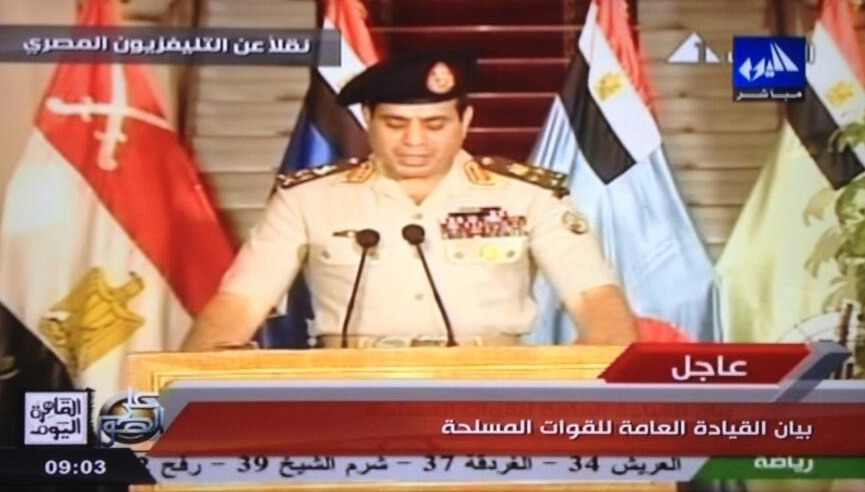
On the 3rd of July the Egyptian Army led a coup d'État against Mohammed Morsi, the legitimate president elected by the citizens in June 2012. The head of the Army, General Abdul Fattah Al Sisi, justified the coup  because the president didn't listen to the people's demands. After several weeks of protests, led by an opposition movement called Tamarod (Rebel), focused again on Tahrir Square, the Army gave a 48-hour ultimatum to the president to resign. When the deadline finished, the Army took the control of the TV stations, suspended the Constitution and appointed an interim president, Adli Mahmoud Mansour, head of the Supreme Constitutional Court. General Al Sisi, surrounded by the members of the opposition parties, announced that the Army doesn't have the intention of keeping power and they will step down after elections take place.


This has been the end of the first democratic experience in the history of Egypt, apparently as a result of people's will. But another feature of the history of modern Egypt has repeated: the intervention of the Army. Since 1952, when another coup d'État deposed the monarchy in Egypt, the Army has played a central role in the country. All the former presidents of Egypt (Muhammad Naguib, Gamal Abdel Nasser, Anwar Sadat and Hosni Mubarak) came from and were supported by the Army. The military also had an important role in the February 2011 revolution, when the people's protests forced Mubarak's resignation. Mubarak was succeeded by Mohammed Hussein Tantawi, commander-in-chief of the Egyptian Armed Forces, who ruled as interim president until the presidential elections in June 2012, when Mohammed Morsi was elected.

Morsi has been the first civilian president in the history of Egypt. He belongs to a party called Freedom and Justice, the political branch of an Islamist organization called Muslim Brotherhood. This Broterhood was created by Hassan al Banna in 1928 with the purpose of building a system based on the Sharia (Islamic Law). The influence of the Muslim Brotherhood extended to other Muslim countries due to their fight against colonialism and their charity work. The Muslim Brotherhood was forbidden in Egypt during the monarchy and also during most of the military rule period. Many of its members were imprisonned and played an opposition role against the regime. In the first free elections after the Arab spring revolution (parliamentary elections from November 2011 to January 2012) Freedom and Justice won around half of the seats in the Parliament and Mohammed Morsi, their candidate, won the presidential election with 51% of the ballots in June 2012. 

Egypt-morsi


Here you have a detailed timeline with the most important facts of Morsi's year in office: 

http://www.aljazeera.com/indepth/interactive/2013/07/20137493141105596.html

The main protests against Morsi's decisions have been related to his attempt of accumulating power (although he later backed out), his inability to solve ordinary problems of the population (inflation, electricity power outages) and the increasing Islamization of the State. But one thing is clear: Morsi was elected in clean elections and subverting the opinion of the majority of the population is a dangerous move which may have unexpected consequences. Something similar happened in Algeria in 1992, when the Army led a coup d'État to cancel the elections won by another Islamist party, the FIS (Islamic Salvation Front). This action was supported by the main Western countries, but led to a 10 year civil war that caused more than 200,000 dead. As in Algeria, the main Western countries have greeted the intervention of the Army in Egypt and refuse to consider it a coup d'État. Egypt is an important element for the stability of the Middle East region and the main guarantor of Israel's survival and the main powers (especially the USA) may prefer a country controlled by the Army than accepting the people's decisions. Also the Syrian regime, Saudi Arabia  and the United Arab Emirates have celebrated the coup. 

The situation at the moment appears to be very complicated. The protest day in support of deposed president Morsi has ended with several protesters killed by the military police. Tension is growing and it's very difficult to foresee what the evolution of the situation will be. 

Here you have some articles in Spanish I've read that can help you understand these events in a better way: 

http://internacional.elpais.com/internacional/2013/07/03/actualidad/1372876967_132123.html

http://internacional.elpais.com/internacional/2013/07/04/actualidad/1372963607_414138.html

http://www.eldiario.es/zonacritica/egipto_golpe_de_estado_hermanos_musulmanes_6_150194992.html

This is a summary of the situation of the countries where the Arab spring developed: 

http://internacional.elpais.com/internacional/2013/07/04/actualidad/1372960896_851426.html

And these are some websites where you can find a lot of information about what's happening in Egypt: 

-RTVE: 

http://www.rtve.es/noticias/revueltas-arabes/egipto/

-BBC

http://www.bbc.co.uk/news/world-middle-east-12315833

- Al Jazeera

http://www.aljazeera.com/indepth/spotlight/egypt/

Tuesday, June 25, 2013

It's the final countdown!! :(


We have been in bilingual section for four years and we have lived many experiences there with a lot of friends, teachers and classmates... maybe we won't be together again, but these moments would never been forgotten! You have been a great group of people! And you, Paqui, have been one of the best person I have ever known, maybe I don't think the same as you in some themes but you have shown a great humanity in your behavior, I think that if there were more people as you in the world, it would be a better place! THANKS!!!

Please classmates, watch the video!!

Sunday, June 23, 2013

An inspirational video

This is a video I've just watched about what education should mean for students and teachers. I hope you like it as much as I have liked it. 


Saturday, June 22, 2013

A year to remember


This last post is to make a review of what this school year has meant for me. At the beginning of the year I was sceptic and my expectations were rather low. I wasn't satisfied with the evolution many students had in 2nd of ESO and I feared that it would be a hard year. 30 students in the same group seemed too much and sometimes I have felt powerless in front of so many noisy people. But despite the difficulties and my initial precaution, this has been a year I will remember. I think most of you have worked a lot and I'm not only referring to the fact that you've studied for the exams, because the really productive intellectual work is the one that leaves some unforgettable remains on your minds. And I think that this has been achieved especially with projects and, in some cases, with your work on the blog. I would like to have the freedom to teach always through projects, readings, essays, text analyses...They are the best way to learn, including me. I've learned so much this year trying to answer your questions, orient your projects, satisfy your curiosity... that I have to thank you for challenging me in the same way I've tried to challenge you everyday. That's how I understand this wonderful profession: teaching is opening new paths, not only for the students, but for the teacher itself. I can't understand this job as a bureaucratic task, as a routine work. I believe in interaction, in sharing opinions, expanding knowledge, connecting new contents with the past, stopping for a while and reflecting about ideas or concepts... We've had much of this together this year and this is something that doesn't happen too often. Thank you again. 

This year has already finished and it's time to wish you the best for the future. No matter where you go or what you do, this will continue to be your place if you want to stop by and write something, ask questions, make comments, ask for help... We're not closed (neither in summer!). 

Finally, I would like to share with you some ideas to make you think about the kind of person you want to become. You can call them pieces of advice, if you prefer: 

- Respect the others if you want to gain their respect. 

- Reason and words are your best weapons. Use them anytime. Violence and revenge never bring anything else but more pain and suffering. Remember that all the wars we studied ended with peace treaties, with people obliged to sit down, talk and reach agreements. 

- Don´t forget about the past: use it to build a better future. Our progress as species will only be proved when we learn from the past and don't make the same mistakes over and over again. 

- Don´t stop asking questions: it´s the best way to learn. 

- Be curious, not nosy. 

- Be critical. Don´t believe everything people tell you and don't be conformist with what most people say. Look for the answers to your doubts and come to your own conclusions. 

- Give a hand to the people who need it, cooperate, be supportive. No one can survive alone and the progress of mankind has always been achieved uniting efforts. Remember the good results and the good time you had when you worked in groups and try to find the best of everyone you work or share your life with. 

- Don´t forget that you are human, not numbers (nor users or clients). Don´t let anyone treat you as if you were only figures on a sheet of paper. As for the marks, they´re only figures too. What will remain is what you learnt, not what the administration wrote on your school report.

- Open your mind, judge people for what they do, not for who they are or where they come from. Forget about prejudices. We, citizens of the world, all belong to the same species and share more than we could imagine. Borders, nations, flags and “races” are human inventions to divide us and justify the supremacy of the minorities over the great majority.

- Don´t keep silence before injustice. Listen to the others, but speak out loud when you think you´re right. Following the herd may seem more comfortable sometimes, but you will feel better if you don't betray your principles (even if some people say that principles won't feed you). 

- Keep in mind that, even in the worst circumstances, you can always choose how to behave or what to do. 

- Try not to be another brick in the wall. Don't be afraid of choosing a less trodden path. As Friedrich Nietzsche said , "The individual has always had to struggle to keep from being overwhelmed by the tribe. If you try it, you will be lonely often, and sometimes frightened. But no price is too high to pay for the privilege of owning yourself."

- Have a good life and share with others everything you can do to make the world a better place to live in. Be the change you wish to see in the world!

Finally, I would also include the letter a Murcian teacher of Greek called Arístides Mínguez has written at the end of this school year. He reflects very well why we, public school teachers, have to keep on fighting: 

http://lacolumnata.es/politica/el-antro-de-la-arpia-politica/adios-muchachos-adios-alumnos-mios

That's all, folks! I hope to see you soon, in the corridors or in class! Have a nice summer and keep in touch if you want.