Friday, October 31, 2014

30th October 2014

Hello I'm Rodrigo!

Today in the class of Social Sciences the teacher Paqui has showed a video  (posted by Amalia), the video talks about the 17th century in England, how kings received their power,

We have seen some photos of the Sant's Paul Cathedral of Chistopher Wren, he drew inspiration from  of San Peter Basilica in Rome. And we have talked about Iñigo Jones who was the first significant British architect of the early modern period, he made Banqueting House in England

Then we have spoken about the empiricism , of Galileo Galilei, who was a scientist who defended the most important theory, the heliocentric theory ( the planets turn around the Sun). The Catholic Inquisition Catholic said: if you don't recant you will kill you. And he had to recant, but he said EPPUR SI MUOVE: However it moves


EPPUR SI MUOVE: However it moves


http://edtech2.boisestate.edu/angelacovil/506/scientific_process.html

After Empiricism, we have spoken about Rationalism… we have concluded that if you have a doubt, this is the best way to learn, this was stated by René Descartes and it’s summarized on his quote COGITO ERGO SUM: I think, therefore I exist

We have talked about if the animals think about their existence , their lied of his life... Later we have written some scientifics of the 17th century like Francis Baron, Isaac Newton, Nicholas Copernicus Johannes Kepler and Gottfried Leibniz. All this people lived in protenstant countries. This is not casual. The Protestant religious gave more freedom and more progress in scientific than  Catholic religious. In the Inquisition Catholic the progress in scientific was inexistence because Inquisition Catholic go to their house and chosed them. They said that the Earth is the center of the universe, because it's created by God. Dogma is rigid and you can't change it. 

Other features of this period, were the Royal Academies ( sponsored by the king ). For example the Royal Academy of Language, Art or Sciences in France ( 18th century) and the Royal Society in Great Britain. 

Then we have copied an scheme of the Baroque art ( chronology, general features, architecture, sculpture, painting).

And finally we have spoken about the proyect, we have to write a text of two works of architecture, sculpture or painting, including chronology, who was author the , Baroque features. The teacher has said that she has to write a post with all the information. 

The teacher said that we have to do the scheme because she will check it..

Some vocabulary: 

- Proof: prueba
- To recant : retractarse
- Royal Academy: Real Academia
- Grand Tour: Gran Tour 

                                         https://www.youtube.com/watch?v=m1g8wjsEQyw

Bye and enjoy the longweekend! 


Thursday, October 30, 2014

Instructions and guidance for your Baroque


You may have received an e-mail with the names of the Baroque works of art you will have to study. This is what you will have to do: 

- Write an individual post about the two works of art you have to study. The post will have to include the following data compulsorily: Title, author, pictures to understand what you are explaining, the text you have written and the sources you have used to prepare it. 

- You should start looking for information about your work of art in Spanish. You have to make sure that you understand all the information before starting writing. Prepare a previous scheme and be sure that you don´t forget any part, review the main Baroque features and try to find them on your work of art. 

- Use different sources of information (not only Wikipedia), don´t copy and paste and don´t use the computer translator (I will know it if you do it and this may make you fail this project) Write simple and understandable sentences. 

- Copy the links of the websites you visit to include them at the end of your explanation and file them on a Word document. This way, you won't lose time looking for the links you've used when you finish your project.

- The names of the works of art have to be written in Italic font (cursiva) and with all the words in capital letters (nouns and verbs, not prepositions). For example: Saturn Devouring His Son, The Crucifixion of Saint Peter. 


- You have to understand what you explain because once the projects will be finished, I will ask you about them in class, in the same way we did with the Renaissance art projects. 

These are the specific guidelines for architecture, sculpture and painting

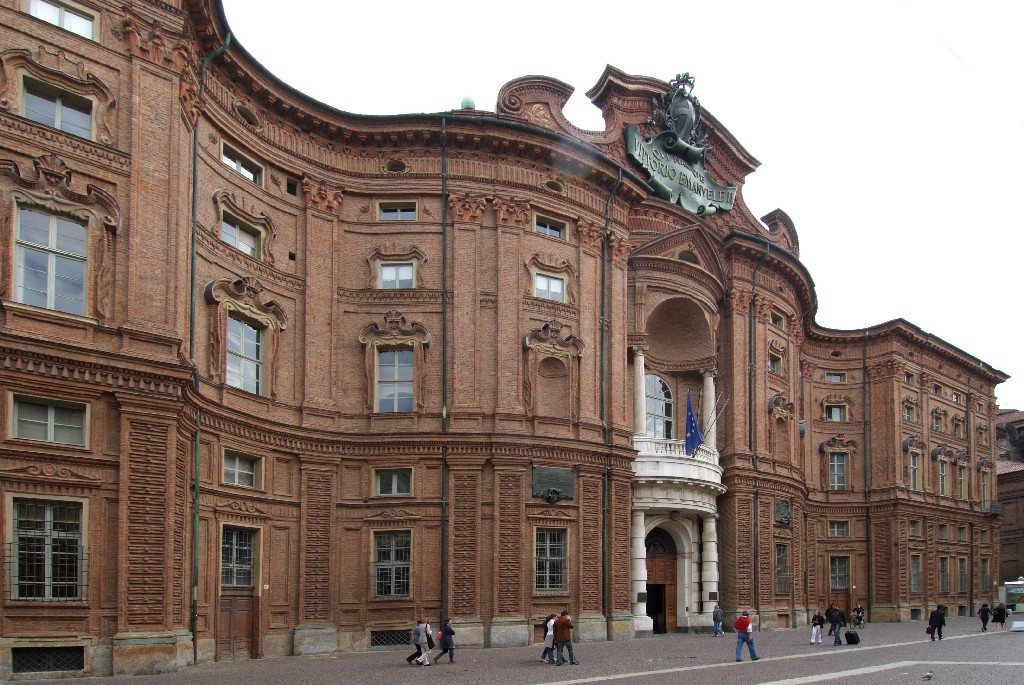
ANALYSIS OF A BUILDING


Palazzo Carignano, Guarino Guarini in Torino (Italy)

The analysis of a building has to include: 

-  The title and author of the building

- The chronological and geographic context: where and when the sculpture was made and who commissioned the sculpture.

- Type of building and function

- Commissioner

- Materials used

- Description of its different parts: facade, floor plan and elevation, decorative elements used, proportions, integration in the space

- The features of the art style the building belongs to and the correspondence between the features of the building and the art style.

- Additional information: influence in other buildings

You can include one or several pictures of the building, its floor plan and also the portrait of its author. 

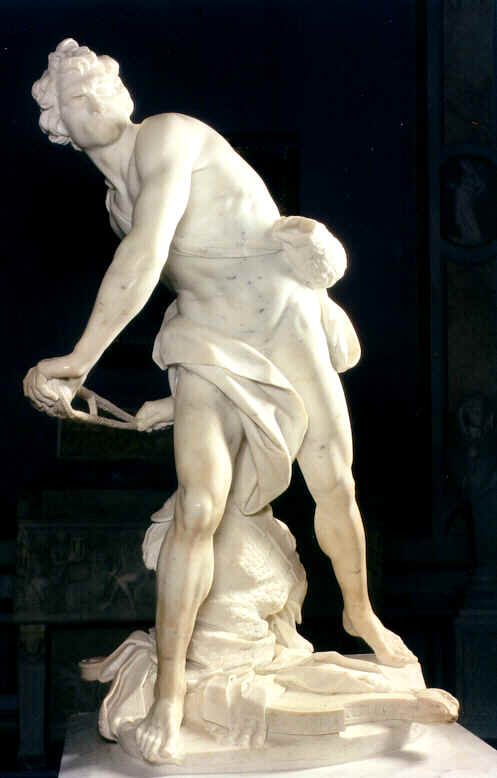
ANALYSIS OF A SCULPTURE


David, Bernini


The analysis of a sculpture has to include this information:

- The title and author of the sculpture.

- The chronological and geographic context: where and when the sculpture was made and who commissioned the sculpture.


- Technical data: size, material used, where the sculpture is at present...

- A description of the sculpture, taking into account this rule: first we have to talk about what we see and after we can add details of what we have learnt in our research. We have to include the material, technique, figures represented, light, movement, clothes, influences the author received, symbols and meaning.

- The features of the art style the sculpture belongs to and the correspondence between the features of the sculpture and the art style it belongs to.

- Additional interesting information: importance of the sculpture in the story of art, influence of the sculpture in other artists.

You can include one or several pictures of the sculpture and also the portrait of its author. 

You have an example of a sculpture analysis on page 115 of your book. Read it before writing your text. 


ANALYSIS OF A PAINTING

italia

Saint Thomas' doubt, Caravaggio

 The analysis of a painting has to include: 

- The title and author of the painting.

- The chronological and geographic context: where and when the painting was made and who commissioned the painting.


- Technical data: size, material used, where the painting is at present...
- A description of the painting: technique, people represented, places, colours and shapes, light, influences the author received, symbols and meaning.

- The features of the art style the painting belongs to and the correspondence between the features of the painting and the art style it belongs to.

- Additional interesting information: importance of the painting in the history of art, influence of the painting in other artists.

You can include one or several pictures of the painting and also the portrait of its author. 

You have an example of a painting analysis on page 88 of your book. Read it before writing your text. 


And finally, here you have some useful websites to find  good information: 


- Smart History: http://smarthistory.khanacademy.org/

- About.com: http://arthistory.about.com/

http://www.galleriaborghese.it/borghese/en/edafne.htm

- Fountains in Rome:

http://en.wikipedia.org/wiki/List_of_fountains_in_Rome
http://www.tours-italy.com/rome/fountains.htm

- El Prado Museum: Here you will find a lot of information about Velázquez, Murillo, Ribera, Ribalta, Rubens and Zurbarán:

http://www.museodelprado.es/coleccion/galeria-on-line

- Velázquez´s paintings at the National Gallery:

http://www.nationalgallery.org.uk/search/vel%C3%A1zquez/1?filter=paintings

- Rembrandthuis: the Rembrandt House Museum in Amsterdam:

http://www.rembrandthuis.nl/cms_pages/index_main.html

- Essential Vermeer: a very complete website about the painter Vermeer:
http://www.essentialvermeer.com/index.html

- Caravaggio´s paintings:

http://caravaggio.com/#

http://www.artble.com/artists/caravaggio/more_information/style_and_technique

REMEMBER THAT THE DEADLINE IS THE 20th OF NOVEMBER. 

Tuesday, October 28, 2014

Friday 24th of October

Hello Everybody!
Today in the class of Social Sciences we have done a lot of things.
We have started the class copying a new scheme about the decline of the Hispanic Empire.
The scheme included Philip III's validos: duke of Lerma and when he was suspected of corruption, he was replaced by the duke of Uceda, his son. And his main events as the devaluation of currency, the twelve years' truce... It also included Philip IV's validos: Count-Duke of Olivares and also the main problems, for example the Thirty Years' war in 1648 and the Union of arms project. Charles II's validos were Fernando de Valenzuela and Juan José de Austria. His main problems were firstly his physical and mental problems and when he died without successor. Because of this, took placer the War of Spanish Succession. This is what we have copied in the scheme. We also have copied some words in the glossary.
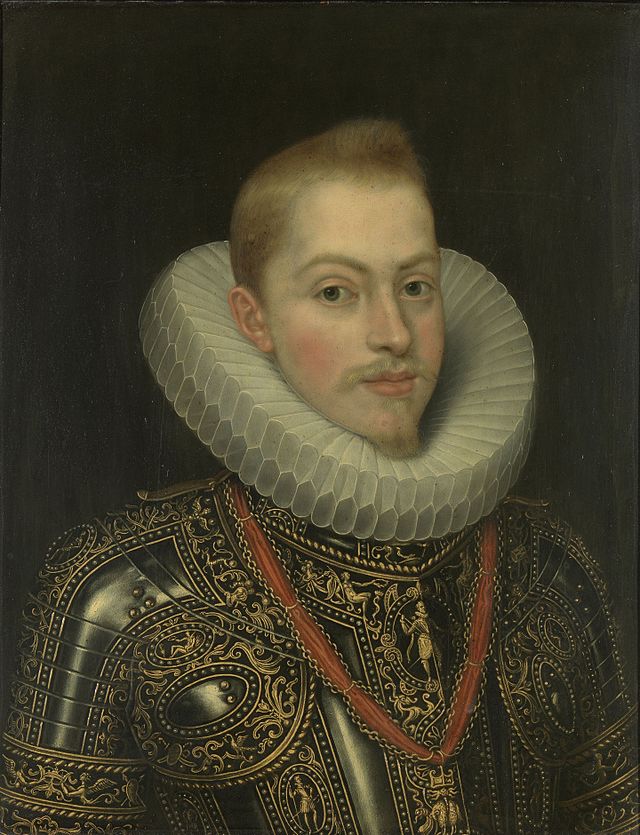
Here I leave you a photo of Charles III of Spain.
 http://commons.wikimedia.org/wiki/File:Diego_Vel%C3%A1zquez_-_Philip_III_on_Horseback_%28detail%29_-_WGA24408.jpg
Bye.


Tuesday, 28th of October.

Good afternoon to everybody!

Today, Tuesday 28th of October, in the class of Social Sciences we have continued with point 
D) CULTURE AND ART: Scientific Revolution, Empiricism, Rationalism and Baroque art.
Yesterday, Paqui gave to us some homework: we had to look for the definition of Empiricism and Rationalism. So, at first, we have corrected this two definitions. Gema has read her definition of Empiricism: Method of knowledge based on experience; observing nature, formulating hyphoteses, testing them and writing a theory. And then I have read my definition of Rationalism: Method of knowledge based on the use of reason to learn. It was started by the philossopher René Descartes. Doubt was basic for him to start warning. After this, Paqui has corrected the mistakes and she has explained Empiricism and Rationalism to us. Also, Paqui has explained the main features of the rational been (thinking), and she also has write on the blackboard a small summary about Rationalism; COGITO ERGO SUM (latin sentence), which means: I think, therefore I exist. 
Paqui has also talk about the life of Leonardo da Vinci and Galileo Galilei.

Then, she has told us the discoveries during the 17th century, and we have talk about the scientifics of this century. The most important scientifics were Newton, Leibriz, Kepler, Galileo Galilei and Copérnico; all them lived on the protestant countries of the Holy Roman Empire. Paqui has explained the life of Galileo Galilei; he didn't was killed, but he was recanted, because science was opposite with religion. Galileo said that the Earth revolved around the Sun; and society didn't think this, they thought that all the planets turned around the Earth.

Paqui has also talk about the Royal academy of Language and Art created in Madrid during the 18th century. And then we have talk about the TV serie of Isabel. In the episode of yesterday, the king Charles I was born; son of Joanna of Castile, more known as Joanana the Mad; daughter of the Catholic Monarchs.

After this, Paqui has explained to us that the society of this century thought that when the children born, touch them was a sin. And the hygiene was used to prevent illnesses.

Later, we have started with Baroque art. We have seem a Power Point presentation and Paqui has said that Baroque art is a realistic art, with straigh lines, geometric and simple forms. She has told us that "baroque" is a perjorative word to define and exuberant and exaggeraded art in contrast to Renaissance art and New Classicism. And also the chronology of Baroque art: Predominant style during 17th century and part of 18th century. Some examples of Baroque art are: Collegiate Church of Catania, Italy; Square and Colonnade of Saint Peter of the Vatican, Bernini; Versailles Palace...
Paqui has also explained the differences between Baroque art and Renaissance art:

RENAISSANCE ART
  • Balance.
  • Ideal of beauty.
  • Simplicity.
  • Proportions
  • Straight lines.
  • Predominance of drawing over colour and light.
BAROQUE ART.
  • Movement.
  • Realism in representations.
  • Complexity.
  • Interest in suprissing the audience.
  • Curved lines, concave and convex.
  • Predominance of colour and light over drawing.
And finally, we have copied some new words in our glossary, like:
- I wish I: Ójala.
- To set free: Liberar.
- To lose ground: Perder terreno.
- To recant: Retractarse.
- Eppur Si Muove: The Earth move.
- Hygiene: Higiene.
- Pearl: Perla.
- Exuberant: Exuberante.
- Balance: Equilibrio.

Today was an interesting lesson.


                                                                    Galileo Galilei.


                                                     Collegiate Church of Catania, Italy.


                                                                      Versailles Palace.


                             Square and Colonnade of Saint Peter of the Vatican, Bernini, Rome.

Tuesday 28th october 2014

  Hello everybody!!

 Today, at the begining of the lesson Paqui has given to the people who has repeated their projects, she has given their marks, only a group has failed and this group is going to have a part of Renaissance art in their exams.

 After that, we have reviewed the part of demography, economy and society in which we have learned that population decreased due to bad harvests, wars, migration to the Indies and the expulsion of the Moorish. Due to this, an economic recesion started, but also for negative political decisions, inefficient farming tecniques and competition for cheaper and better quality products. About society we have learned that as nobility was the main social model, people started to think that manual  work  was considered shameful and dishonest.

 The conclussion about that, is that people wanted to live without working and Paqui has told us that this continues to happens nowadays and she give us the example of Belén Esteban.
Source: http://www.eldebat.cat/


After this she has asked us to  raise our hands if : If we were rich , would we  continue working? Only five of us have raised their hands.

  She has told us also that when a new king arrived to the peninsula from Napples, Charles III, he had to issue a law  saying that manual work is not dishonest, but even whith this law, people continued to think that it was.

  Later we have started with the point c, about culture and art in the 17th century .We have copied as a chronologic scheme about the Middle Ages and the Modern Era, it is about the secularization process (the progressive liberation of knowledge from religion):
 In the Middle Ages religion stopped the progress of science and thinking ,then on the 15th and 16th centuries, during the Humanism, human beings became center of interest and scholars tried to separate thinking from religion and the Protestant Reformation started. After that ,in the 17th century the Scientific Revolution started and about this we have to define two concepts: Empiricism and rationalism .
We have also learned that the 17th century was the golden age for literature
We have also decided the date for the exam that will be next friday .
We have added some new words in the glossary :
Survey- encuesta
The swidler- El buscón
Rogue- pícaro
Schdar- sabio, erudito 
And that was all we have done today .
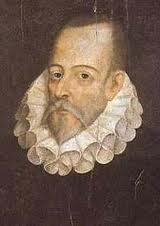
source:http://www.classicspanishbooks.com/img/gallery/cervantes.jpg
(Miguel de Cervantes belongs to the golden age)

BYE!!
                                  I found this video about the 17th century in europe

Presentations of Baroque art (general and in the Hispanic Monarchy)

Here you have the two presentations that correspond to Baroque art style: 


Monday, October 27, 2014

Monday, 27th October, 2014

Hello to everybody!! Today I'm going to do the journal, and I'm the last student that have to do the journal.Today in Social Sciences class, Paqui has asked about the scheme that we had to do about the Demography, the economy and the society in the 17th century.
-Demography:the population declined for several reasons: bad harvests, plagues, the expulsion of the Moorish, wars, migrations to the Indies.
-Economy: there was an economic recession for several reasons:
·Decrease of production in agriculture due to inefficient farming techniques and bad climatic conditions, which caused droughts and floods. The expulsion of the Moorish also caused a negative impact, especially in the Crown of Aragón.
·The arrival of cheaper and better quality foreign products imported from the northern Europe caused a negative impact over p0cal craftsmanship. Many  workshops went bankrupt. +·Less demand for products, as a result of the demographic crisis. Trade declined too.
-Society: the nobless were the social model. They lived off rents, without working. Hand work was considered shameful and dishonest. Many people aspired to live without working. There were lots of beggars and rogues, who lived from begging and crime.
Then, Paqui has  asked us if we have an idol, and we have spoken about Julian JRA and his song.
After this, Paqui has  asked us about Spanish scientifics and about Spanish writers. We also spoke about famous people who are famous without doing anything, like Belén Esteban.
To finish the class we have started a little scheme about  the Middle Ages- Middle Era. We have to complete the parts about Rationalism and Empiricism.
We have also decided on the date of the exam that is the next week, Thursday 6 of November.

-------------
We have included to our glossary new words like:
-To live off rents: vivir de las rentas.
-Dishonest: deshonesto.
-Suntanned: bronceado.
-Shameful: vergonzoso.
-Smort/ clever: inteligente.
-Rogue: pícaro.
-Beggar: mendigo.
-Lazzy: vago.
-Golden Age: Siglo de Oro.
I have attached this photo about Phillip IV:

http://www.fuenterrebollo.com/faqs-numismatica/felipe4.html

Thursday, October 23, 2014

Thursday 23rd October 2014

Good afternoon to everybody! Today in Social sciences class Paqui has checked if we have the scheme she gave to us the last day. The scheme we have to do for today was the scheme of the Decline of the Hispanic Empire: Philip III (1598-1621) and his government and the thingss he has done; Philip IV the things that he has done and some laws he established; Charles II what happened with he, what diseables that he had. 
We have corrected the scheme and Paqui has explained to us that a long time ago in the royal family and with all this kings they were married whith some members of their family and that's why the children had many diseables such as Charles II who was known "The Hexed", she has also explained all that this kings, Philip III, Philip IV and Charles II did.
>Philip III:
-Twelve years truce (1609-1621).
-Expulsion of the Moorish (1609).
- Devaluation of currency.
>Philip IV: He established the same fules over all the peninsular kingdoms.
-Thirty Years' War (1618-1648).
-Project of the Union of Arms:
  • Catalonia, supported by France. The peace of the Pyrenees.
  • Portugal, the conflict ended with the treaty of Lisbon and the definitive independence of Portugal (1668)
>Charles II: He was known as "The Hexed".
-War of Spanish Succesion (1700-1713).
We have also add many words to the vocabulary such as: "to take advantage of", "Habsburg"...
Paqui has given us homework to do at the weekend.  We have to do a summery of the Demography, society and economy.
That's all for today. It was an interesting and funny class.

Thursday, 23rd October 2014

Hi people! I'm Gustavo. Today in class of Social Sciences we have started tolking about the English revolutions. Then we have seen some slides about Charles II, James II and William of Orange. After this we have started with Hispanic Empire.

Paqui has copied the meaning of Habeas Corpus (Right every person who is arrested has: They have the right to know why they have been arrested in order to prepare their defense. This obliges also the authorities, because they can't arrent anyone without real evidence of their crimes.

We have copied some words in the glossary like hegemonic (hegemonico), hegemony (hegemonía), state-nation (estado-nación), to be of age (ser mayor de edad), conspiracy (conspiración), protector lord (lord protector), to get rid of (deshacerse), habean corpus (Habeas Corpus), arbitrary (arbitrario), Bill of the Right (declaración de derechos), son in law (yerno), crime (delito), to rape (vidar), nun (monja), Sterile (esteril), To atrophy (atrofiar), lame (cojo).

At the end we have talked about a very funny story. One of the most important kings of the Hipanic Empire has raped a nun!!

Bye!


http://upload.wikimedia.org/wikipedia/commons/c/c9/Rey_Carlos_II.jpg

Wednesday, October 22, 2014

21st October 2014 (Tuesday)

Hi everybody! I am Cristina. I'm sorry, I couldn't write the journal yesterday, so I am doing it now, and I apologize for that.
------------------------------------------------------------------------------------------------------------
Today in social sciences class Paqui has talked a little bit about the Renaissance Art projects: people who haven't finished it yet must give it to Paqui next day. Later, we have corrected what we had to summarize about the second part of the point 3 of the unit: Politics in the 17th century:

We can distinguish three main events in politics of the 17th century:

-The Thirty Years' War: the protestants and the French wanted to defy Halisburg's dynasty hegemony. It was a religious conflict, but also a fight for hegemony in Europe. the Protestant kingdoms of the north of Europe and France fought against the Catholic kingdoms of the south of Europe. The Hispanic Monarchy army conquered the city of Breda (1634), but they were defeated (1643). This meant the end of the Hispanic hegemony in Europe.
This war finished with the signature of the Treaty of Westphalia in 1648:
· All the kingdomss accepted the Peace of Augsburg principles: religious
freedom (which supposed the end of religious wars)
                        · The Hispanic Monarchy lost its hegemony in Europe
                        · Consolidation of State-nations and Absolute Monarchy.
· Huge demographic losses in the Holy Roman Empire (some states lost half of their population).           
At the end of the Thirty Years’ War consequences, we’ve talked about races, and I have remembered something that Paqui said to us last week when we were reading about the Indies: “Have you ever seen “black blood?” I think it’s an interesting reflection. What do you think?

-Absolute Monarchy: Kings consolidated their authority, especially over the priviledged groups. The kings were helped by an important bureaucracy to rule. The Parliaments limited kings’ power.
The main example of absolute monarchy is Luis XIV, the Sun King, who moved the court to Versailles and imposed his authority over his subjects.

-English Revolutions: there were two different revolutions in England:
            · 1648. A civil war started because Charles I Steward tried to rule as an absolute monarch, without the control of the Parliament. One year later Charles I was decapitated and the Republic was proclaimed. Monarchy was reestablished in 1660 when Oliver Cromwell, the Protector Lord, died. The deputies limited the king’s powers with the Habeas Corpus.
            · 1689. After the definite expel of the Steward dinasty from the throne, William of Orange, the new King, swore the Bill of the Rights, which limited the king’s power and put some of his decisions under the control of the Parliament. England was the first country to have a limited monarchy, with a separation of the powers of the King (executive) and of the Parliament (legislative).
Charles I Steward 
William I of Orange


We have also learned some new concepts, like “to be of age” (ser mayor de edad), “conspiracy” (conspiración) and “hamlet” (aldea).