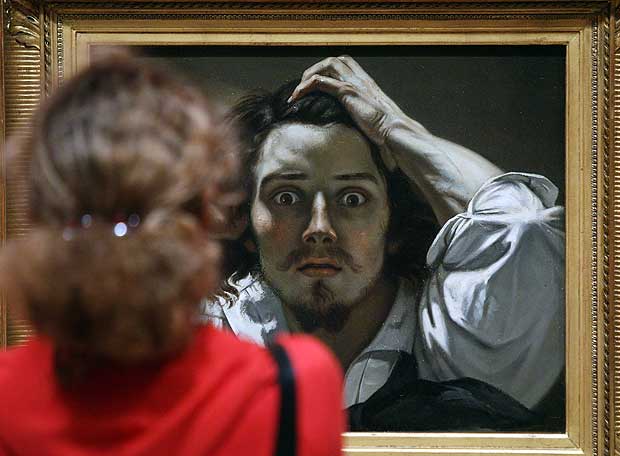
Sunday, April 28, 2013

THE CIRCUS, BY SEURAT


THE CIRCUS


The painting I have chosen is The Circus by the famous painter Georges Pierre Seurat. It was painted in 1891, but Seurat died before it was finished. This is the last painting made by Seurat. It is painted on oil on canvas. He made the painting with pointillist technique. Its dimensions are 180cm x 148cm. Paul Signac (another famous neo-impressionist painter) bought the painting and then he sold it to John Quinn. The painting was shown in the 7th “Salon des Artistes Independants”. Now the painting is in the Orsay Museum in Paris (France).

This painting represents a pleasant scene in the circus. In the foreground you can see the people who are performing the show. There are a clown, a dancer and a juggler doing pirouettes. They are performing together in the stage. The clown is waving a yellow a ribbon that reaches almost the exit gate of the circus. There are also a horse and a person who is guiding its performance. Behind them, in the background, you can see the grandstands where there is a happy public watching the show. In the right upper part of the background you can see some people playing different instruments like the violin to make the show more pleasant.

The painter wanted to represent his subjective view of the circus. He made the painting with pointillist technique. This technique consists of making the painting with dots of pure colours. He used primary colours with their complementary colours. He reduced his palette to four colours in which warm colours predominate, especially yellow. The use of curved lines is also striking. All this has a meaning: he wanted to represent the joy of the show. The use of warm colours gives life to the painting, making it more striking at first sight. In this way it is closer to the circus theme.

The dancer, the acrobat, the position of the horse… give movement to the painting in the foreground in contrast with the rigid figures of the grandstands in the background.


Seurat did several sketches of the painting. He used the pure colours and he made the painting with dots of colour, because he wanted that the small touches mixed in the eyes of the viewer.


Another characteristic of the painting is that he represented the feelings the show awakened in the audience. Among the audience you can observe that some of them are laughing, others are looking with curiosity. The representation of these gestures makes the scene more real.

Georges Pierre Seurat is considered to be the leader of neo-impressionism because he was the first painter to break up with the ideas of impressionism. He was the first to show the artistic movement in his works. His ideas were based on impressionism but the colours and the lines had more importance. There are some neo-impressionist features like the use of pure colours or the pointillist technique (paintings are made with dots).
Seurat was influenced by Delacroix and Ingres. He was interested in the novels of Goncourt brothers about the French social life. The specific inspiration of the painting was the Goncourt’s tale Frères Zemgano (Zemgano Brothers).

 The Circus belonged to a series of three paintings. The paintings are Circus Sideshow, Can-Can and The Circus.


Circus Sideshow

Can-Can

There were other painters who represented circus scenes such as Renoir (Clown in the Circus), Degas (Miss La La at the Cirque Fernando) and Toulouse-Lautrec (Au Cirque Fernando l’Ecuyère).


Clown in the Circus


Miss La La at the Cirque Fernando


Au Cirque Fernando l'Ecuyère

Seurat’s ideas were followed by Paul Signac and later by Camille Pisarro. His ideas lead to the birth of Cubism and Abstract Art.


This is Portrait of Félix Féneon by Paul Signac.


Some curious information is that after Seurat’s death the painting was considered to be a plagiarism of a poster the painter Jules Chéret made in 1880 for the Spectacle-Promenade de l’Horloge in the Champs-Elysèes. Meyer Schapiro proved that Seurat drew inspiration from an anonymous poster for the Nouveau Cirque.


In my opinion this painting is beautiful because it is a painting with a lot of warm colours and it shows the feelings of the audience who is watching the show. I like this painting because it reminds me of childhood.

SOURCES:


http://www.musee-orsay.fr/en/collections/works-in-focus/painting/commentaire_id/the-circus-7145.html?tx_commentaire_pi1%5BpidLi%5D=509&tx_commentaire_pi1%5Bfrom%5D=841&cHash=93bb90f527

THE CHARGE OF THE MAMELUKES

THE CHARGE OF THE MAMELUKES 


The painting I’ve chosen is The Charge of the Mamelukes, also called The Second of May 1808, by Francisco de Goya. It was painted six years later, in 1814. It’s an oil painting on canvas and its dimensions are 268,5 cm x 347,5 cm. On the 24th February 1814, Goya sent a letter to the Regency of Spain, informing of his pretension of painting scenes of the Spanish insurrection against the French. The Regency of Spain was directed by infant Luis María of Bourbon. The government paid Goya a salary and the cost of the materials. Goya didn’t witness the events occurred in 1808, but he looked for information to paint The Charge of the Mamelukes and The Third of May 1808.

During the Spanish Civil War, this painting was moved many times because El Prado Museum was evacuated by the republicans because the city of Madrid was being bombarded with incendiary bombs by the Nazi aviation (Germany was allied with the nationals) and finally it ended in Geneva. When it was moved some fragments were damaged, because the truck which carried it had an accident in Benicarló. When the Civil War finished, it came back to El Prado Museum and some parts were restored in 1941. But, as we can see on the next photo, the scratches weren’t restored and they only painted them with red because they decided that the damages wouldn’t be evident because the predominant colour in this piece is red. In 2008 the last restoration of the piece took place and the scratches were completely restored, as we can appreciate on the first image. Nowadays, the painting is located in El Prado Museum in Madrid.


The Charge of the Mamelukes before being restored.

Source: www.lasalle.es


After 1941                     After 2008 

The painting represents one of the episodes which took place near Puerta del Sol in Madrid on the Second of May 1808, when the people of Madrid tried to stop the move of the royal family to France. These quarrels gave origin to the general uprising of the Spanish people against the French. In particular, in this scene a group of citizens of Madrid are attacking a group of Mamelukes, Egyptian soldiers hired by the French. In the centre of the painting there is a Mameluke soldier who is falling down of his horse. In the bottom right corner a Spanish man is killing a horse. The faces of the Spaniards are expressing anger and indignation and the French and their horses are showing fear. The work of art is full of blood and in the lower part there are a lot of dead people.

Goya shared the liberal ideas of the French Revolution and he was against the wars, because they led to big atrocities. With the Spanish man killing a horse, Goya wanted to represent that, because the horses only do what their owners want. He also used a lot of blood, terror and dead people to emphasize that. One important purpose of the painting is to criticize violence and war craziness during the Peninsular War. The war caused a great impression on Goya. He wanted to show his pacifist attitude and to teach a lesson to human irrationality.

The foreground of the painting is very detailed. The background is a little blurry and there we can see a crowd of citizens of Madrid pushing the French and some buildings of Madrid, but they are very blurry because Goya wanted to focus all the looks on the action. He used loose brush-strokes and big colour stains, as if the violence of the action had invaded the painting. Goya wanted to represent that there was a big chaos.

The movement and expressivity of the figures show a powerful image to the viewer. Goya painted the head of one of the horses with green as the effect of shadow.

If we observe to the clothes of the Spaniards, we can see that they are clothes from different regions. They represent the diversity of people who rose up against the French.

The Charge of the Mamelukes is a romantic piece, because it represents freedom, it reflects the wish of liberty of the Spanish people. It represents feelings, the feelings of the Spanish people, who are angry, and the ones of the French soldiers and their horses, who have fear.

Goya had an internal conflict, because he was a patriot, but he also thought that the French occupation was the only way of modernizing Spain. When the war ended, he had to show his patriotism, in order to avoid problems with Ferdinand VII due to his liberal and enlightened ideas, and he offered to paint this painting and The Third of May.

The painting is related to a series of etchings made by Goya, called Disasters of War. Goya didn’t like the atrocities of the war, his paintings became sadder and darker and he painted scenes of vile assassinations committed by both sides.


The Third of May 1808 


Disasters of War


Disasters of War 


I like this painting because there is a lot of action and because it is a critic against the war. I like it because it says that war creates injustices and atrocities. I also like how Goya managed to reflect the horses’ fear.

Sources:

http://es.wikipedia.org/wiki/El_dos_de_mayo_de_1808_en_Madrid

http://elpais.com/diario/2008/02/27/cultura/1204066801_850215.html

http://www.elpais.com/especial/bicentenario-2mayo/grafico.html

http://arte.laguia2000.com/pintura/la-carga-de-los-mamelucos-o-dos-de-mayo-de-goya

http://www.youtube.com/watch?v=-NE6wRBI5NQ

http://www.slideshare.net/beacoloma/goya-restauracin-del-2-y-3-de-mayo

http://www.museodelprado.es/goya-en-el-prado/obras/ficha/goya/el-dos-de-mayo-de-1808-o-la-lucha-con-los-mamelucos/?tx_gbgonline_pi1%5Bquery%5D=Dos%20de%20Mayo%20de%201808&tx_gbgonline_pi1%5Bitype%5D=1&tx_gbgonline_pi1%5Bgosort%5D=b&tx_gbgonline_pi1%5Bgonavmode%5D=search

http://elpais.com/diario/2008/02/27/cultura/1204066801_850215.html

http://www.luzrasante.com/goya-el-2-de-mayo-y-su-restauracion/

Saturday, April 27, 2013

Self-Portrait or Portrait of a desesperate man, by Gustave Courbet


The painting I have chosen is Portrait of a desperate man, by Gustave Courbet. It was painted between 1843 and 1845. It is an oil painting on canvas and its dimensions are 44 x 55 cm. At the moment it is part of a private collection. The painting is also known as Courbet’s Self-portrait.

It represents a young man who looks to the viewer with hopelessness and impatience. The man is touching the superior part of his head with his left hand and his hair with his right hand. His eyes are very open, simulating fright or hopelessness and his mouth is half-open. The composition is triangular. The main colors are white and brown, although in the low part there is a little of grey and blue in the kerchief. 
The light emphasizes the nose and the elbow of the desperate man, who is putting pressure on the surface of the painting. The undulation of the grey kerchief in the inferior part has a softening effect. 

On this painting, Courbet wanted to eliminate any distance between the figure represented and the viewer, trying to save the existing space between both and unifying them in one only ground.


It can be considered to be a realist work because the author wanted to show the hopelessness of a man with complete realism at a specific moment. This author is known for his complete reality on his paintings. 

Courbet was very criticized during his time, because he was very realistic, he represented the things as they are, without restraints and for that reason, many of his works were denounced and they haven’t been showed until the last century in a continuous way. He frequently said: «If I don’t scandalize, I will die» .He was considered to be a «dangerous revolutionary»

Other works by Courbet:


I really like this painting because it is amazing how the man of the portrait is so close to the observer! This man is also so handsome and he looks like Johnny Depp. I think he is also very similar to Cillian Murphy.


Courbet made many self-portraits. Artists painted self-portraits, because they were cheaper and they didn’t have to pay professional models to pose for them.

If we look at his self-portraits, we can see that he might have been a very handsome man. For him, portraying himself was as writing an autobiography. He drew himself a lot of times and in different positions and places. 

When he was very young, 23 years old, he made a self-portrait as a romantic artist and nature lover.


Six years later, when he started having success, he made a self-portrait as a painter looking over his shoulder, with a little frivolous and arrogant pose.


In another one, he represented himself as an injured man, leaning on a tree. It seems that initially he portrayed himself as a sleeping man with a woman next to him, but after a love disillusion, he replaced the woman for the sword and he drew a wound on his chest.


This drawing is a self-portrait made with charcoal, which represents the author working in his studio.


Other self-portraits are:


Other artists similar to Courbet and their self-portraits:


Jean Francois Millet used to paint peasant's life.


Camille Corot belonged to the Barbizon School, they were a group of painters who showed great interest on landscapes.

The most important Spanish painters of this period were:


Sources:

http://elespiritudelchemin.wordpress.com/2013/01/19/el-taller-del-pintor-1855-gustave-courbet-la-precision-sobre-los-diferentes-presupuestos-conceptuales/

http://es.wikipedia.org/wiki/Gustave_Courbet

http://www.musee-orsay.fr/index.php?id=851&L=3&tx_commentaire_pi1%5BshowUid%5D=7256&no_cache=1

http://harteconhache.blogspot.com.es/2011/04/autorretratos-gustave-courbet.html

http://www.descubrirelarte.es/tag/courbet

http://ablaevariteprobatum.blogspot.com.es/2013/04/courbet-si-dejo-de-escandalizar-dejo-de.html

http://www.wikipaintings.org/en/gustave-courbet/the-cellist-self-portrait-1847

http://www.musee-orsay.fr/es/colecciones/obras-comentadas/busqueda/commentaire_id/lorigine-du-monde-125.html?no_cache=1

http://www.gustavecourbet.org/

http://www.abc.es/cultura/arte/20130207/abci-gustave-courbet-origen-mundo-201302071405.html

http://www.arteespana.com/gustavecourbet.htm

http://www.museothyssen.org/thyssen/ficha_artista/145

The Abbey in the Oakwood, by David Caspar Friedrich

The Abbey in the Oakwood
The painting I have chosen is The Abbey in the Oakwood (also called Abbey in the Oak Forest or Abbey among Oak Trees), by Caspar David Friedrich. It was painted between 1809 and 1810 in Dresden and it was first exhibited together with the painting The Monk by the Sea in the Berlin Academy exhibition in 1819. After the exhibition, both pictures were bought by King Frederick Wilhelm III of Prussia for his collection.
It is an oil painted on canvas, whose dimensions are 110.4 x 171 cm. Nowadays, this painting, together with The Monk by the Sea, is hung side by side in the Alte Nationalgalerie, Berlin.

This painting represents an abbey surrounded by some oaks. Friedrich drew inspiration from the ruins of Eldena Church, which is located near Greifswald, where Friedrich was born. A cemetery can be distinguish, where there's a group of people with their back to the viewer, who maybe are monks, walking to the abbey's gate. Several tombstones can be distinguished as well.

The monks’ retinue is going toward the gate of a ruined Gothic church in the centre of the painting. The people, some of whom are carrying a coffin, have their back to the viewer, something very common in Friedrich's paintings. Their walk is only illuminated by two small candles.

The abbey is obviously in ruins because some cracks and breaks can be seen on its walls. Over the abbey, there's a lancet window in disrepair, with many broken grilles and where no glass remains. In front of the abbey's gate there's a crucifix.

The cemetery, located in the foreground, is desolated and not well-tended. It has many crooked, sunken tombstones which don't follow any order. There's an open tomb, besides some withered plants.

There are some oaks located to the right and left of the abbey. They are leafless, twisted and bare and they reach up to the sky. This means that it's winter, because a slight layer of snow is covering the cemetery (the ground is white, but it seems to be grey because of the light) .

There's an oak forest surrounding the cemetery. The abbey and oak trees are very detailed, but past a certain point in the foreground, trees are not much visible and the forest is thick, dim and blurry. A faint crescent moon appears in the sky.

The painting is divided into two parts, separated by a horizontal line of fog: the lower part is immersed in the darkness, while the upper part is more illuminated and lighter, representing a sunrise or maybe a sunset. But some oaks and the abbey break up this horizontal line, emerging from the dark land to the bright sky.

This bleak landscape can transmit that nature is eternal, but what man creates is transient: the abbey and the tombs have become damaged with time, but the moon continues to appear after so many years.

The subject of death is present in the gloomy retinue and the graves and it’s related with what Friedrich had lived from his childhood: his mother died in 1781, one year later, his sister Elisabeth died of smallpox; his brother Johann drowned while he was trying to save Friedrich, who had sunk below the ice in 1787, and in 1791, her sister Maria died of typhus. Even Friedrich attempted suicide around 1801 and later, in 1809, his father died while Friedrich was painting The Monk by the Sea. All these events make the importance that death had in his works understandable.

Friedrich wanted to create a religious feeling through landscapes. Dualism appears in his landscapes: the body and the soul, the earthly and the spiritual side. He usually represented the human in the foreground (where the people are located) and the divine in the background (where the landscape appears).

Friedrich was a very religious person, as well as his father, who was a strict Lutheran. So, from a religious point of view, this painting can be interpreted as a symbol of faith in the beyond. The abbey's door could be a symbol of moving on after this life: once you have passed through the grave yard and gone through the door we are supposed to be in the afterlife. The visionary gleam of the heavenly realm is completely detached from the earthly regions, which are still sunk in darkness. This sky brightness represents the only optimistic thing in this bleak landscape.

The retinue is going to enter the abbey, leaving the darkness of the earthly life behind them, to go to the beyond, to the immortality, to the divine paradise. Besides, the snow represents winter, which embodies the Christian idea of resurrection.

On the other hand, The Abbey in the Oakwood could have a political sense: it is an expression of grief at the loss of a great past. Oaks are the German trees par excellence and, even, they were the emblem of Germany between the 18th and 19th centuries. For that reason, the oaks and the old abbey can symbolize the glorious German past, being patriotic symbols. Friedrich, as many other compatriots, showed off their patriotic and political commitment, which had appeared due to Napoleonic occupation of Germany. Besides, Eldena Abbey may well have had a personal meaning for Friedrich, as it was destroyed during the Thirty Years’ War by invading Swedish troops, who later used bricks from the abbey to construct fortifications. Thus, the funeral becomes a symbol of "the burial of Germany's hopes for resurrection". But, as the monks are moving away from the open tomb, it can mean that the Germans have to leave behind them the death and the destruction the war had provoked.

From 1807, Friedrich usually painted the human beings, with their back towards the viewer, hiding their face, and they are usually located in the center of the painting. In this way, Friedrich manages to achieve that the viewer doesn't get distracted with the face of the anonymous character, but he or she can identify himself or herself with them.

Caspar David Friedrich is considered to be one of the most important German Romantic painters. He mainly developed landscapes (nature was a symbol of all the divine and true things), with Gothic ruins, cemeteries, knotty trees, at night time and with cold atmospheres, which transmit a sensation of sadness and worry. Romantic artists preferred this type of gloomy landscapes. Friedrich, unlike other painters, was inspired in real landscapes that he had seen before, giving realism to his paintings.

Romanticism gave much importance to individualism, creativity and originality, so that's why Friedrich didn't paint upon request, but he was inspired by the imagination. Besides, this style also gave priority to feelings.

The Monk by the Sea
The Monk by the Sea was first conceived as a companion piece to the Abbey in the Oakwood, and it is not uncommon in Friedrich's work to find paintings paired together, despite their different theme, coloring and composition.

The theme of The Monk by the Sea is the tiny figure of a man set against a big, natural landscape divided into three horizontal zones of color. The tiny figure of a man, which is robed in black, is visible from behind, being this man the only vertical component in the picture. The broad expanse of sea and sky emphasize the insignificant figure of the monk and infinity becomes the true subject of the painting. In the knowledge of his smallness, the man, in whose place the viewer is meant to imagine himself, reflects upon the power of the universe.

Upon closer examination, one finds these two paintings to be less distinct than they superficially appear. The gloomy sea with the monk meditating on life and its limits, about death and what follows, is not dissimilar from the dark and dismal scenery in this piece, clouds of fog rising, the open doorway to death (the open grave) and the procession of the monks through the portal of the abbey to the shining light of eternity. This painting is most definitely rooted in this world, pointing to the world to come.

Both paintings possess the spiritual quality for which Friedrich was famous and it is the combination of his interest in depicting nature (because of its relation to God) with a Christian approach to life what helps us understand the meaning for which Friedrich was striving.

I have chosen this painting because of the colours Friedrich used (I really like black colour) and because I’ve always liked such gloomy landscapes. I like observing all the details that have helped me understand the painting better and the contrast between the dark, pessimistic foreground and the luminous background. I’ve enjoyed knowing the meaning of the painting and discovering a bit of Friedrich's life and feelings too.

Here you have other Friedrich's paintings:

Two Men Contemplating the Moon

Woman before the Rising Sun
These are two paintings of other German Romantic painters:

Artists resting at the mountain, by Johann Christoph Erhard
 Ruins of the Altenberg Cathedral from the southwest to the moonlight, by Caspar Joohann Nepomuk Scheuren  
Sources:
http://arte.laguia2000.com/pintura/caspar-david-friedrich-iv
http://www.wga.hu/frames-e.html?/html/f/friedric/1/105fried.html
http://histartgazer.blogspot.com.es/2012/06/abadia-en-el-robledal-un-sublime.html
http://es.wikipedia.org/wiki/Roble_de_Thor#El_roble_en_la_cultura_germ.C3.A1nica
http://es.wikipedia.org/wiki/Caspar_David_Friedrich#Simbolismo

Vocabulary:
retinue: séquito, comitiva
coffin: ataúd
crack, break: grieta, fisura
lancet window: ventana ojival
in disrepair: en mal estado
grille: verja, reja
well-tended: ordenado, organizado
crooked: torcido
sunken: hundido
withered: marchito
leafless: sin hojas
bare: desnudo
to reach up: levantarse
dim, blurry: borroso,
faint: apenas visible
bleak, gloomy, dismal: deprimente, sombrío, lúgubre
transient: efímero, pasajero
grave: tumba, sepultura
to drown: ahogarse
the beyond: el más allá
gleam: brillo resplandor
heavenly: divino, celestial
realm: reino
detached: distante, indepeniente
grief: pena, dolor
to show off: presumir, alardear
commitment: compromiso
knotty: enredado
tiny: pequeño, minúsculo
robed: togado, que lleva toga
to strive: esforzarse

Friday, April 26, 2013

Woman Combing Her Hair by Degas.


Woman Combing Her Hair


Technical Data

The painting I have chosen is Woman Combing Her Hair by Edgar Degas. He was born on the 19th July, 1834 and he died on the 27th September, 1917.


This painting was painted from 1888 to 1890 with three different types of pastel on cardboard. Its dimensions are 61.3 x 46 cm. It had many owners. The first one was Durand-Ruel, who bought it to Degas on the 27th February, 1891. Later there were other buyers and the last one was San Salz, who bought and sold it on the 30th April 1950 to Mr. and Mrs. B. Nate Spingold. They gave it to the museum later. Now this painting is located in the Metropolitan Museum of Art in New York, in the Gallery 817.


Description 

This painting shows a woman combing her hair after bathing. The woman’s position is very interesting and peculiar. This picture is painted with soft pastel and Degas used primary and complementary colors. We can see the outlines to differentiate the background and the woman. We can also see light areas in the arms and some parts of the back and shadow areas in the low part of the back, her legs and some areas of the background. Degas mixed mahogany, black and brown colors in the woman’s hair, which contrast with the dark yellow background. The woman shows a little of movement in her arms while she is combing her hair. This pastel shows the force of form and color Degas wanted to display. The background has some brush-strokes of different colours, it is very colorful. This painting is made from a central perspective, but the body occupies the left part of the painting mainly.


Analysis 

Degas was a French artist famous for his works in painting, sculpture and drawing. Degas had a personal style, which connects with the great art of old painters, such as Ingres and Delacroix. He said: “I never adopted the impressionist stain of colour”. His scenes were about the Parisian life, eccentric compositions, experiments with colour and form and he was included in the impressionist movement. When he started to paint café life scenes, he changed his style and started to paint with a darker palette, live colours and intrepid brushstrokes.

He is identified with dancers and racecourses works, but in the mid-1870s Degas started to paint and draw women drying themselves with towels, combing their hair and bathing. He is considered to be an impressionist painter and he participated in seven impressionist exhibitions.

Degas wanted to show the external beauty of a woman. This is an impressionist painting because it has primary and complementary colors, lights change the color, there are different versions of the same theme (there are at least six similar paintings to this one) and it represents a scene of ordinary life. 


All these pictures are from the same link: http://www.edgar-degas.org/the-complete-works-2-96-3-0.html


Realist painters represented the nudes in a real way, but Impressionism contributed with movement. Impressionist painters started to paint nude bathers, because this was a natural way of representing this theme and Degas started to paint women in different situations at their toilet: undressing, dressing, drying themselves....


 All these pictures are from this link: http://www.edgar-degas.org/the-complete-works-2-96-3-0.html


Comparison between different Degas’ works of art 

If I compare this picture with other Degas’ works of art , I can say that this and five more paintings are special, because Degas painted dancers and racecourses, but he changed his theme and started to paint women after bathing, combing their hair, drying their neck, etc. I can also say that the last paintings he painted have more colours and they aren’t boring, because the first paintings about dancers he painted were too dark!


My personal opinion 

I like this painting by Degas very much, because when I saw it I felt something special which called my attention and it isn’t the typical landscape with a boat or nature.


Sources 

I have looked for information on the following links:
- http://www.spanisharts.com/history/del_impres_s.XX/impresionismo/impresionismo_degas.html 
- http://www.metmuseum.org/Collections/search-the-collections/110000609
- http://www.biografiasyvidas.com/biografia/d/degas.htm
- http://www.edgar-degas.org/biography.html
- http://www.slideshare.net/Muchoarte/2-caractersticas-generales-impresionismo
- Oxford Pocket dictionary to look for some words that I didn’t know
- The World encyclopedia.