Showing posts with label Nuria Iniesta. Show all posts

Thursday, May 21, 2015

Tuesday 19th of May, 2015

Hello everybody!

Today in the class of Social Sciences we have taken had an exam of three units:
  • Unit 5. Europe in the 2nd half of the 19th century.
  • Unit 6. Art in the 18th-19th centuries (Goya).
  • Unit 7: The 1st World War and the Russian Revolutions.
The exam consisted in four questions:
  1. In this exercise, we had to choose 4 of the concepts that Paqui gave to us. I have chosen Acculturation process, Social Darwinism, Protectorates and Berlin Conference. (2 points)
  2. In the second question we had to develope the Causes of Colonialism, the Justification to Imperialism and the Attitudes towards Colonialism. I hadn't enough time to finished this question... (2 points) 
  3. In the third exercise we had to choose two of the four concepts that Paqui gave to us. I have chosen Causes and outbreak of World War One (2 points) and Consequences of the War (1.5 points). The others themes were Features of World War One and Conference of Paris and the peace treaties. We had to choose one of the concepts which was worth 2 points and another one which was worth 1.5 points. In total, the exercise was worth 3.5 points.
  4. In the last question, Paqui has given to us 11 sentences to complete. (2.5 points).
For me, this exam was long and I hope to pass it.


PD: I apologize for not writing the journal the day of the exam... Sorry! 

Tuesday, March 24, 2015

Tuesday, 24th of March 2015

Hello everybody!
Today we have started the class of Social Sciences a little bad. Paqui was very angry with us because we don't work enough on the blog, and I think that it's true, all could work and participate more.
Then Paqui has given to us the final mark of the term. And generally she has said that we talk a lot. 
After this, Paqui and some classmates have decided the day of the make up exam.
Finally Paqui has explained to us a new project about art. We have to do a travel journal. We have to imagine that we are a time traveller and an art lover. We have to learn about the art styles of the 18th and 19th centuries. Paqui has written a scheme on the blackboard to help us:


 Art in the 18th-19th centuries:

  • 18th century
  1. Baroque 
  2. Rococo
  3. New Classicism
  • 19th century
-Architecture
  1. Historicism
  2. Iron and steel architecture
  3. Art Nouveau
-Sculpture and painting
  1. Romanticism
  2. Realism
  3. Impressionism
  4. Neo-Impressionism (Pointillism)
  5. Post-Impressionism
Like everyday, we have copied some new words in our glossary, like:
  • Pointillism: Puntillismo
  • Travel journal: Cuaderno de viajes
  • Time traveller: Viajero en el tiempo
  • Historicism: Historicismo
  • Iron and steel archil: Arquitectura del hierro
  • Art Nouveau: Modernismo

Monday, February 9, 2015

Monday, 9th of February of 2015

Hello everybody!

Today in the class of Social Sciences we have done many things.
At first, Paqui has asked us about the homework she gave us last Tuesday. We have corrected three exercises: 10,11 and 12 of the 31 page of our book. Then, Paqui has explained many things about the Labour Movement, the first workers associations, trade unions...

Working and living conditions of workers (dreadful conditions).
Workers' awareness of their bad working and living condtion, the first step to try to improve their situation. First organisation they created:
-Mutual benefit societies: Association of workers who paid a monthly fee and used this money to help the workers when they couldn't work, were ill, suffered an accident... For example: Mutual Benefit Society of Baltimore (USA). This was a temporaly solution for some workers, but not for all.


The second step was the union of all the workers to improve their work situation.
-Trade Unions: Associations of workers of the same profession created to improve the working conditions of their members. Declared illegal until the Combination Acts (1824).
Many people died, because they tried to get all this rights that we have actually and we don't appreciate them. They also made demostrations and strikes.

The Tolpuddle Martyrs (1832). They were condemned because they created a farmers' union. They were punished to Australia. Australia in this times, was a penal colony of the United States. All the criminals were deported here.


Trade Unions were declared illegal bgy the goverments. In the UK they were declared legal in 1824. After this there was an attempt of uniting all the unions of the UK: Grand National Consolidated Trades Union (Union of Unions), promoted by Robert Owen, but it was also forbidden.
The first big union in Spain was UGT (1889).

Next step: Getting the right to vote, to participate in politics, have the possibility of electing their representatives and charging the laws (Chartist Movement). For example: Great Chartist meeting at Kennington Common (1848). They got more than 3 millions of signatures from workers of UK, to obtain the right of vote. Many workers didn't signature, because they were afraid of lose their work post.

Also, Paqui has explained why we celebrated the Workers' day on the 1st of May. (Factory burnt women protesting).

And finally, we have studied the 6 points of the people's charter:
  1. Vote.
  2. Ballot.
  3. No property of valification.
  4. Payment of members.
  5. Equal constituencies.
  6. Annual parliament.
For homework, we have to copy in our notebook the Utopian Socialism. 
And like every day, we have copied some new words in our glossary:
  • Sentenced to death: Condenado a muerte.
  • Death penalty: Pena de muerte.
  • Awareness: Toma de conciencia.
  • Expectation: Aspiración, esperanza de mejora.
  • Workmate/ colleague: Compañero de trabajo.
  • Demostration: Manifestación.
  • To strike: Hacer huelga.
  • Trade Union: Sindicato.
  • Banish: Desterrar.
  • Chartist movement: Cartismo.
  • Chart: Carta (letter with petitions to the goverment).
  • To run to the elections: Presentarse a las elecciones.
And, to finish the class, Paqui has given to us the exams we did last Thursday about Unit 3: The French Revolution. My mark isn't bad, but I think that it could be better. It was a very interesting class. See you tomorrow!


Thursday, December 11, 2014

Thursday, 11th of December 2014.

Hello everybody! I'm Nuria and this is my third journal of the year.

Today in the class of Social Sciences we have done the exam of Unit 2: The 18th century. We have done the exam at the first period of the day.
The exam had 6 questions:
  1. This question was for the people who failed the project of Baroque art, so I didn't do it.
  2. In this question, we have to match famous characters  of the 18th century with the things that they have done. For example: George Washington - First president of USA. Denis Diderot     D' Alambert - he created the encyclopedia. Archiduke Charles of Austria - Candidate to the Spanish throne.
  3. Definition of the Ancient Régime and its main features.
  4. Definition of Enlightenment, its main features and choose 2 enlightened philosophers and say all we know about them. I have chosen Voltarie and Montesquieu.
  5. In this question we had 4 themes, and we had to choose 2 and say all we know about them. The 4 themes were: The War of Spanish Sucession, the reforms made by Charles III, the Constitution of the United States and the Independence of the 13 colonies. I have chosen the reforms of Charles III and the Independence of the 13 colonies.
  6. This was the last question, and we had 6 different concepts and we had to choose 4 of them. The concepts were: Rationalism, the encyclopedia, Nueva Planta decrees, physiocracy, Enlightened despotism and the Boston Tea Party. In this question I have chosen Nueva Planta decrees, physiocracy, Enlightened despotism and the Boston Tea Party.
I'm very happy because this exam was the last of the term! In my opinion the exam wasn't very difficult, but it was really long. I think that I'll pass the exam.

Thursday, November 20, 2014

The Surrender of Breda, Velázquez. Nuria Iniesta

The Surrender of Breda, Diego Velázquez.

It was completed during the years 1634–1635, inspired by Velázquez's visit to Italy with Ambrogio Spinola, the Genoese general who conquered Breda on June 5th of 1625.

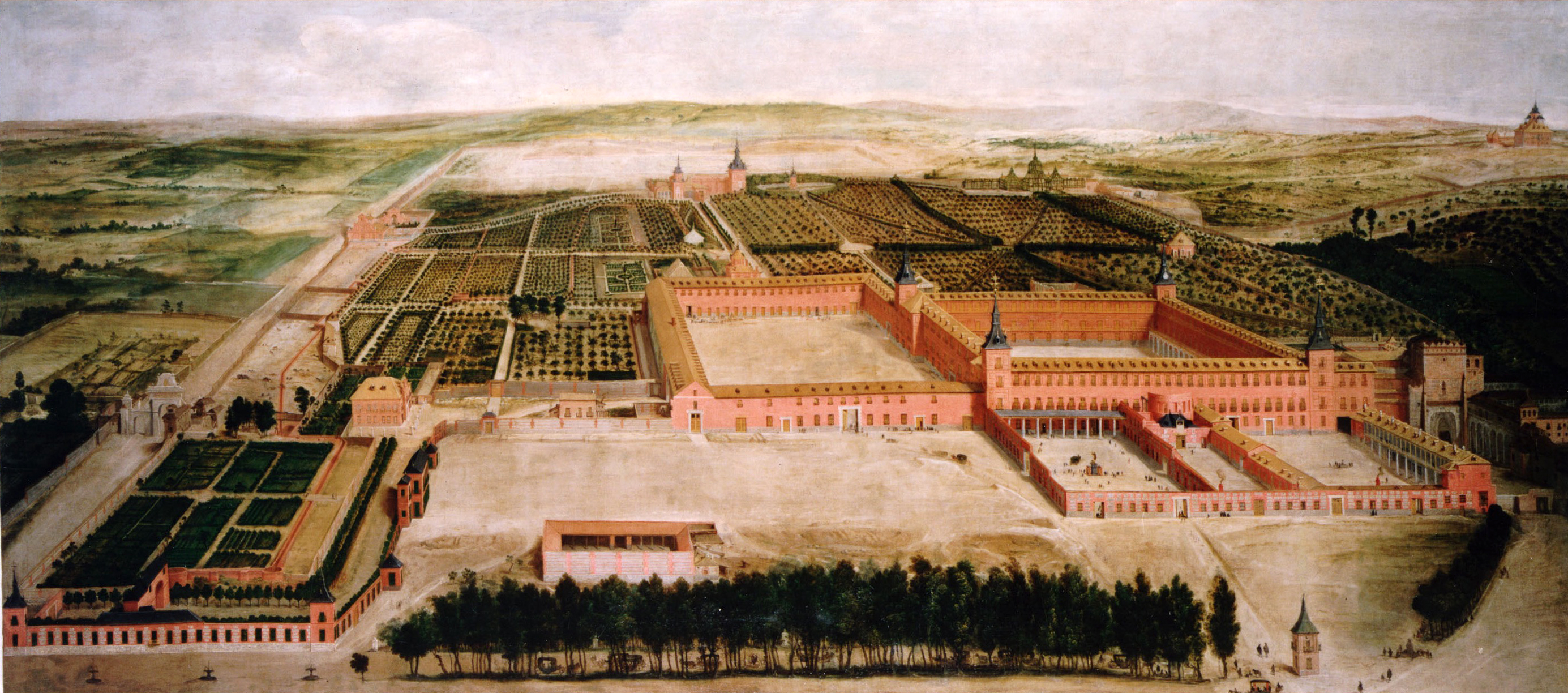
This painting was a assignment to Velázquez from Philip IV. In the early 1630s, a massive project to build and decorate a new palace for Philip IV was underway outside of Madrid.


Philip IV


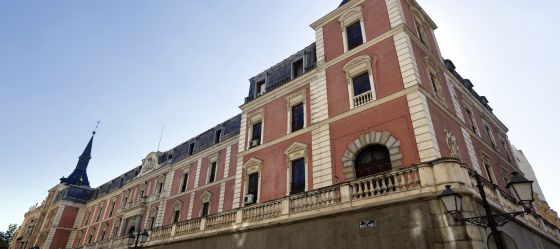
Called Buen Retiro, the palace was intended as a retreat for the king and his court. In addition to the temporary spectacles that were there, Buen Retiro came to house a big collection of art by some of the greatest painters of 17th century in Spain.


Drawing of the Buen Retiro Palace


http://ep00.epimg.net/ccaa/imagenes/2013/10/21/madrid/1382381507_853821_1382383386_noticia_normal.jpg

Among the works commissioned for the palace was a series of twelve paintings for the Hall of Realms, where royal audiences and other ceremonies took place. The paintings, by different artists, depicted recent Spanish victories.

Technical data:
  • Type: Oil on canvas. 
  • Dimensions: 307 cm x 367 cm (121 in x 144 in). 
  • Location: Museo del Prado, Madrid, Spain. 

The Surrender of Breda commemorates the capture of the city of Breda during the Eighty Years’ War, a conflict between Spain, which controlled the Low Countries, and the Dutch, who were fighting for political independence.

This painting is a perfect representation of the collection of atmospheric and chromatic light.


This painting shows the third day after the battle between Spain and the Netherlands. The work is not focused on the battle itself, but rather in the reconciliation. That’s why both armies, the Spanish on the right and the Dutch on the left, although days before were killing each other in battle, here they share a peaceful atmosphere, which contrasts with the smoke coming up from fires at the background.

The canvas is divided into five horizontal bands, which are the foreground, the area of activity and focus, a view of Breda in the distance, the countryside and the blue sky and horizon. The horizon is very high, and represents the threatening atmosphere there is due to the conflict between the Spanish and the Breda peoples. All bands except for the one with the two peoples are painted in rather muted and dark colors to represent the sadness and tension of the Breda militaries. A line of vertical spears behind the Spanish is balanced by the Dutch weapons being closer to the left to show a diagonal approach of the Spanish. At the main focus the commander of the Dutch army, Justin Nassau, gives the keys of the city to Spinola. The key represents the key of the painting as a whole, locking all other components into place. On the right is the tilted flag, and below the horse's legs, the document of surrender is in the lowest right. On Nassau, his white ruff and sleeves represent surrender of his town. The whole picture represents Velazquez's attempt to snapshot what actually happened, showing how one officer is staring at the viewers and another is gazing at the distant sky. He did this to make the viewers believe that the painting was an actual capture of what happened during the capture of Breda.


Details of The Surrender of Breda.


Traditional scenes of surrender in early modern Europe, generally the winner was showed raised above the vanquished.

In this painting we can recognize different features of the Baroque style, like: movement, use of olil painting, predominance of colour over drawing, use of warm colours, contract of light and shadow, complex compositions in order to shock the curdience (asymmetry, curved lines), realism in representations…

Diego Velázquez

He was a Spanish painter who was the main artist in the court of King Philip IV and one of the most important painters of the Spanish Golden Age. He was an individualistic artist of the contemporary Baroque period, important as a portrait artist.


http://www.nndb.com/people/913/000071700/velazquez-sm.jpg

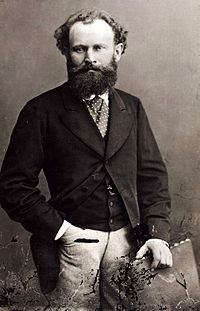
Velázquez is often cited as a key influence on the art of Édouard Manet, important when considering that Manet is often considered the bridge between realism and impressionism.


Édouard Manet.


The importance of Velázquez's art even today is evident, considering the respect with which 20th century painters consider his work.

Pablo Picasso presented a homage to Velázquez in 1957 when he recreated Las Meninas in 58 variations, in his characteristically cubist form.


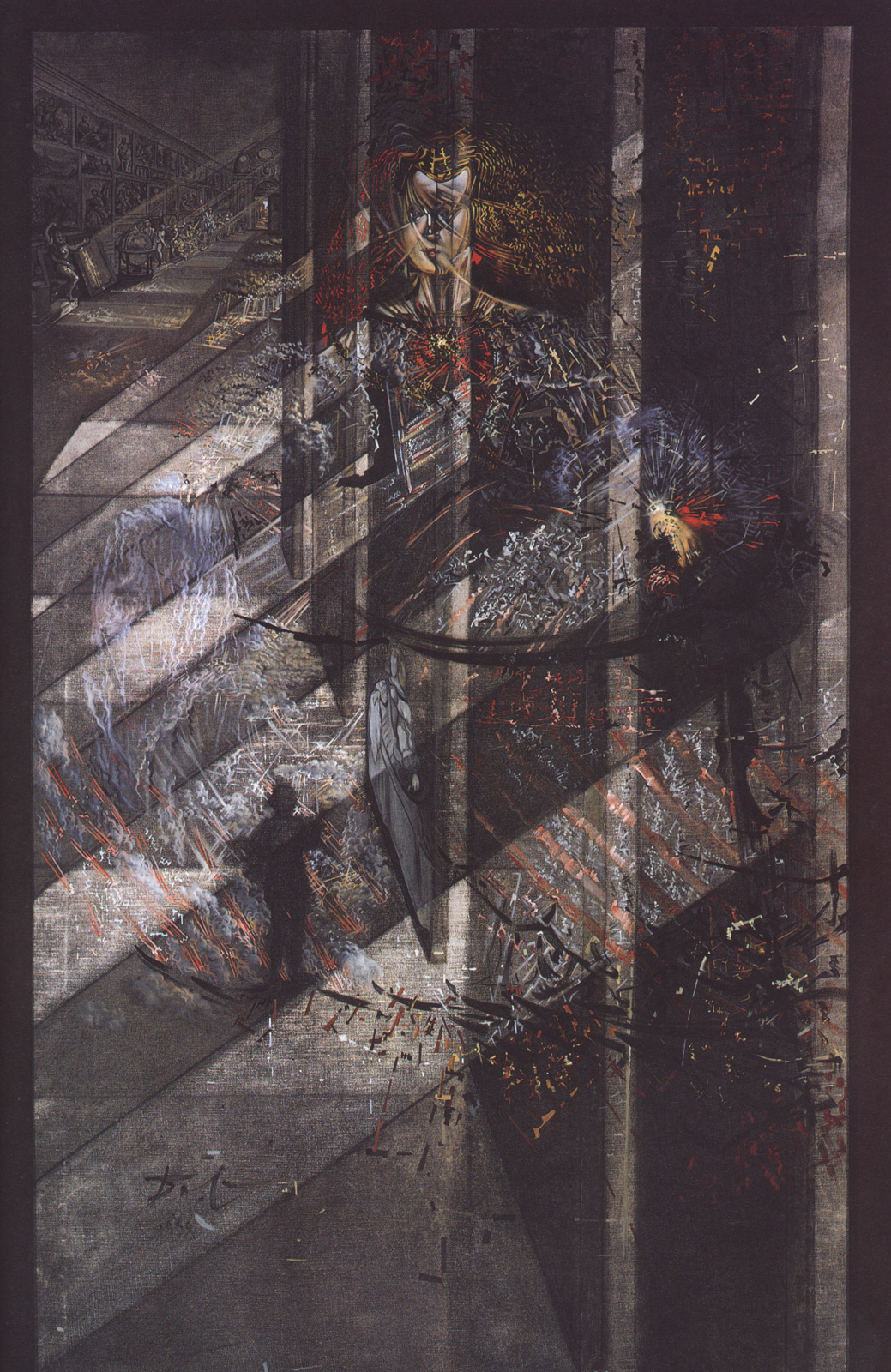
Salvador Dalí, created in 1958 a work entitled Velázquez Painting the Infanta Margarita With the Lights and Shadows of His Own Glory. The color scheme shows Dalí's serious tribute to Velázquez.


The Anglo-Irish painter Francis Bacon found Velázquez's portrait of Pope Innocent X to be one of the greatest portraits ever made. He created several expressionist variations of this piece in the 1950s. One such famous variation, entitled Figure with Meat (1954), shows the pope between two halves of a bisected cow.

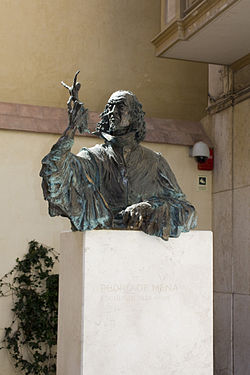
Penitent Magdalen, Pedro de Mena. Nuria Iniesta

Penitent Magdalen, Pedro de Mena.

This sculpture was made for the casa profesa of the Jesuits in Madrid during a voyage of Pedro de Mena to Madrid. It was finished in his studio of Malaga in 1664.

Technical data:
  • Size, dimensions: 171 cm x 52 cm x 61 cm
  • Material used: Polychromed wood, carving.
  • Actually, this sculpture of Pedro de Mena is on the National Museum of Sculpture, Valladolid.

The Penitent Magdalen is distinguished for the simplicity of its forms. She looks like a young and Hebrew woman. This sculpture is the living image of penance and repentance. It is made up of polychromed wood. The colors are inside the ocher and brown variety, very appropriated with the theme and spirit that Pedro tried to transmit with this sculpture. This is one of the finest examples of the realistic language of Spanish Baroque sculpture, steeped in emotion and religiosity.


Mary Magdalen contemplates a crucifix she holds in her left hand. Her right hand is on her bosom, indicating her love and devotion to Christ. She feels empathy for Christ's suffering. The movement begun by her left foot represent a dynamic pose. She has a sad look with red eyes, caused by tears and her mouth is slightly open and dry. For the long and flowing hair, Pedro de Mena used several strands of twisted wicker, painted with a chestnut colour. She is wearing a simple long dress, down to his feet and tied around her waist with a rope. X-radiography has revealed that the main body of the figure was created from a column of wood to which Mena attached the separately carved body parts using animal flue and long nails.

The theme of the Penitent Magdalen is a representation of the repentance of the Cristian believers. This sculpture it isn’t very common at the time and in the Andalusian school neither. There aren’t many sculptures of this style during the Baroque period in Spain.
It is a sculpture with a lot of realism that transmits a spiritual value that shows the influence of some Castilians sculptors, like Gregorio Fernández.


In this sculpture we can recognize different features of the Baroque style, like: movement, realism in representations, interest in surprising the audience, capturing fleeting moments,  use of curved lines and cloths folds…

The subject belong to be religious, representing drama and realism, using: wounds, blood, expression of suffering (like the Penitent Magdalen) and pain.

Pedro de Mena

Pedro de Mena was a Spanish sculptor who is considered the most famous representative of Granada during the Baroque period in Spain. He dedicated his life's work to producing sculptures about religious imagery, just as his father had done before him. He shared his workshop with a famous Spanish sculptor and artist, Alonso Cano. As a result, the pair worked together and collaborated in many projects during their lives.


Pedro de Mena has been one of the best sculptors of all time, he was able to create naturalistic iconographic on the Granada school, and he was one of the most influential sacred sculptors in the Spanish religious art during the 17th century until today.

He kept alive the Granada school and he created the focus of sculptors from Malaga. He had influence one hundred and fifty years after his death. 

Sources

Atlas ilustrado de la Historia del Arte, Susaeta.
Historia del Arte, Vicens Vives. J. R. Triadó Tur, M. Pendás García, X. Triadó Subirana.

Tuesday, October 28, 2014

Tuesday, 28th of October.

Good afternoon to everybody!

Today, Tuesday 28th of October, in the class of Social Sciences we have continued with point 
D) CULTURE AND ART: Scientific Revolution, Empiricism, Rationalism and Baroque art.
Yesterday, Paqui gave to us some homework: we had to look for the definition of Empiricism and Rationalism. So, at first, we have corrected this two definitions. Gema has read her definition of Empiricism: Method of knowledge based on experience; observing nature, formulating hyphoteses, testing them and writing a theory. And then I have read my definition of Rationalism: Method of knowledge based on the use of reason to learn. It was started by the philossopher René Descartes. Doubt was basic for him to start warning. After this, Paqui has corrected the mistakes and she has explained Empiricism and Rationalism to us. Also, Paqui has explained the main features of the rational been (thinking), and she also has write on the blackboard a small summary about Rationalism; COGITO ERGO SUM (latin sentence), which means: I think, therefore I exist. 
Paqui has also talk about the life of Leonardo da Vinci and Galileo Galilei.

Then, she has told us the discoveries during the 17th century, and we have talk about the scientifics of this century. The most important scientifics were Newton, Leibriz, Kepler, Galileo Galilei and Copérnico; all them lived on the protestant countries of the Holy Roman Empire. Paqui has explained the life of Galileo Galilei; he didn't was killed, but he was recanted, because science was opposite with religion. Galileo said that the Earth revolved around the Sun; and society didn't think this, they thought that all the planets turned around the Earth.

Paqui has also talk about the Royal academy of Language and Art created in Madrid during the 18th century. And then we have talk about the TV serie of Isabel. In the episode of yesterday, the king Charles I was born; son of Joanna of Castile, more known as Joanana the Mad; daughter of the Catholic Monarchs.

After this, Paqui has explained to us that the society of this century thought that when the children born, touch them was a sin. And the hygiene was used to prevent illnesses.

Later, we have started with Baroque art. We have seem a Power Point presentation and Paqui has said that Baroque art is a realistic art, with straigh lines, geometric and simple forms. She has told us that "baroque" is a perjorative word to define and exuberant and exaggeraded art in contrast to Renaissance art and New Classicism. And also the chronology of Baroque art: Predominant style during 17th century and part of 18th century. Some examples of Baroque art are: Collegiate Church of Catania, Italy; Square and Colonnade of Saint Peter of the Vatican, Bernini; Versailles Palace...
Paqui has also explained the differences between Baroque art and Renaissance art:

RENAISSANCE ART
  • Balance.
  • Ideal of beauty.
  • Simplicity.
  • Proportions
  • Straight lines.
  • Predominance of drawing over colour and light.
BAROQUE ART.
  • Movement.
  • Realism in representations.
  • Complexity.
  • Interest in suprissing the audience.
  • Curved lines, concave and convex.
  • Predominance of colour and light over drawing.
And finally, we have copied some new words in our glossary, like:
- I wish I: Ójala.
- To set free: Liberar.
- To lose ground: Perder terreno.
- To recant: Retractarse.
- Eppur Si Muove: The Earth move.
- Hygiene: Higiene.
- Pearl: Perla.
- Exuberant: Exuberante.
- Balance: Equilibrio.

Today was an interesting lesson.


                                                                    Galileo Galilei.


                                                     Collegiate Church of Catania, Italy.


                                                                      Versailles Palace.


                             Square and Colonnade of Saint Peter of the Vatican, Bernini, Rome.

Tuesday, September 16, 2014

Tuesday, 16th of September 2014

Hello everybody!

Today has been the first day of class of Social Sciences in this new school year. I think that our class it's really good, because we are all friends and we met Paqui two years ago, so I would like that the class works well. Our class is composed by two different classes: 4th A and 4th B.

Well, today in the class of Social Sciences, Paqui has given to us a sheet which contains information about the Social Sciences assessment criteria and some useful advices to pass the subject. Paqui has explained us how the final mark is divided into different percentages:

-50% of the mark will correspond to the marks of the exams.

-50% of the mark will correspond to the work of the classroom and homework (25%), notebook (10%) and finally the student's attitude in the classroom (15%).

Paqui also has explained how we should work during this school year.

After this, Paqui has given us the books that we will use during the year; but there are some problems, because there aren't enough books for everyone, so many of my classmates have to print the books. Also, she has talked about the organization of the notebook.

We have also included the first words in our Glossary, like: resit exam, damn, vow, brochure, raring to go, post... Then, Paqui has started explaining a new project about Renaissance art. The work has to be a brochure; she has told us that we will have to use photos, tray to reduce the information and contents, look for curiosities, trying to make it interesting, because if not it would be like a History book. We have to look information in our class book, but also in other sources, like internet or encyclopedias. Paqui has told us that we have to do this work correctly, because it could be very important for the mark.

Paqui has explained how we will write the journals everyday: a different person will write the journal each day on the blog and the rest of the classmates have to comment on it. Also she has explain the correct way to write the posts, and how we have to use the blog and enter on it. Today I' m the student who should write the journal.

Finally, Paqui has given to us a white sheet to write there our emails. It was a good lesson.


Birth of Venus by Sandro Botticelli.