Showing posts with label Baroque art. Show all posts
Tuesday, October 31, 2017
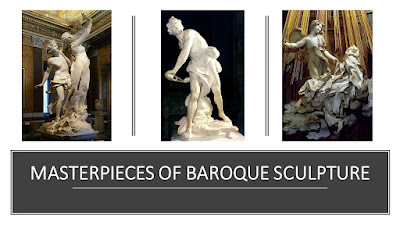
Presentations and some games to review Baroque art
Here you have the two presentations we used in class to study Baroque art. Use them to prepare your project for next Monday. There are also three games to review the main works of art of this style.
Friday, November 4, 2016
More Hispanic Baroque paintings
These are some more videos about the paintings the students have explained today:
And two links to learn more about the painting:
http://www.diego-velazquez.org/christ-in-the-house-of-martha-and-mary.jsp
https://www.nationalgallery.org.uk/paintings/diego-velazquez-christ-in-the-house-of-martha-and-mary
The Waterseller of Seville, which was explained by Ana:
The Meninas, explained by Marcos:
The Drunks, explained by Natalia:
And here you have some links for the rest of the paintings we analyzed:
The Martyrdom of Saint Philip (José de Ribera)
https://www.museodelprado.es/en/the-collection/art-work/the-martyrdom-of-saint-philip/a221ea0e-d38c-4018-be83-af9119458701
The Holy Family with a Little Bird (Murillo):
https://www.museodelprado.es/en/the-collection/art-work/the-holy-family-with-a-little-bird/8008380e-fef5-48b4-8caf-d78b810fb62c
The Martyrdom of Saint Serapion (Zurbarán):
https://www.khanacademy.org/humanities/monarchy-enlightenment/baroque-art1/spain/a/zurbarn-the-martyrdom-of-saint-serapion
Old Woman Cooking Eggs (Velázquez):
http://www.artble.com/artists/diego_velazquez/paintings/an_old_woman_cooking_eggs
The Jester Sebastián de Morra (Velázquez):
https://www.museodelprado.es/en/the-collection/art-work/the-buffoon-el-primo/cc7a8493-e2ff-4d33-a0d0-91d7dc210d5a
https://en.wikipedia.org/wiki/Portrait_of_Sebasti%C3%A1n_de_Morra
Christ on the Cross (Velázquez): :
https://www.museodelprado.es/en/the-collection/art-work/the-crucified-christ/72cbb57e-f622-4531-9b25-27ff0a9559d7
The Toilet of Venus (Velázquez): :
https://www.nationalgallery.org.uk/paintings/diego-velazquez-the-toilet-of-venus-the-rokeby-venus
Pope Innocent X (Velázquez): :
http://www.artble.com/artists/diego_velazquez/paintings/portrait_of_pope_innocent_x
The Spinners (Velázquez): :
https://www.museodelprado.es/en/the-collection/art-work/the-spinners-or-the-fable-of-arachne/3d8e510d-2acf-4efb-af0c-8ffd665acd8d
http://www.artble.com/artists/diego_velazquez/paintings/las_hilanderas
Christ in the House of Mary and Martha, explained by Cristina:
http://www.diego-velazquez.org/christ-in-the-house-of-martha-and-mary.jsp
https://www.nationalgallery.org.uk/paintings/diego-velazquez-christ-in-the-house-of-martha-and-mary
The Waterseller of Seville, which was explained by Ana:
The Surrender of Breda, which was explained by Laura Ortiz:
<
The Forge of Vulcan, explained by Paula:
And here you have some links for the rest of the paintings we analyzed:
The Martyrdom of Saint Philip (José de Ribera)
https://www.museodelprado.es/en/the-collection/art-work/the-martyrdom-of-saint-philip/a221ea0e-d38c-4018-be83-af9119458701
The Holy Family with a Little Bird (Murillo):
https://www.museodelprado.es/en/the-collection/art-work/the-holy-family-with-a-little-bird/8008380e-fef5-48b4-8caf-d78b810fb62c
The Martyrdom of Saint Serapion (Zurbarán):
https://www.khanacademy.org/humanities/monarchy-enlightenment/baroque-art1/spain/a/zurbarn-the-martyrdom-of-saint-serapion
Old Woman Cooking Eggs (Velázquez):
http://www.artble.com/artists/diego_velazquez/paintings/an_old_woman_cooking_eggs
The Jester Sebastián de Morra (Velázquez):
https://www.museodelprado.es/en/the-collection/art-work/the-buffoon-el-primo/cc7a8493-e2ff-4d33-a0d0-91d7dc210d5a
https://en.wikipedia.org/wiki/Portrait_of_Sebasti%C3%A1n_de_Morra
Christ on the Cross (Velázquez): :
https://www.museodelprado.es/en/the-collection/art-work/the-crucified-christ/72cbb57e-f622-4531-9b25-27ff0a9559d7
The Toilet of Venus (Velázquez): :
https://www.nationalgallery.org.uk/paintings/diego-velazquez-the-toilet-of-venus-the-rokeby-venus
Pope Innocent X (Velázquez): :
http://www.artble.com/artists/diego_velazquez/paintings/portrait_of_pope_innocent_x
The Spinners (Velázquez): :
https://www.museodelprado.es/en/the-collection/art-work/the-spinners-or-the-fable-of-arachne/3d8e510d-2acf-4efb-af0c-8ffd665acd8d
http://www.artble.com/artists/diego_velazquez/paintings/las_hilanderas
Wednesday, October 26, 2016
The Martyrdom of Saint Philip, by José de Ribera
This is a video that explains the main features of the painting Mª Rosa explained yesterday. You can see this painting in El Prado Museum, in Madrid:
And here you have some additional information to learn more about the painting:
Friday, October 21, 2016
How to recognize Baroque art
This is a short video that gives the keys to recognize Baroque art, comparing it with Renaissance art, as we did in class:
Some of Caravaggio's masterpieces
This video is an overview of Caravaggio's most famous paintings:
On the following video the curator of Italian and Spanish painting of the National Gallery explains Caravaggio's life and talks about the three paintings of this painter they have in the museum:
And here you have the explanation of some of the paintings we have studied today:
- The Conversion of Saint Paul, which includes the two versions of the painting:
- The Crucifixion of Saint Peter
- The Death of the Virgin
- The Supper at Emaus:
Some videos about Rembrandt's masterpieces
The following videoa have been made by Khan Academy and explain some of Rembrandt's most famous paintings:
The Anatomy Lesson of Doctor Nicolaes Tulp:
:
The Shooting Company of Frans Banning Cocq and Willem van Ruytenburch, commonly known as The Night Watch:
Rembrandt's Self-Portrait:
The Girl with the Pearl Earring
This short video explains why this Vermeer's painting is considered to be a masterpiece:
Here you have the trailer of the 2003 film inspired on the painting, where you can learn how Vermeer painted and the typical life in the city of Delft in the 17th century. You will see many of the paintings we have seen in class today:
Monday, October 3, 2016
Presentations to study the 17th century
Here you have the presentation we are going to use to study the 17th century. The firts one includes the contents related to politics, economy and culture and the other two are about Barque art:
¡
Tuesday, November 10, 2015
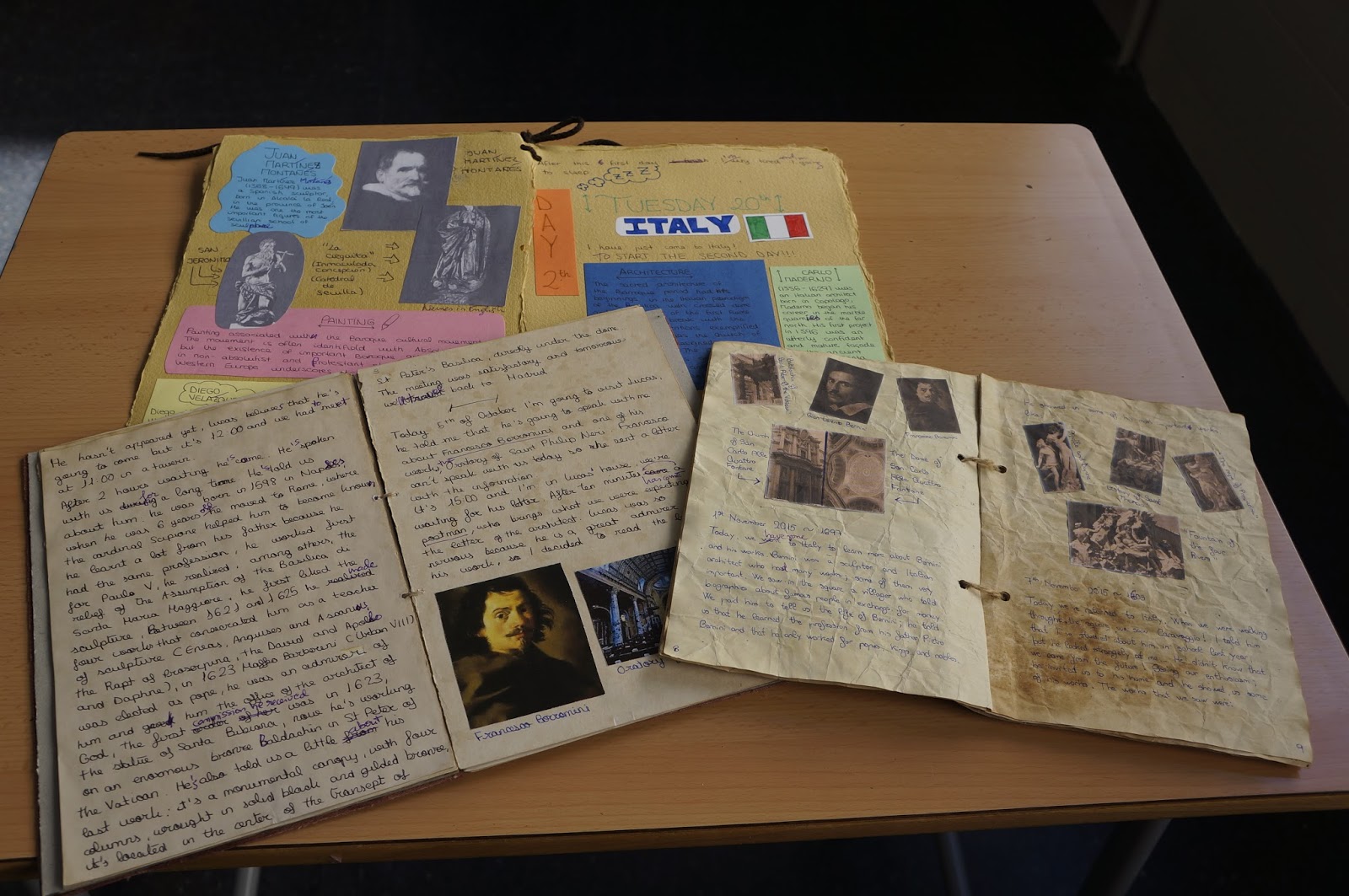
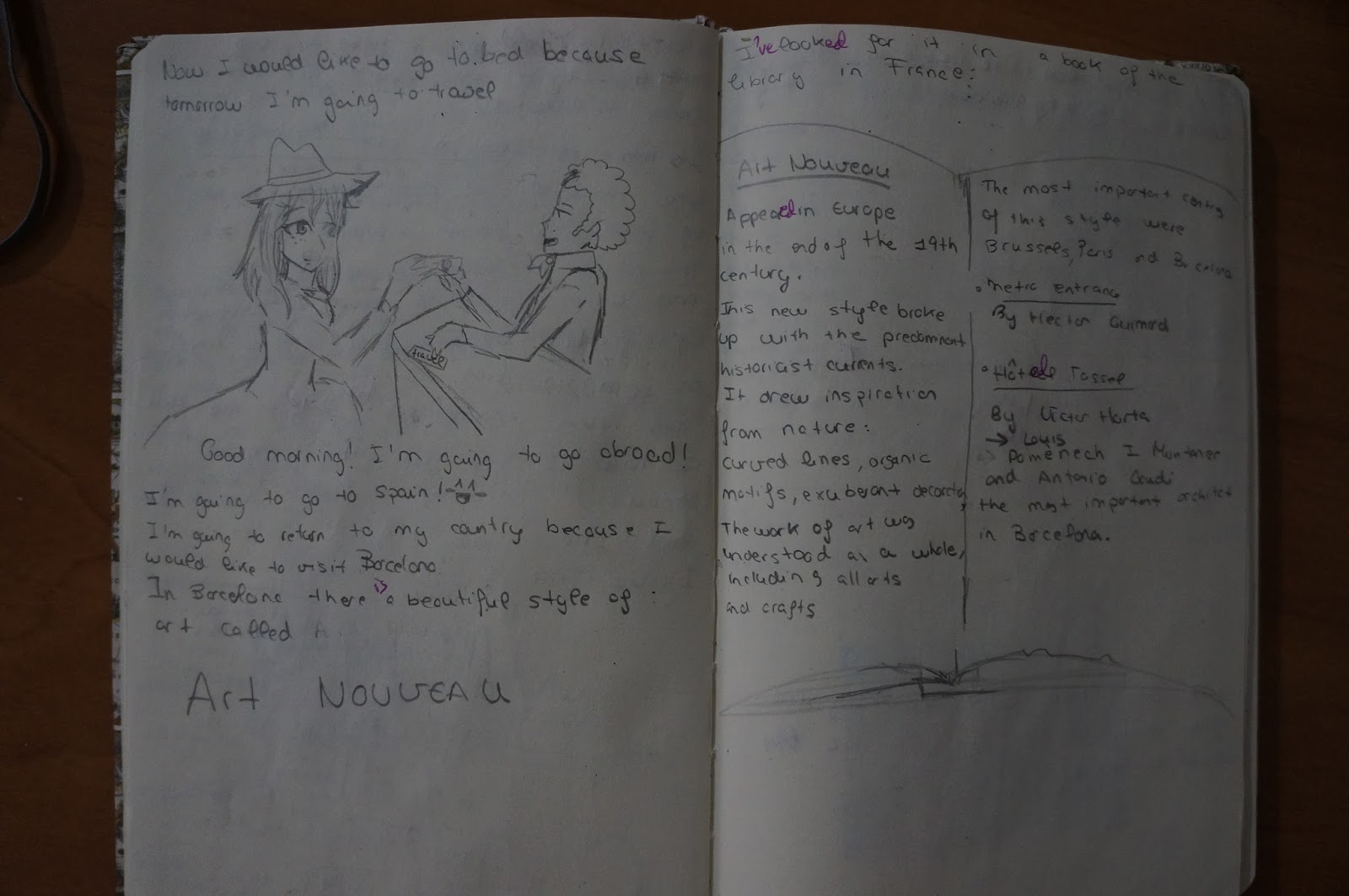
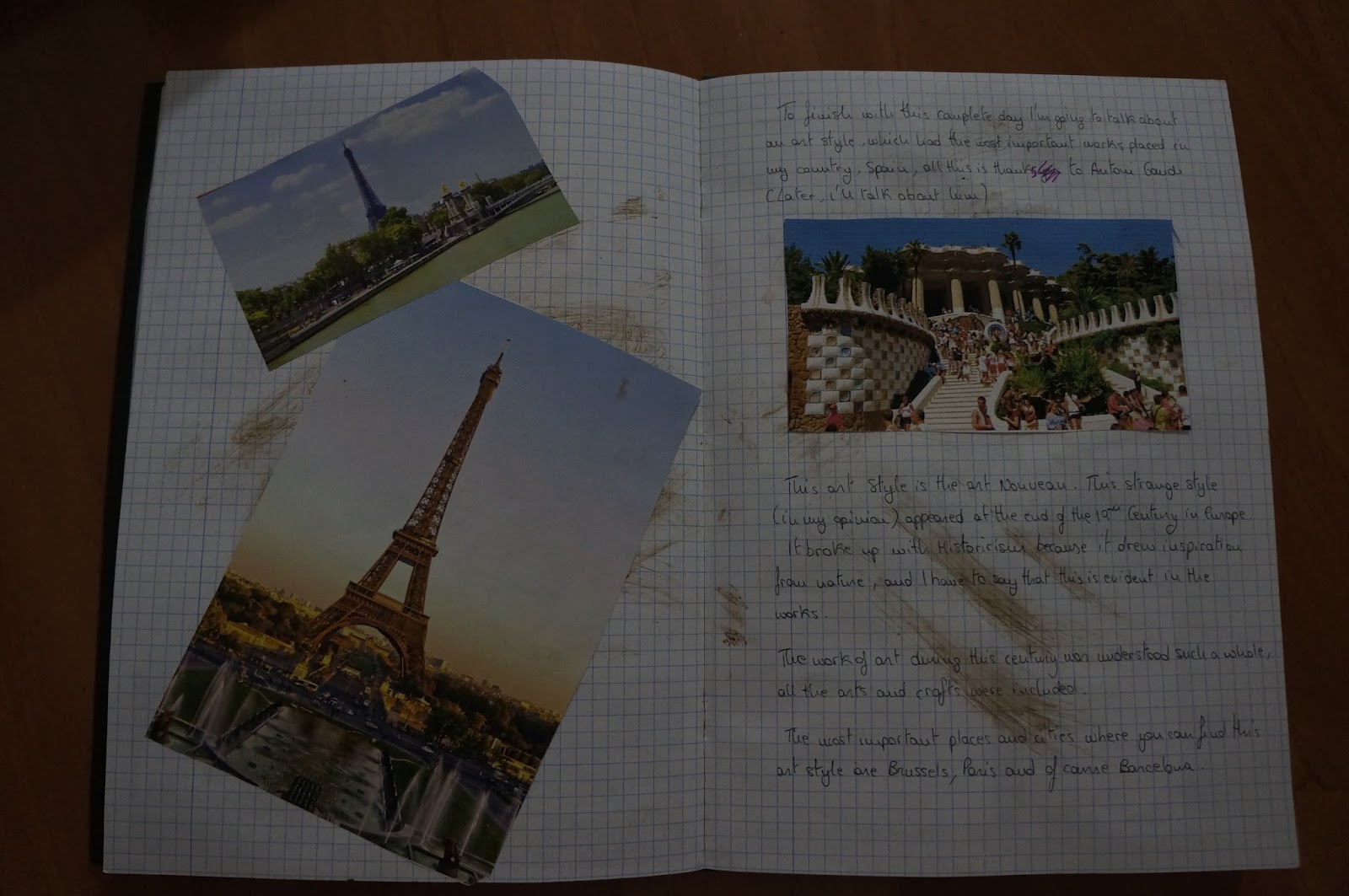
Baroque art travel journals
Here you have the pictures of your travel journal I've taken this morning. I hope you will find some time to have a look on your classmates journals and also that you try to improve them. I'm sure that the next project will be better.
The last four pictures correspond to María Pérez's travel journal. In my opinion it combines both a good design and almost complete content.
Tuesday, October 6, 2015
Two presentations for your Baroque art travel journal
Here you have two presentations about Baroque art. You can o¡use them as a reference to learn about the main features and most important art works of every artist:
Monday, October 5, 2015
Some examples of travel journals
Here you have some examples of the travel journals the students of 4th ESO made about the art styles of the 18th-19th centuries last year. There were really good projects. I hope yours will be at least as good as they were.
Thursday, November 20, 2014
The Holy Family with a Bird, Bartolomé Esteban Murillo
THE HOLY FAMILY WITH A BIRD
The Holy Family with a Bird was painted by Bartolomé Esteban Murillo (1617-1682), Baroque painter from Seville. This painting was one of his most important paintings. It was painted around 1650. The Holy Family with a Bird is nowadays in El Prado Museum in Madrid, and Murillo used an oil technique over canvas to paint it. The painting’s size is 144 x 188 cm and it belongs to the Baroque style.
Bartolomé
Esteban Murillo
The painting's name comes from the little bird Jesus is showing to the dog and it represents the Holy Family as a normal family. The child, Jesus, who is the
most important figure of the painting, is playing with a bird and a dog, it seems that he is
happy. As he is the most important figure, he is painted in brighter colours.
On the left, we can see his mother, the Virgin Mary, who has stopped working
to look at his son, and on the right his father, Saint Joseph, who is also
looking at him. As you can see, the painting represents movement (the child
playing, the dog…), colour is predominant over drawing and the colours are
dark. The scene seems peaceful and calm. As you can see, the light that illuminates
the picture enters from the left side, and it only illuminates the figures, the
background is really dark and doesn’t allow to see that the house is simple and
humble. The figures of this painting are very realistic and perfect.
Source: http://www.artble.com/artists/bartolome_esteban_murillo/paintings/the_holy_family_with_a_little_bird
We can observe that this painting is from the Baroque
period because the painter uses contrasts in colours, this technique, known as “Chiaroscuro”, was usually used in the
Baroque paintings, to make them more realistic and perfect. Murillo uses other
techniques in this painting, mentioned above.
One curiosity is that Saint Joseph didn’t have much
importance in art, it was thought that he didn't educated Jesus well, but with the Counter-Reformation the devotion to him grew
considerably. This devotion was promoted by some religious institutions that inspired it since the 16th century. In this work, Murillo stands out
Saint Joseph’s value as a worker person and represents him as an ideal father.
Sources I used to make this project:
In both projects, I've used Wordreference to search the words I didn't know.
Labels:
4th ESO A-B,
Azahara Andújar,
Baroque art,
Baroque project,
painting,
Spain
Wednesday, November 19, 2014
ECSTASY OF SAINT THERESA, BERNINI
Ecstasy of
Saint Theresa is a sculpture made in marble between the years 1647 to 1652 by Gian Lorenzo Bernini. It was requested by cardinal
Cornaro to be placed on its grave in Santa Maria della
Vittoria’s church in Rome, nowadays it still placed there.
| Ecstasy of Saint Theresa, in Cornaro's chapel. |
| Gian Lorenzo Bernini |
This work
is usually considered as the most emblematic piece made by Bernini, who was also the main sculptor from the Barroque period. It’is a
religious sculpture, it represents the ecstasy of Saint Theresa based on her
own deeds in which it’s written that she felt a divine arrow pierced her chest
and she felt pain and pleasure at the same time and she also levitate.
The author obtained
a lot of dynamism in this work, and transmitted perfectly Saint Theresa’s
feelings. We can see her lying down with a long dress and the angel over her,
who is looking at her and holding an arrow.
Let’s look
a bit closely with a presentation I've made:
http://citelighter-cards.s3.amazonaws.com/p16o7qj2ve19a61u8tsg0dro11270_8664.jpg
Tuesday, November 11, 2014
11th November of 2014 (Tuesday)
Today the class of social sciences have been so interesting, and a little diferent. At first, Paqui has copied a outline on the blackboard, and we had to complete. If we haven't finished, we have to complete at home. This outline sumarize the baroque art in the hispanic monarchy. There are three paragraphs: Architectures, sculptures and paintings. Here we have to complete with the main features and main architectures, paintings and sculptures, and examples. Also Paqui has explained in the digital board with a power point. ç
Also today Paqui has given us the exams that we did the last Friday. My mark was a 6.45. I'm happy with this mark because in 2ºESO I had less, but also I can do more so I will try improve in the next exam. In the exam there was five questions, or six if you failed the Renaissance art and you had to recover it.
And this is the today's journal. I hope that you like it.
This is an example of the San Esteban de Churrigueresque, in the sculpture of the Baroque Art.
Also today Paqui has given us the exams that we did the last Friday. My mark was a 6.45. I'm happy with this mark because in 2ºESO I had less, but also I can do more so I will try improve in the next exam. In the exam there was five questions, or six if you failed the Renaissance art and you had to recover it.
And this is the today's journal. I hope that you like it.
This is an example of the San Esteban de Churrigueresque, in the sculpture of the Baroque Art.
Subscribe to:
Posts (Atom)