Showing posts with label Modern Age. Show all posts

Monday, October 14, 2013

Hygiene in the Modern Era


A Woman Bathing in a Stream, Rembrandt van Rijn (1654)


As we learnt last Friday, hygiene customs have changed a lot with respect to the Modern Era. After the Black Death epidemics, the idea that water was a dangerous  way of transmission of illnesses extended. People thought that water carried diseases into the skin and public baths were closed in many cities. There was also a moral reason.against taking baths: as people had to be naked to have a bath, this could induce them to debauchery and depravation. People only cleaned their hands and face regularly and they took baths from time to time. The rich people had more resources and they sometimes had special rooms with a tub to take a bath. They used scented oils, parfums or flower petals mixed with water. But even if they had the means, they didn't wash frequently: once a month or one or two times per year. Even kings were very dirty: 

- Isabella I, the Catholic queen of Castile didn't change her shirt until they conquered Granada. The campaign lasted 10 years

-  King Henry IV of France was described as "stinking of sweat, stables, feet and garlic"

- Queen Elizabeth I of England bathed only once a month and James I, her succesor, only cleaned his fingers and wore the same clothes for months 


- Louis XIV of France, the Sun King, had dozens of bathrooms at Versailles, but he didn't take baths. His servants ruubed his hands and face with alcohol and he only took therapeutic baths from time to time. 


James I of England


In different countries men didn't take their hats even when they were eating, in order to avoid the lice falling into their plates. People used parfums to hide the smell. 

The poor people had more difficulties to have access to water and they commonly cleaned with a rag and plain water (no soap, because it was a luxury product). When they took a bath, alll the family did it in the same water: first the oldest members of the family and the youngest in the end. This custom is the origin of the expression "Don't throw the baby out with the bath water", which means "not throwing or spoiling good things when you get rid of something you don't need anymore. 

If you want to read more about this, here you have some links. They are really interesting: 

http://www.historyundressed.com/2008/07/history-of-hygiene-bathing-teeth.html

http://www.economist.com/node/15108662

http://hubpages.com/hub/A-History-of-Dirty-Habits

http://www.andreazuvich.com/history/the-hygiene-of-the-17th-century/

http://www.skin-science.com/_int/_en/topic/topic_sousrub.aspx?tc=SKIN_SCIENCE_ROOT%5EWORDS_RITES_AND_CUSTOMS%5EWATER_HYGIENE_AND_BEAUTY

Saturday, October 27, 2012

Interactive activities to review for Wednesday´s exam

Here you have some interactive activities made with HotPotatoes software to review about some of the contents of next Wednesday´s exam. They refer to the 17th century and Baroque art. If you want to check your knowledge about these contents, please click on the images below and start. You can also leave a comment about how your final score has been. 


Sunday, October 21, 2012

The Reapers´ War and the Catalan anthem

Corpusdesang.jpg

Corpus of Blood, 1640


As we studied last Friday, the Count-Duke of Olivares´ projects for all the territories of the Hispanic Monarchy provoked generalized revolts, which were more serious in Catalonia and Portugal. In Catalonia the revolt started in January 1640, when the population revolted against the royal order of accomodating 10,000 soldiers. The protests, headed by peasants, were strongly repressed by the royal army. Armed peasants occupied the city of Barcelona, killed the lieutenant of the royal army and the Generalitat broke up with the Monarchy. The Count -Duke of Olivares planned the invasion of Catalonia and the representatives of the Generalitat contacted Louis XIII, the king of France. Although France had always been Aragon´s enemy, Louis XIII decided to support the Catalans in order to take advantage  of political instability in the Hispanic Monarchy and open a new front against Philip IV (remember, "my enemy´s enemy is my friend")

The Reapers´ War  lasted for almost 19 years. It ended in 1659, with the signature of the Peace of the Pyrenees:  Catalonia lost the territories of Roussillon and Cerdanya and a marriage alliance was established: Louis XIV would marry María Teresa of Austria, Philip IV´s daughter and Charles II´s sister. This marriage would be decisive some years later, when Charles II died without direct successors. The French branch of his family got rights to the Hispanic Monarchy, but Charles II´s testament wadn´t accepted by the Habsburg branch and other European powers. 

The Reapers´ War belongs to the events Catalans consider part of their national history of fight for independence. In fact, the Catalan anthem takes its name and music from those events. Its´called  Els Segadors (The Reapers), because peasanst had an important role in the uprising against the royal troops and the beginnig of the Corpus of Blood , in June 1640, was related to an incident with a reaper. The music of the anthem was composed by Francesc Alió in 1892, drawing inspiration from a 17th century folk song. The lyrics were composed by Emili Guanyavents in 1899, for a song contest organized by Unió Catalanista, a political group which demanded self-government (not independence) for Catalonia. Guanyavents draw inspiration from a 17th century popular ballad collected by Manuel Milà i Fontanals on a book called Romancerillo Catalán. On the following video you can listen to the old version, with the lyrics of the old ballad compiled by Milà i Fontanals: 


The song was adopted by the Catalan Parliament as anthem in 1993. This is the modern version, with Emili Guanyavents´ lyrics:


If you want to read the translation in Spanish, click here.

And here you have the score:


Thursday, October 18, 2012

Corruption at Philip III´s court: the Duke of Lerma´s case


The Duke of Lerma (1602), painted by Juan Pantoja de la Cruz

As we learnt yesterday, political corruption and influence peddling are not a 21st century invention. The Duke of Lerma, Philip III´s favourite, is a good example of political abuse on his own benefit. His influence over Philip III was such that he convinced him to move the capital city from Madrid to Valladolid in 1601 only because he had bought a lot of land on the outskirts of the city. When the capital city was moved to Valladolid, the Duke sold these properties at a very high price. He did the same some years later: he bought a lot of cheap properties in Madrid. These properties considerably increased their price when Lerma "convinced" the king to move the capital city back to Madrid in 1606. Lerma was an ancestor of many land speculators. 

In 1618 an enquiry about the Duke of Lerma´s way of administering the royal finances was opened. The Duke of Uceda (his own son), father Aliaga, a Dominican monk and the Count-Duke of Olivares denounced corruption and headed a conspiracy against the all-powerful Duke of Lerma and some of his collaborators started being removed from their posts. When the Duke started fearing from being prosecuted, he convinced the Pope to ordain him cardinal and escape civil justice. After this he asked the king permission to leave the court and retired to his palaces in Valladolid and Lerma (Burgos). The people of Madrid started singing a folk song with these lyrics: In order to avoid being hung, the biggest Spanish thief, wears red clothes. (Para no morir ahorcado, el mayor ladrón de España, se viste de colorado, as cardinals did)


There is another curious story about the Duke of Lerma. It seems that Baroque sculptor Gregorio Fernández portrayed him in one of his most famous procession floats: the Deposition with the Two Thieves on the Cross. The Duke of Lerma had been Gregorio Fernández´s patron when the sculptor started working in Valladolid and Fernández might have wanted to thank the Duke for his help. But the fact is that he portrayed the Duke of Lerma as Dismas, the good thief. Was this made on purpose? We don´t really know. But the truth is that the Duke of Lerma is reminded as one of the biggest thieves in power. He became very rich by using influence peddling and selling official posts and used power to escape justice. Nothing to envy to many current corruption cases with politicians!

Here you have a picture of the Duke of Lerma´s bronze statue and Gregorio Fernández´s Good Thief: 


Tuesday, October 16, 2012

Sovereign defaults during Philip II´s reign and later


The Invincible Fleet to invade England in 1588 increased the debts of Philip II´s Monarchy

Yesterday we talked about the consequences of maintaining big empires: huge armies to subjugate the different peoples and defend the territories, high administration costs... Philip II´s heritage entailed a lot of responsibilities and huge expenses. During his rule the Hispanic Monarchy went bankrupt four times: in 1557, 1560, 1576 and 1596. Although big quantities of precious metals arrived from the Indies every year, this was not enough to cover the war expenses and the State couldn´t pay its debts. The Fuggers, a familiy of German bankers who worked with the Hispanic Monarchy since Charles V´s times, went also bankrupt when Philip II couldn´t pay his debts. The creditors had to accept that they couldn´t receive all their money (debt deduction). This is what we call debt restructuring: reducing the money the debtors had to give back, changing the period of payment, giving them more time to pay...

The Hispanic Monarchy was the first State to go bankrupt. During Philip III´s rule, there were two more defaults in 1598 and 1607. The same happened during Philip IV´s rule in 1627, 1647, 1652 and 1662. There was a last Habsburg default in 1666 during Charles II´s reign, which led to a monetary reform to control inflation and stabilize prices. The first Bourbons controlled the economic situation during the 18th century, but expenses rocketed in the 19th century, due to several wars, and sovereign defaults came back in 1809, 1820, 1831, 1834, 1851, 1867, 1872 and 1882. The last Spanish default took place during the Spanish Civil War (1936-1939). Spain holds the historical record of sovereign defaults. 

If you think about the present situation in Greece, you can imagine how things were here everytime the State went bankrupt. So, what do you think? Are Empires worth it?

Here you have some interesting links to learn more about sovereign defaults:

- List of countries which went bankrupt and had to restructure their debt: 


- A Financial Times article which compares Philip II¨s defaults with the present situation in Greece: 


List of the historical sovereign debt defaults of some European countries


Sunday, October 14, 2012

Presentations to study the Hispanic Empire in the 16th and 17th centuries

Here you have two presentations: 

-  the presentation we used last Wednesday to study Charles I´s Empire. We´ll also use it  tomorrow to study Philip II´s rule. 

- another presentation we´ll use to study the decline of the Hispanic Empire in the 17th century. It also includes contents about Absolute Monarchy, the Thirty Years´ War and the English Revolutions. 

As I always tell you, have a look on them to complete your notes..


Charles V and beer


Yuste Monastery

Last day we learnt that Charles V decided to abdicate in 1556 and retired in Yuste. As he liked eating and drinking well, he settled down in the monastery with 20 servants. One of them was a master brewer, in charge of producing beer in the Flemish style, as the Emperor liked. This was the origin of the first beer factory (rather manufacture) in the Kingdoms of the Iberian Peninsula. 

The brewery continued to exist in the monastery in the following centuries. Nowadays Heineken, the big beer producer, has supported the production of a craft beer called Legado de Yuste. They follow the same craft process the monks used in the 16th century. If you want to learn more about the production process, click on the following link: 

Monday, October 8, 2012

Some links to end with Baroque art


Michelangelo Merisi da Caravaggio


If you like to learn about the hidden side of History, here you have an interesting link about Caravaggio´s life. This Baroque Italian painter was a brilliant artist, but had a very controversial personality. He killed a man on a fight, spent some time in jail and earned his living as a pimp (exploiting  prostitutes). If you want to read more about him, click on the link below: 


And this link includes Velázquez´s biography and his complete works (244 paintings)


Venus at her mirror, (1647-1651)Velázquez

Presentation about Baroque in the Hispanic Kingdoms

Here you have the presentation we´ve used today to study Baroque Art in the kingdoms of the Hispanic Monarchy. Pay special attention to Velázquez´s paintings: 


Sunday, September 30, 2012

The Index Librorum Prohibitorum


List of forbidden books in Castile in 1583

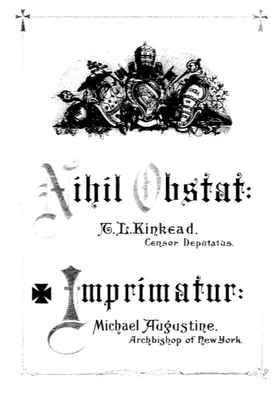
As we studied last Friday, one of the decisions made by the Catholic Church to stop the extension of Protestantism was the creation of the Index Librorum Prohibitorum, a list of the books forbidden for the Catholic believers. This list was created in 1559 and it existed until 1966, when Pope Paul VI decided to abolish it. The Index included all the books whose ideas were considered against the official dogma of the Catolic Church. Many works of thinkers and scientists were included on it, but also novels. Every book published in the Catholic countries had to pass the control of the Church and receive its aproval: Nihil obstat (nothing forbids) and Imprimatur (let it be printed). If the book belonged to a religious institution and was on questions of religion or moral, it should also get the Imprimi potest (it can be printed). 

Nihil Obstat and Imprimatur of a book published in New York


The institution in charge of the List of Forbidden Books was the Sacred Congregation of the Inquisition, later called the Holy Office. Owning forbidden books was considered to be heressy and the heretics were persecuted and punished. For example, Giordano Bruno, an Italian philosopher and scientist, was burnt at stake for his writings. Galileo Galilei had to recant many of his ideas about the universe, because this was the only way to save his life. 

At present the Congregation for the Doctrine of the Faith is the insitution in charge of watching books and overseeing the Catholic doctrine. Cardinal Joseph Ratzinger was the prefect of the Congregation for the Doctrine of the Faith since 1981 until he was elected Pope in 2005. This institution still bans the books they consider theologically wrong. For example, they punished the books of some members of the Church who follow the Liberation Theology current, such as Leonardo Boff, Jon Sobrino or Hans Küng

On the following link you have a complete list of the books and authors forbidden for the Catholics until the list was suppressed


The Opus Dei, a very conservative group of the Catholic Church, has a list of forbidden books for its members. They have created a list of more than 60,000 books and rated them according to religious and moral criteria. Here you have the list of forbidden writers: 


On the same link you can upload the whole booklist and  watch the "mark" Opus Dei gives to every book. 

Thursday, September 27, 2012

Presentations used this week

At some students´ request, here you have the presentations we´ve been using this week to study the Age of Discovery and some of the cultural changes during the Modern Era. 


Monday, September 24, 2012

Some data about the colonization of the Indies and slavery


Smallpox epidemics, Codex Florentinus

As we have studied today, the contact between the Europeans and the peoples of the Americas was catastrophic for the last ones. Although there was a number of natives who died fighting against the conquerors, most of them died from diseases transmitted by the Europeans. The Indies were "virgin soil" for many European diseases, which became lethal for the native Americans. Estimates calculate a demographic loss from 70 to 90 % of the total population of the continent. The population of the Americas didn´t recover until 1800, three centuries after the beginning of the conquest, but including the Europeans who had migrated to the Indies and the slaves forced to leave Africa. The impact was such that the natives were not the majority of the American population any more. 


Advertisement of a slave auction in Virginia, British colony in North America, in 1769

When the natives started dying, the Europeans replaced them by black slaves brought from Africa forcedly. Around 12 million slaves crossed the Atlantic Ocean to work in the plantations and mines owned by the Europeans and their descendants.Many of them died during the voyage (25%). Slavery started in the Castilian and Portuguese colonies in 1502, became an important part of triangular trade and it didn´t finish until the end of the 19th century: in the USA slavery was abolished after the Civil War (1861-1865). Spain definitively abolished slavery in its colonies of the Caribbean Sea between 1873 (Puerto Rico) and 1880 (Cuba). 

Figures have been extracted from the book LIVI BACCI, Massimo, Los estragos de la conquista. Quebranto y declive de los indios de América, Editorial Crítica, Barcelona, 2006. (English version: Conquest: the destruction of the American Indios, Polity, 2008).

More information about the Columbian exchange and demographic catastrophe for the native Americans:


Some important figures in the abolition campaign in the United Kingdom: 


Interactive map about slavery: 

Thursday, October 13, 2011

2011-2012 Challenges. Number 4


This week we´ll learn something more about Diego de Silva y Velázquez, one of the genius of world painting. The following questions will be focused on his personal life and his work. The students who have commented on Velázquez´s paintings will be able to answer most of the questions. So, take a little time and participate!

QUESTION 1

Where did Velázquez study to become a painter?

QUESTION 2

One of the models used by Velázquez on his painting Christ in the house of Martha and Mary also appeared in another Velázquez´s painting. What is this painting?

QUESTION 3

Velázquez moved to Madrid and started working for the court thanks to the protection of a powerful valido. Who was this powerful man?

QUESTION 4

As a court painter, Velázquez had access to the royal collection of paintings. What Renaissance painters could he study in the royal collection?

QUESTION 5

In 1628 Velázquez met another important painter, who was visiting Madrid in a diplomatic mission. Who was this "diplomatic" painter?

QUESTION 6

Velázquez travelled to Italy twice in his life. The first time he spent some time studying other painters. What was the purpose of his second trip to Italy?

QUESTION 7

Velázquez only painted a female nude in his long career. What is the name of this painting? According to experts, who was the  model used for this painting?  What is the realtion between this painting and suffragettes?

Monday, October 3, 2011

Baroque art presentations

These are the two PowerPoint presentations we are going to use to study Baroque art: the first one refers to the general features and Baroque style in Europe and the second one is focused on the Hispanic Kingdoms. Please, review them if you want to observe the main features and works of art with more detail.


Thursday, September 29, 2011

2011-2012 Challenges. Number 2


The Dukes of Lerma and Uceda and the Count-Duke of Olivares

This week you will have to research about some aspects of the Hispanic Monarchy during the 17th century: 


QUESTION 1
One of the Austrias´ validos used his power and influence over the king to become very wealthy. He even convinced the king to move the capital city from Madrid to a different city. Who was this valido? What was the new capital city of the Monarchy? When did the court come back to Madrid and why? When intrigues and corruption cases in which he was involved, what did he do to avoid being prosecuted?


QUESTION 2
The famous writer Francisco de Quevedo had intense relations with several validos under Philip III and Philip IV´s reign. What effects did this relations have in Quevedo´s life? Why was Quevedo confined in a monastery between 1639 and 1643?


QUESTION 3
The opposition to the Count- Duke of Olivares´s policy is in the origin of the anthem of a territory of the Iberian Peninsula. What is this territory? What is the title of this anthem and on what events is it inspired?


Images

Wednesday, September 28, 2011

Louis XV´s speech about the king´s power


Louis XV of France


This year we are going to start commenting on historical documents and the blog will have a section with original texts related to the contents we´ll study. The first one is an extract of a speech King Louis XV of France gave before the parlement of Paris in 1766:  

In my person alone lies that sovereign power whose very nature is the spirit of counsel, justice and reason. From me alone the courts receive their existence and authority. The fullness of this authority, which they exercise in my name only, remains permanently vested in me, and its use can never be turned against me. Legislative power is mine alone, without subordination or division. It is by my sole authority that the officers of my courts effect not the creation of the law, but its registration, promulgation and execution, and that they have the right to remonstrance, as is the duty of good and faithful counsellors. Public order in its entirety emanates from me. I am its supreme guardian. My people are one with me, and the rights and interests of the nation – which some dare to make into a body separate from the monarch – are of necessity united with my own and rest entirely in my hands.
Louis XV´s speech before the parlement of Paris, 1766


Source: FURET, François, Revolutionary France, 1770-1880, Blackwell Publishing, 2004


Could you explain the relation of this speech with what we have studied this week? Do you think Louis XV´s power was as he described it?

PowerPoint presentation about the 17th century

Here you have the PowerPoint presentation we have been using this week to learn about the 17th century. Review the slides if you want to take some notes to complete your schemes and summaries.


Thursday, September 22, 2011

2011-2012 Challenges. Number 1


Five mercenaries in the Thirty Years´War


Hi everybody!

As we have lessons on Monday, Wednesday and Thursday this year, the weekly challenges will be set on Thursday afternoon. This way you will have more time to research and solve them. Let´s inaugurate this year´s challenges with some questions about the Thirty Years´ War.

QUESTION 1

One of the most famous Spanish painters immortalized the result of a victory of the Hispanic Army during the Thirty Years´ War. Who was this painter? What is the name of that painting?

QUESTION 2

There is a famous series of novels, which explain different aspects of life, culture and politics in the Hispanic monarchy during the  17th century. The main character of these novels fought and died in the Battle of Rocroi, considered to be the beginning of the end of the Hispanic hegemony in Europe. What is the name of this fictional character? Who is the author of this series of novels?

QUESTION 3

The casualties of the Thirty Years´ War were numerous, especially in the German States, where the main battles took place. The use of mercenaries caused a lot of damage to the civil population. They attacked and sacked cities and villages and acted with extreme cruelty. Some regions didn´t recover until 100 years later. What percentage of the population of the German States died in this war?


The hanging, one of the prints of The miseries and misfortunes of war, Jacques Callot, 1632


QUESTION 4

One of the consequences of the Thirty Years´War was the independence of the United Provinces of the Netherlands. What type of State had this new country? What type of State is the Netherlands at present?

The questions are not difficult. Researching and learning more are the main objectives. Come on, participate!

Thursday, June 30, 2011

Our video


This is the result of our work during the last week. Thanks to all the people who helped us to make this project come true: 

- The teachers who lent us their rooms and materials: Cristina Parra, Mª José Onteniente and Mª Carmen Lázaro.

- The students who participated from the beginning to the end, despite the heat and the school holidays: Yolanda Abad, Javier Alberca, Beatriz Antequera, Ángel Aranda, Laura Bustamante, Silvia Castiblanque, Manuel Cruz, Ana de la Fuente, Rebeca García, Diego López Casero, Ana Lucas, Isabel Naranjo, Mari Luz Ortiz, Mónica Palasanu, Daniel Pintado, Yolanda Rubio, Carmen Salido, Alejandro Torrillas, Enrique Vázquez and Beatrriz Yuste. Kids, you´re the best ones! 

- Special thanks to Ángel Aranda, our technician. This couldn´t have been possible without your knowledge and dedication. You rock!

- And a million thanks to Kelly Babis, who has been our language assistant for three years and has become a real friend. Thanks for your help, your advice and all the extra time you´ve spent with us, contributing to make this freaky idea come true. You are a real crack (in the Spanish sense! ).We all love you!

I couldn´t have imagined a better end fot this year. But remember, this is not the end. There will be more projects and  new opportunities of going on learning Social Sciences in English in the funniest way. 

I can´t stop watching it! 

Tuesday, June 28, 2011

Some games and links for this summer


Children´s games, Pieter Brueghel the Elder, 1560


Here you have some interesting links to review the last units we have studied this year. Some of them include additional information about some topics we didn´t have time to develop. There are also some games to review art and the conquest and colonization of the Indies:

Here you have some games about the Renaissance: 


The following links refer to the Tudors, the ruling dynasty in England between the Catholic Monarchs, Charles V and Philip II´s reigns: 

- Henry VIII´s six wives: 


- The BBC History site includes a lot of information about the Tudors: 


- Some games about this period: 


- On the following link you can listen to some songs of this historical period and learn more about fashion in Tudor Times: 


And this last block  refers to the conquest and exploration of the Indies

- This is a PBS website about the conquistadors: it includes a timeline, videos and a lot of information about the explorers of the Indies:


http://www.pbs.org/conquistadors/

- A test about Christopher Columbus: 


- The first voyage of Christopher Columbus: 


- Some other games about the Age of Discovery and the explorers: 


- A game about the Age of Exploration during Tudors´ time: 


- A link to learn more about the peoples who lived in the Americas before the European conquest: 


Enjoy!