Showing posts with label Gustavo Moragon. Show all posts

Friday, June 19, 2015

Friday 19th June 2015

Hi! I'm Gustavo.

Today we haven't do to much things because almost half of the class have missed today.

First fo all, I has gave my complete notebook to Paqui and Paqui have give me my make-up exam. I pass it with a mark or 5.5.

Later we have seen a presentation about how the nazi germany expand over the world. The Nazis spread almost by all the world. Very few countries were those that were not invaded. Later some countries like United kingdom and Russia, recover all the world and invaded Germany too.


The world under the Nazis

Finally we have show a documental about the World War Two. In the documental appear some old gentlemen that explain how was the life when they are in the war.

Like everyday we have copied some words in the glossary:

-Divertionary operation: Operación de distracción.
-Landing: Desembarco.
-Air raid: Operación de bombardeo.
-Stripped pijama: Pijama de rayas.

This is my last journal and I wish you to have a good summer! Enjoy it!

Bye!

Tuesday, May 12, 2015

Tuesday, 12th of May 2015


Hi I'm Gustavo!

Today we have started the class asking Paqui if she can remove some theory of the exam or if she can say to us the questions of the exam, but Paqui has said to us no.

Then we have asked her about the projects of the Diary Travel journal, and she has say to us that she has checked the half of the projects.

After this, Paqui has checked the consequences of the scheme of the 1917 revolution with some slides on the digital blackboard. The correction is: For the 1st time in history a workers's party took power and became an example for other parties around the world. Their first decisions were taking Russia out of the war, distributing land among peasants and puting industry under workers control and a government formed by the Soviets.

Later we have copied a little bit of theory about the distatorship of the proletariats. Once the Bolcheviks took power, they dissolved the Constituent Assembly, established the dictatorship of the proletariats and started persecuting those who opposed them with the Cheka (secret police).
The Tsarist prepared an army against them (White army) and a Civil War (1918-1921) started.

White army

The homework for next Tuesday is to do a scheme about the Civil War, creation of the USSR and the NEP.

Today we have only copied one word in the glossary, which is very strange. This word is Ice ax (piolet).

Tuesday, April 7, 2015

Tuesday, 7th of April 2015

Hi, I'm Gustavo!

Today in class of Social Sciences we have done the following things:
- At first, Paqui has checked Amalia's work and she has said she's doing it very well.
-Later, Paqui has asked us about the date of the make-up exam. We have set it on 16th, Thursday of April.
-After setting the date of the make-up exam, we have started the class, and we have talked about Goya. Francisco de Goya is a painter between classicism and modernity. He was born in Fuendetodos (Zaragoza) in 1746. He studied to become a painter, he travelled to Madrid and Italy and started working at Francisco Bayeu's workshop in Zaragoza, who recommended him to work in Madrid. In 1775 he moved to Madrid and started working for the Royal Tapestry Factory, designing tapestry cartoons. His style was luminous and colonist, with loose brush-strokes. He started receiving commissions from important figures of nobility and intellectuals and he became court painter in 1775. In 1780 he was also accepted as a member of the Royal Academy of Fine Arts. In 1792 he suffered from a serious illness and became deaf. This deafness completely changed his personallity: he became withdrawn and his painting became more critical and introspective and colours were darker. Imagination, freedom and critique became central. He continued to be an extraordinary portrait painter, but many of his works completely broke up with the predominant style.

Today's anecdote:
 When we were watching the Naked Maja, Jose Mari say to Paqui: -The girl has her tits too much separated, true?, and when we were laughing at this, Lucia has said to Jose Mari: -Ask your mother if when she is lying like the girl, her tits are separated like hers.

THE NAKED MAJE

-Like everyday we have copied some words in the glossary:
Naif (inocente), tapestry (tapiz), playful (juguetón), crockery vendor (el cacharrero), the parasol (el quitasol), grape harvest (la vendimia), blind man's buff (la gallinita ciega), the stilts (los zancos), the straw maniquin (el pelele), fine arts (bellas artes), deaf (sordo), witchcrart (brujería), witches sabbath (aquelarre), etching (grabado), burin (punzón), mistress (amante), fantasies (caprichos), bullfighting (la tauromaquia), war disasters (desastres de la guerra), follies (los disparates), francophile (afrancesado), shooting (fusilamiento), firing squad (pelotón de fusilamiento).

Bye!

Tuesday, February 24, 2015

Tuesday, 24th February 2015

Hi! I'm Gustavo and today I have to do the journal.

Today, we have started tolking about the projects that we have to give to Paqui on Thursday 26th of February.

Then, Paqui has expleined us Socialism and it's two types. Socialism is a political ideology that defends the collective property of the means of rpoductions and a faires distribution of the profist. It's two types are Utopian Socialism (a series of propositions considered to be naive and imposible to make real prepositions based on the idea that the human beigns are good by nature, it's main thinkers were Owen, Saint Simon and Fourier) and Scientific Socialism (they studied capitalism and reached some conclusions, it's main thinkers were Karl Marx and Friedrich Engels).

Like everyday we have copied some words in the glossary, for example:

-Utopian: Utópico.
-Naive: Ingenuo.
-Willing to: Deseoso de o Dispuesto a.
-Housing: Vivienda.
-Heiness: Heredera.
-Phalanstère: Folansterno.
-Committed: Comprometida.
-Liar: Mentiroso.
-Layer: Capa.

Bye!


Karl Marx

Tuesday, January 20, 2015

20th January 2015 (Tuesday)

Hello! I'm Gustavo.

Today, we have started checking the make-up exams. I have passed the exam with a mark of 5'2 that isn't very good but is OK. Then, we have corrected the scheme of the congress of Vienna with some diapositives in the digital blackboard.

Later, we have copied some homework for Thursday about the Revolutionary Ideologies.

We have copied some words in the glossary like: Skilled (Hábil), Buffer State (Estado Tapón) that is a state created to avoid the expansion of another country in the future.

At the end of the class Paqui have told us some things about a new project about Spain during the 19th century. We have formed the groups, and I'm with Antonio and José. Each group has to talk about the following topics:

- Charles IV's reign and the Peninsular War (1788-1814)
- Ferdinand VII's reign and the regencies (1814-1868)
- Isabella II's reign (1843-1868)

Bye!

Fernando VII - Vicente López.jpg
Ferdinand VII

Friday, November 28, 2014

27th of November (Thursday)


Hello everybody! I'm Gustavo and I write the journal today.

We have started the class correcting some exercises about the reasons of discontent of North American colonist against the English goverment, the Boston Tea Party, the Independence War of the U.S.A, the ideas of the first written constitution of history and the causes and development of the War of Spanish Succession.
I have all this exercises well done, exept the last, because I had written too little.

Flag of USA
Source: http://bespokemarketingacquisitions.co.uk/bespoke-marketing-acquisitions-review-expand-usa/

During the class we have copied some words in the glossary like everyday:
-Happenine- Artistic Personmance
-Truck- Camión
-Spark- Chispa
-Trigger for 5th- Detonante de...
-Unalienable- Inalienable
-Sript- Guión
-Premiére- Estreno
-To amend- Corregir, cambiar una ley
-Amendment- Enmienda
-Prohibition- Ley Seca

Bye!


Thursday, November 20, 2014

Judith Beheading Holofernes, Caravaggio


Judith Beheading Holofernes was painted in 1598-99 by Caravaggio in the studio of his father. Now this painting is on the  Galleria Nazionale d'Arte Antica at Palazzo Barberini, in Rome.


Bild-Ottavio Leoni, Caravaggio.jpg
Caravaggio
This painting is 144 cm x 195 cm. It shows a dead general (Holofernes) beheaded by Judith, the woman who seduced him in less than one night. This painting provoked reactions of horror and surprise to the visitors from its first headquarters, as Caravaggio managed to give the work of great realism and rawness. Juditt is shown standing majestic and unmoved, while her maid, who gives her the sword, is nervous and waiting for what might happen.

Judith Beheading Holofernes by Caravaggio.jpg
Judith Beheading Holofernes

It has a Baroque style. The Baroque is often thought of as period or artistic style that used exaggerated motion and clear, easily interpreted detail to produce drama, tension, exuberance, and grandeur in sculpture, painting, architecture, literature, dance, and music. The style began around 1600 in Rome, Italy and spread to most of Europe.

The beheading of Holofernes was a favourite subject of the age, depicted by such names as Donatello, Sandro Botticelli, Andrea Mantegna, Giorgione, Artemisia Gentileschi, and Lucas Cranach the Elder, among many others. Caravaggio's approach was, typically, to choose the moment of greatest dramatic impact, the moment of the decapitation itself.

Sources:

- http://es.wikipedia.org/wiki/Judit_y_Holofernes_%28Caravaggio%29
- http://en.wikipedia.org/wiki/Judith_Beheading_Holofernes_%28Caravaggio%29
- http://www.artecreha.com/Iconograf%C3%ADa/judith-y-holofernes.html
- http://en.wikipedia.org/wiki/Baroque
- https://www.google.es/imghp?hl=es&tab=wi&ei=NzZuVMGGE4mgyQSmjIL4Bg&ved=0CAQQqi4oAg


St. Peter's Baldachin, Gian Lorenzo Bernini

St. Peter's Baldachin was built from 1623 to 1634. This work was done by Bernini himself in his studio, but he was helped by Francesco Borromini from 1629 to the end of work. St. Peter's Baldachin was commissioned by the pope. Shortly after reaching the papacy, Cardinal Maffeo Barberini, who would take the papal name of Urban VIII commissioned the work to his favourite artist, Gian Lorenzo Bernini.

Gian Lorenzo Bernini, self-portrait, c1623.jpg
Gian Lorenzo Bernini

It is a ciborium or monumental baldachin of 28'5 meters. It has four columns (20 meters) culminated in a canopy of forged black solid bronze and based on Baroque style, which is housed in the center of the transept of the basilica of St. Peter's Basilica, directly under the dome, in the Vatican City. It is located on the vault where the tomb of the Apostle Peter is.

                                                               Bernini Baldachino.jpg
St. Peter's Basilica

It has a Baroque style. The Baroque is often thought of as a period of artistic style that used exaggerated motion and clear, easily interpreted detail to produce drama, tension, exuberance, and grandeur in sculpture, painting, architecture, literature, dance, and music. The style began around 1600 in Rome, Italy and spread to most of Europe.

In 1610 was commissioned Carlo Maderno, Bernini's predecessor, was commissioned for the design of a permanent baldachin for San Peter, for which he already incorporated spiral columns. Actually the Old St. Peter's Basilica had twelve spiral columns forming a screen before the altar. Greece had brought by the Emperor Constantine in the second century from Greecce. In the Middle Ages peoples claimed that they came from the Temple of Solomon. What is certain is that they are of Greek marble. Eight of those columns are preserved inside the basilica, near the canopy.

Sources:

- http://en.wikipedia.org/wiki/St._Peter's_Baldachin
- http://es.wikipedia.org/wiki/Baldaquino_de_San_Pedro#Descripci.C3.B3n
- http://www.artehistoria.jcyl.es/v2/obras/16318.htm
- http://en.wikipedia.org/wiki/Baroque
- https://www.google.es/imghp?hl=es&tab=wi&ei=NRhuVLeJL8naoATdh4DQAw&ved=0CAQQqi4oAg

Thursday, October 23, 2014

Thursday, 23rd October 2014

Hi people! I'm Gustavo. Today in class of Social Sciences we have started tolking about the English revolutions. Then we have seen some slides about Charles II, James II and William of Orange. After this we have started with Hispanic Empire.

Paqui has copied the meaning of Habeas Corpus (Right every person who is arrested has: They have the right to know why they have been arrested in order to prepare their defense. This obliges also the authorities, because they can't arrent anyone without real evidence of their crimes.

We have copied some words in the glossary like hegemonic (hegemonico), hegemony (hegemonía), state-nation (estado-nación), to be of age (ser mayor de edad), conspiracy (conspiración), protector lord (lord protector), to get rid of (deshacerse), habean corpus (Habeas Corpus), arbitrary (arbitrario), Bill of the Right (declaración de derechos), son in law (yerno), crime (delito), to rape (vidar), nun (monja), Sterile (esteril), To atrophy (atrofiar), lame (cojo).

At the end we have talked about a very funny story. One of the most important kings of the Hipanic Empire has raped a nun!!

Bye!


http://upload.wikimedia.org/wikipedia/commons/c/c9/Rey_Carlos_II.jpg

Friday, September 19, 2014

Friday 19th September 2014

Hello, I'm Gustavo

Today in class of Social Sciences we have started with a review of the Renaissance Art. Paqui has explained us the society of the Modern Era with a pyramid of the privileged and underprivileged people and its features.
Later we have seen some pictures of the Renaissance Art.

Then Paqui has told us about a project for Tuesday, the 30th of September and we have formed the groups to do the project. I'm going to do the work with Jose Mari, I think that we are going to do it in a good way.

In this class, we have learnt new words like corpse (cadáver), remains (restos), investment (inversión), court (tribunal), low rank nobleman (noble de baja categoría , to sponsor (patrocinar), to compete (competir), to hire (contratar), to fire (despedir) and pediment (frontón).

We have started very well!

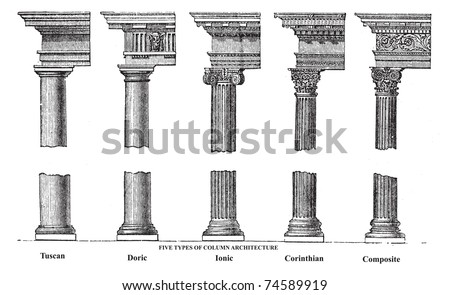
 Five types of old column architecture old engraving. Vector, engraved illustration showing a Tuscan, Doric, Ionic, Corinthian and Composite Greek and Roman column - stock vector