Monday, November 7, 2011

7th November 2011


Hello!!

Today in Social Science we have done the exam of units 9 and 1, in the unit 9 we have to study: the Absolute Monarchy, the definition of Baroque, demography, society and economy, the Thirty Years' War, The English Revolutions and the Decline of the Hispanic Empire and in the unit 1 we have to study: the Ancien Régime, the changes in the 18th century, Enlightenment, Political and Economy thinking, the independence of the 13 colonies of North America and the fundations of the U.S.A. and the War of the Spanish Succession.

In the exam we have got five questions, first to put the correct name with it definition, second one, to explain the Enlightenment and two of its philosophers, the third one, to choose two of these options:
a) Explain the Ancient Regime: Main features
b) Explain The Enlightened Despotism
c) Explain the War of the Spanish Succession.

In the exercise four, we have to choose five words and define it when and where they happened, and the last exercise we have to explained the Foundation of the U.S.A.

In my opinion the exam has been a little bit long.

This is all for today.


Saturday, November 5, 2011

Hot Potatoes activities to review for the exam

Here you have some interactive activities I´ve prepared, so that you can review for the exam on Monday. Click on the pictures to go to the correspondent websites: 


Thursday, November 3, 2011

3th of November

Today in Social Science we have been without Paqui,
 because she has been on a strike, with other teachers.
During the lesson we have done the last exercises
of unit 1 and the crossword.
The exercises were about the main features
of the Centralized Absolutism of Philip V and Ferdinand VI,
about the Esquilache Riots and the main reforms of Charles III´s reign.
And the crossword was about the 18th century (all the unit).


On Monday we will have the exam, and I think that it will be more difficult
because is about 2 units.
The first one is about the 17th century:

  17th CENTURY                       - Demography, Society and Economy
 ABSOLUTE MONARCHY     - Politics in the 17th century                                   
 AND BAROQUE                      - The decline of the Hispanic Empire                              
                                                    - Art and culture in the 17th century                          


The second one is about the 18th century:


  18th CENTURY                    -The Ancien Régime  
THE CRISIS OF THE           - Changes in the 18th century                                                                                   
ANCIENT REGIME AND   - Englishment
 THE BOURBONS IN          - The Independence of the 13 colonies 
           SPAIN                            of North America and Fundation                                                                                                  
                                                   of the USA               


      Sorry for writing the journal so late, but I have had some problems with the computer.  
      See you tomorrow, 
      Bye

Wednesday, November 2, 2011

2011-2012 Challenges. Number 7

As I´m going on strike (again) tomorrow, here you have this week´s challenge questions. If you answer them, you will learn something more about the first Bourbons in Spain.

QUESTION 1

Cadastre is a Catalan word used to refer to the single tax imposed in Catalonia by Philip V. This tax was part of the punishments imposed by Philip V to the territories of the former Crown of Aragon and its objective was to make tax collection more efficient and to balance the Aragonese contributions to the State finances with the Castilian contributions. The unique tax was called cadastre in Catalonia. How was this single tax called in Aragon, Valencia and Mallorca?

QUESTION 2

The Marquis of Ensenada had the idea of extending the cadastre to Castile. Ensenada was one of Ferdinand VI´s  most important and influential secretaries. However, he made a decision that could be considered racist today. He ordered the  arrest of  all the member of a minority  community. What was this community?


Zenón de Somodevilla y Bengoechea, Marquis of Ensenada

QUESTION 3

Some years later Ensenada was arrested and exiled, first in Granada and later in El Puerto de Santa María. Why?

QUESTION 4

There is a royal pantheon in El Escorial, where all the kings of the Hispanic Monarchy and Spain since Philip II have been buried. Why wasn´t King Ferdinand VI buried there? Where is he buried?


Ferdinand VI

QUESTION 5

The first population census in Spain was made during Charles III´s reign. How is this census known? According to this census, how many people lived in Spain at the end of the 18th century?

QUESTION 6

Why didn´t Charles III´s firstborn male son reign in Spain?

2nd of November

Today in the Social Science class Paqui has come a little late because she has come from the toilet. There have been a change in the places of sit, because I have changed my place with Alexander, because if not I speak a lot with Carmen. At first in the class Silvia has been a little revolutionized and Paqui has said her that she is going to go out if she follow in this way, but then she has been relaxed.
We have reviewed some things with a power point and then we have started to check the scheme we have had to do for homework about the point 6a in the book, the War of Spanish Succession and the treaty of Utrecht. We also have spoken about the challenge, about the painting of Philip V, because it is hanging upside down. He is like that because the conquered the city of Xátiva, he set it on fire and then the citizens punish Philip V in this way. We have spoken about two proverbs which are in Valencia:


- Quan el mal ve d´Almansa, a tots alcança (When evil comes from Almansa, everybody is caught)

- De ponent, ni vent ni gent (From the west, neither wind nor people")

The people in Minorca called the 18th century as “The British century” as it belonged to Great Britain. The British have Gibraltar because it is a strategic city like Ceuta and Melilla. We have also spoken about the War of Jenkins’ Ear, in 1739. After that we I have checked the exercise 19 of the book, about the Nueva Planta Decrees, which was a punishment to the Aragonese people of Philip V, because they supported Archduke Charles in the Succession War.

We have vote about if the point 6a is inside the exam of Monday and we have to study it. It is better because if not in the next exam we will have to study a lot.

Paqui has explained us that Philip V was a cicrotimic, because he had different changes of humor. He was also very dirty. Farinelli was a castrato which sung to him with the condition of take a shower. He abdicated in favour of his Son Louis in 1724.After Louis I´s death, Philip V continued to reign, but he left most of his duties on the hands of his secretaries. He was the king until his death in 1746 and Ferdinand VI was his successor. He was the Philip V’s son but of his 1st wife, Mary Louise Gabrielle of Savoy. During the reing of Fernand VI his minister Ensenada prepared a big questionnaire in order to establish a unique tax, but the data obtained couldn´t be used due to the opposition of the privileged.


The new words we have learned:
- Proverb: refrán.
- To severe: seccionar.
- Cadastre: cadastro.
- Property regristry: registro de propiedad.

I have liked a lot this class in my new site. Tomorrow there is a strike and Paqui won’t come. For the next day we have to do the exercises from 20 to 23 and the crossword.

Today Paqui hasn’t said any time to be quiet so congratulations for my classmates jajaja

Respuestas particulares de la Villa de Carbajales (Zamora)

Kisses.

Friday, October 28, 2011

Presentation about Spain during the 18th century

At Mari Luz´s request, here you have the PowerPoint presentation about Spain during the 18th century. It includes the War of Spanish Succession and Philip V, Ferdinand VI and Charles III´s reigns. 


Thursday, October 27, 2011

Thursday 27 TH of October

PHILIP V


Today in Social Sciences Paqui has started giving us a talk about the responsibility that we have and the respect.Then we have said the day of the exam: 7th Monday;the people who did not pass on art project has to studied the whole unit and the people who have passed art project has to study the last unit and the points 1 to 4 of the new book of the unit 1.


We have started seeing a powerpoint of Spain in the 18th Century. Paqui has said that before the long wigs was fashion but with the time were shorter. You can can see that Philip V wear a long wig.


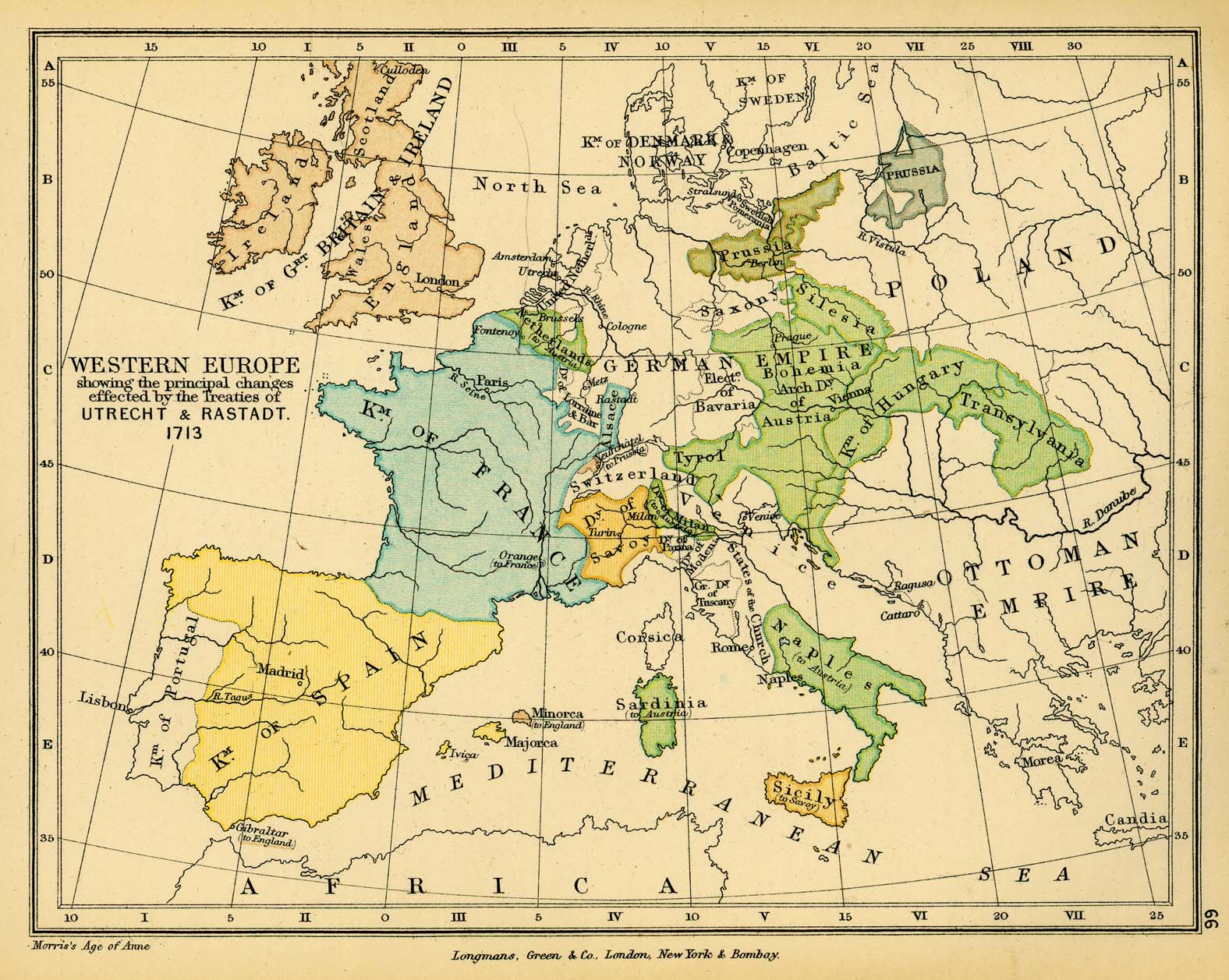
We have begun the point five about the war of Spanish succession and the Treaty of Utrecht, Laura M. has read the introduction of the war of Spanish succession (1700-1714) meanwhile we have seen the powerpoint about this. Then Daniel has continued with the explanation of the differents conflict that existed in Spain and Paqui has explained to us with a picture of the peninsula Iberica because we have had some doubts, and also Sara has read what is the Treaty of Utrecht:


  • Philip V was recognized king of the Hispanic Monarchy.


  • The European territories of the Hispanic Monarchy were distributed among Austria and Savoy.


  • Great Britain preserved Gibraltar and Minorca and they also got two important rights, which broke the Castilian monopoly in the Indies:


  • The assiento: they could sell black slaves in the Indies.


  • The ship of permission : once a year they could send a 500 tons ship with their products to be sold in the Indies.

Then Paqui has been explaining: Europe After the Treaty of Utrecht (1713) is an agreement to end the war. After paqui has made a summary of the Spanish War of sucession (1700 -1714)Finally Paqui has give us the exercise 19 and we haven´t finished the summary of the Spanish War of sucession.


A new word that we have learnt today is wig.


In this moment we have 50.065 visits


There is a interesting page about this:http://www.spanishwars.net/18th-century-war-of-the-spanish-succession.html


2011-2012 Challenges. Number 6

This week´s research will make you discover some curiosities related to the War of Spanish Succession(1700-1714)  and its consequences:

QUESTION 1
There is a Catalan proverb related to the consequences of the Battle of Almansa in 1707. What is this proverb and what´s its meaning?

QUESTION 2
Since 1943 the Almodí Museum of Fine Arts of the city of Xàtiva includes a portrait of Philip V hanging upside down. Why?


QUESTION 3
One of the decisions of the Utrecht Treaty was that Spain had to cede Gibraltar and Minorca to Great Britain. When did Minorca come back to the Spanish sovereignty?

QUESTION 4
Other decisions of the Utrecht Treaty were the two rights Great Britain got in the Spanish Indies: the assiento and the ship of permission. The violation of the limits to these rights by Great Britain led to a war between Spain and Great Britain in 1739. This war had a very curious name: War of Jenkins´Ear. What was the reason for this name?
  

Wednesday, October 26, 2011

The legality of the USA Declaration of Independence


Today we have talked about the USA Declaration of Independence and about how its content was closely related to many of the ideas of Enlightenment. Last week there was a curious debate in Philadelphia about the legality of the Declaration of Independence. British and North American lawyers discussed about the content of the document written by Thomas Jefferson and defended different positions according to the historical moment where the Declaration was written. Here you have the BBC report about this debate and the conclusions of every part: 


And the following links include a lot of information about the Declaration: the full text, biographies of the signers, the historical context, the influences Jefferson received, a timeline of the independence process and the Revolutionary War and so on:


And you? What do you think? Is it legal to rebel against a government that doesn´t respect people´s rights? Can something legal be unfair? Or, on the other way around: can something illegal be fair?