Showing posts with label Dani. Show all posts

Thursday, April 12, 2012

12th April 2012

Today in Social Sciences... we have asked Paqui some questions we had about project of unit 6: Art in the 18th and 19th centuries. Paqui has explained us the way to do well and she has sawn us a poster she wrote here in the blog about what had we have to do. To explaining it better, she has written some examples of slides in the blackboard. She has written an example for the work of the style we have to do, these are the steps:


  • Tittle

  • Author

  • Actual localization

  • Chronology

  • Painted in Material used: (for example: oil in canvas)

  • Description

  • The main characterictics of the style in relation with the work

  • A photo of the work

She has also explained how to do the last slide: Bibliography. She has helped us a lot. Afterwards Paqui has summerized what we did yesterday and she has explained again faster. Then we have seen the War Propaganda and some examples that Paqui has explained very well. These are some examples:


This one advertised citizens to save food for the soldiers>


Last example means that women had to work at factories replacing men, who are at war


Today we have learnt some new words for the glossary:
-To save: ahorrar
-War bounds: bonos de guerra

This is all for today. The class has been interesting and very short!
Sources:

Picture 1: http://www.google.es/imgres?q=tio+sam&um=1&hl=es&qscrl=1&nord=1&rlz=1T4TSEH_es___ES386&biw=1366&bih=556&tbm=isch&tbnid=xx_kEpWa6mpd_M:&imgrefurl=http://es.wikipedia.org/wiki/T%25C3%25ADo_Sam&docid=gnmD5RtukkKJsM&imgurl=http://upload.wikimedia.org/wikipedia/commons/thumb/1/1d/Unclesamwantyou.jpg/220px-Unclesamwantyou.jpg&w=220&h=296&ei=MQaHT97APOOl0AWKg5C5Bw&zoom=1&iact=hc&vpx=108&vpy=173&dur=820&hovh=236&hovw=176&tx=118&ty=128&sig=116752592722412012029&page=1&tbnh=156&tbnw=116&start=0&ndsp=16&ved=1t:429,r:0,s:0,i:130

Picture 2: http://www.google.es/imgres?q=war+propaganda+World+War+I+food&start=157&um=1&hl=es&qscrl=1&nord=1&rlz=1T4TSEH_es___ES386&biw=1366&bih=556&tbm=isch&tbnid=pO_-P6FMo-1ZcM:&imgrefurl=http://www.ww1propaganda.com/ww1-poster/save-loaf-week-help-win-war-0&docid=tl-MxP_1HYPZ7M&imgurl=http://www.ww1propaganda.com/sites/default/files/3g09732u-89.jpg%253F1304893830&w=600&h=834&ei=9AWHT5TRNIKp0QWm14nLBw&zoom=1&iact=hc&vpx=582&vpy=171&dur=230&hovh=265&hovw=190&tx=139&ty=238&sig=116752592722412012029&page=8&tbnh=178&tbnw=128&ndsp=20&ved=1t:429,r:3,s:157,i:209

Picture 3: http://www.google.es/imgres?q=war+propaganda+World+War+I+female+at+factories&um=1&hl=es&qscrl=1&nord=1&rlz=1T4TSEH_es___ES386&biw=1366&bih=556&tbm=isch&tbnid=yCLipiERwwPJlM:&imgrefurl=http://www.popartuk.com/art/propaganda/women-of-britain-44050-tin-sign.asp&docid=3PC9_XZdKug8uM&imgurl=http://www.popartuk.com/g/l/lg44050.jpg&w=336&h=452&ei=QwWHT7WPCsnG0QXGs8S3Bw&zoom=1&iact=rc&dur=140&sig=116752592722412012029&page=1&tbnh=117&tbnw=87&start=0&ndsp=36&ved=1t:429,r:57,s:0,i:108&tx=59&ty=77

Thursday, February 16, 2012

6th of February

Sorry for the great, great delay...


On the 6th of February we were with Cristina Blanco because Paqui wasn't able to work yet... For homework during the class we had:


Copy the outline of the new unit on your notebook. It corresponds to Unit 4 on the book (pages 33-43):
UNIT 5: EUROPE IN THE 2ND HALF OF THE 19TH CENTURY.THE AGE OF EMPIRES
1. The unifications of Italy and Germany.
2. The Age of Empires
A) Definition, causes and justification of colonialism
B) Attitudes towards colonialism
C) Conquest, organization and exploitation of the colonies
D) The big colonial empires and Berlin Conference
E) Consequences of colonialism
3. Spain in the 2nd half of the 19th century
A) Isabella II´s reign
a) The Progressive Biennium (1854-1856)
b) Alternation between the moderates and the Liberal Union (1856-1868)
B) The Glorious Revolution and the Democratic Sexenio (1868-1874)
a) The Provisional Government (1868-1870)
b) Amadeus I of Savoy´s reign (1871-1873)
c) The 1st Republic (1873-1874)
C) The Restoration (1875-1931)
- Read point 1 of the unit on page 33 and do exercises 1, 2 and 3 of page 41.


Cristina was helping us with the unit and she told us that we had to start thinking in the date of the exam of unit 3: THE INDUSTRIAL REVOLUTION AND THE LABOUR MOVEMENT.


If I have forgotten something please tell me!

Thursday, November 17, 2011

17th of november

Today in Social Sciences we have learnt a lot.

At first Paqui has asked for a volunteer to write the reflective journal here in the blog, and all the class has been saying my name....THANKS....so Paqui has thought in me and she has said: YOU HAVE TO WRITE DE JOURNAL...I have answered her because I couldn't write the journal today....

After this dramatic moment for me.... =( we have checked two exercices of the review:

5.-What important events took place in the summer of 1789? Why did the Ancien Régime disappear in France after these events?

-Storming of the Bastille(14th july 1789): popular attacked to the Bastille prison, symbol of absolutism.

-Great fear: in the countryside many peasants attacked castles and manois and they destroyed the property of the lands.

-4th August (1789): The National Constituent Assembly made 2 important decisions:


  • Declaration of the Rights of men and the citizen.

  • Abolition: seigmeurial rights and they were abolished.
The Ancien Régime ended, because estates disappeared, all the citizens had to pay taxes and peasants had to pay for working.

6.-What were the most important decisions of the National Constituent Assembly and the legislative Assembly?


  • National Constituent Assembly:
-Declaration of the rights of men and citizen
-Abolition: seigneurial rights and they were abolished.


  • Legislative Assembly:
-The Constitutional Monarchy
-The democratic Republic
-The Directory
-The Napoleonic era.

Afterwards, we have copied a scheme about the political factions in the assembly which included:


-Constitutional Monarchists: limited monarchy.


-Girondists: they wanted a free market economy and exporting the revolution. Representatives of a commercial bourgeoisie.

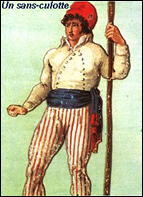
-Jacobins: they wanted a Republic, universal suffrage and more reforms. They were supported by the sans culottes.

Paqui has explained us a project of the french women in the revolution in which we have to explain our life in 1st person us if we were a woman.

We have read in the book and Paqui has explained as this with representations between us.We have learnt new words:


  • To pass a law: aprobar una ley

  • Flight: huída

  • To flee: huir

  • To brind back: devolver

  • Treason: traición

  • Traitor: traidor
Finally Paqui has gave as homework: exercice 9 from the review.
This is all we have done!

Sources of photographs:
1ª:http://www.tfo.upm.es/ImperialismoWeb/Prise_de_la_Bastille.jpg
http://www.laguia2000.com/wp-content/uploads/2008/06/ropa-de-los-sans-culottes.jpg

Friday, October 14, 2011

13th of October

Hello Everyone!


On Friday in Social Sciences we made some presentations about paintings and sculptures of the Baroque Era and Cristina Blanco was with us.


Paqui wrote on the blackboard the steps we must follow like:


1.- Name and author


2.-Commissioner


3.-Desciption


4.-Why is a Baroque painting or sculpture.


The first in explain as him scuplture was Diego with the Penitent Magdalen:
(Pedro de Mena)
Source:http://es.wikipedia.org/wiki/Archivo:Pedro_de_Mena_Magdalena_penitente_ni.JPG


Diego explained some interesting characteristics about this religious sculpture and he said that many sculptures ao this era were similar to this one.


Then was Ana de la Fuente with the Surrender of Breda:

(Diego Velázquez)

Source:http://es.wikipedia.org/wiki/Archivo:De_overgave_van_breda_Velazquez.jpg

Ana explained us the meanings of the symbols of this beautiful painting like the number 13 of the spears and the axes of The Dutch.


Afterwards was Ana Lucas with The calling of Saint Matthew:

(Caravaggio )
Source:http://es.wikipedia.org/wiki/Archivo:The_Calling_of_Saint_Matthew_by_Carvaggio.jpg


She explained the main figures of the painting and she told us who were these people (between them is Jesus christ) and the use of light and shadows.


Then was Ángel with The Night Watch:

(Rembrant)
Source:http://es.wikipedia.org/wiki/Archivo:The_Nightwatch_by_Rembrandt.jpg


Ángel told us that the painting was bigger at the beggining but itwas cut because it couldn't be placed due to its size.He explained also that the girl is the pet of the company.


Finally was Manuel Cuz with The Anatomy Lesson of Dr. Nicolaes Tulp:
Source:http://es.wikipedia.org/wiki/Archivo:The_Anatomy_Lesson.jpg


This painting is alittle disgusting but manuel did a great exposition about it and we learnt that this anatomy lesson was make once a year to saw the muscles of tthe human being.


All of them explained a little of each project because they had to summerized to give the opportunity to the classmates to present their projects.The class was very interesting and we learnt a lot.


I don't remember anything more about the class if you think I can improve it with another information please tell me!!


P.S. Ángel if you want you can upload the videos about these presentations. See you on Monday!

Thursday, June 23, 2011

My experiences...

For me this year has been a different way of learning Social Sciences and I liked the unit of the Catholic Monarchs, because i'ts an easy unit to learn and I disliked the unit of policy because I bored a lot with this theme...


I'll never forget this experience of been all the bilingüal programme together because next year in 4 of ESO we won't be join because each one choose different subjects...

I would like to be with you (Paqui) next year again.

You drew a different hue in the classes...

Image: http://www.fondosgratis.com.mx/items/paisajes/playas/1193_huellas-en-la-arena/

Monday, May 2, 2011

2nd of May of 2011

When Paqui has enter in the class she has been a ``little´´ angry with us and have said us that we have to look for our live and summerize the points that they read last Friday...

Today in Social Sciences we have checked the five exercices that Paqui gave last Friday. Before explaining it I want to thank to our classmatess for say us the homework. Well, the exercices were about the Catholic Monarchs.


Exercice 1>It was about the situation of the Iberian Peninsula at the beggining of the 15th century:

-There were 5 kingdoms in the Iberian Peninsula, four of them were Christians (Castile, Aragon, Portugal and Navarre) and one was Muslim (Granada).

Exercice 2> We had to write the causes of the civil war:

-The civil war occured because after Enrique's IV death the throne would be for Juana but the rumors of Spain said that Enrique couldn't have children and Juana was dauther of Beltrán de la Cueva, so Isabella would be the queen. Portugal support Juana and Aragon and some castillian nobles support Isabella.

Exercice 3> In this exercice we had to explain the main decitions of the Treaty of Alcaçovas:

-Isabel, queen of Castile.

-Portugal get the control of exploration of the african costs of the Atlantic Ocean.

-Juana was confered in a convent.


Exercice 4>We had to explain why the marriage of the Catholic Kings was a dynastic union:
They could control a big part of the Peninsula, but each crown will be continue being independent.

Exercice 5>We had to explain the motto ``Tanto monta, monta tanto, Isabel como Fernando´´ and how it determinated the Catholic King's policy:

Isabel and Fernando gave powers to each other, in order that one could rule in the kindom of the other one, but only Fernando used his power to rule Castile. Isabel never showed interest in Aragonece affairs.


After checked the exercices Kelly has read about territories conquered by the Catholic Monarchs and the reforms made by the Catholic Monarchs to reinforce their authority.
Then Paqui has written in the blackboard a scheme about we have already read while has shown us a powerpoint about it.


Finally Kelly has going to explain us about the Holy Brotherhood but the bell has rung...


PS: Classmates I hate you!!!Muak!


Monday, January 24, 2011

21st of January 2011

Hello everyone, well I'm going to write Friday's journal because JUAN CARLOS didn't write it!!!

So on Friday we checked some exercices of the review:

-In the exercice 18 we can think that the best places to fish are in continental shelves, cold currents and in confluence of cold and warm currents.

19.- This was about territorial waters that are the international laws recognize the right of every costal country to delimitate, that is, area of 200 marine miles from the coast to the international waters.

20.- What's fishing agreement? It's a treaty between countries that allows one countries boats to fish in the territorial waters of another country. In exchange for fishing in their territorial waters, the fishing companies have to hire native workers or give them a part of the fishes catches.
21.- We think about the main problems of fishing are pollution and overfishing. These problems have reduced considerably the quantity of fish avalible. This had led to limit the fish catch and to establish close seasons for some species. But the problems persist.


22.- What's aquaculture? It's an alternative. It consist in cultivating aquatic spieces in enclosed places:
-Fish farms: freshwater fish and algae are raised in tanks or enclosed sections of rivers or dams.


-Mariculture: it consists in raising saltwater fish, molluscs or algae in marne farms, in an enclosed section of the sea: sellyfish, oysters, clams, seaweeds, cultured pearls...


After checking the exercises we read the information about the primary sector in Spain.


We wre talking about the CAP(Common Agricultural Policy) belongs to the European Union, it main objectives, actions and problems.

-OBJETIVES:
*To achive self-comsuption: to produce the products needed by the EU members and to avoid surplus.
*To keep the standards of living of the producers.

-ACTIONS:
*The EU gives subsides to the farmers to keep some crops or to abandon some others.
*The EU signs trade agreements with some countries to import their products at a cheaper price.

-PROBLEMS:
* to achieve self-sufficiency
*to avoid surplus
* to keep the standars of living of the producers.

For homework Paqui gave exercice 24, but this is not on Friday, so bye bye.

I think that it's all, if I forgot something please tell me!! =)

Images:

http://adventure.howstuffworks.com/outdoor-activities/fishing/fish-conservation/fish-populations/salmon-population1.htm

http://www.dcnr.state.al.us/research-mgmt/mariculture-center.cfm

http://www.flickr.com/photos/seafdecaqd/2329750371/

Thursday, November 18, 2010

17th of november 2010

First, I' m sorry, yesterday I forgot to write the reflective journal because I was studying language.


Yesterday in social sciences, we checked the activities 4, 5 and 6 of the economic agents that Paqui gave us on Monday. In the exercise four Paqui explained the direct taxes and the indirect ones. In the exercice five we spoke about the public sector which this one formed by: the public administration, public services, social benefits and state companies.

In the exercise 6 Paqui explained us that it is a fiscal fraud, Paqui gave us this example: If you have 20,000,000 of euros and rides 18,000,000 of these 20 millions to another bank in which you do not give your identity and only you be known by a few numbers, only you declare to estate 2.,000,000, they take fewer taxes from you, it is a fiscal fraud, BUT IF THEY CATCH YOU, THE THING FOR YOU  CHANGES...You can go to the jail.

Finally we corrected the exercise 20 of the review and Paqui explained to us what was a tax evasion.
After correct the exercises, we read the labor market: we learned how the companies look for workers on the labor market, this is the place where workers and employers meet. Workers offer their services in exchange for a salary and employers offer work.

For homework we have to do exercices from 21 to 25 of the review.

The class has been very interesting, but also the class was exhausting for me, because some of us talked a lot and Paqui could not explain things properly.

Monday, September 20, 2010

20th of September 2010

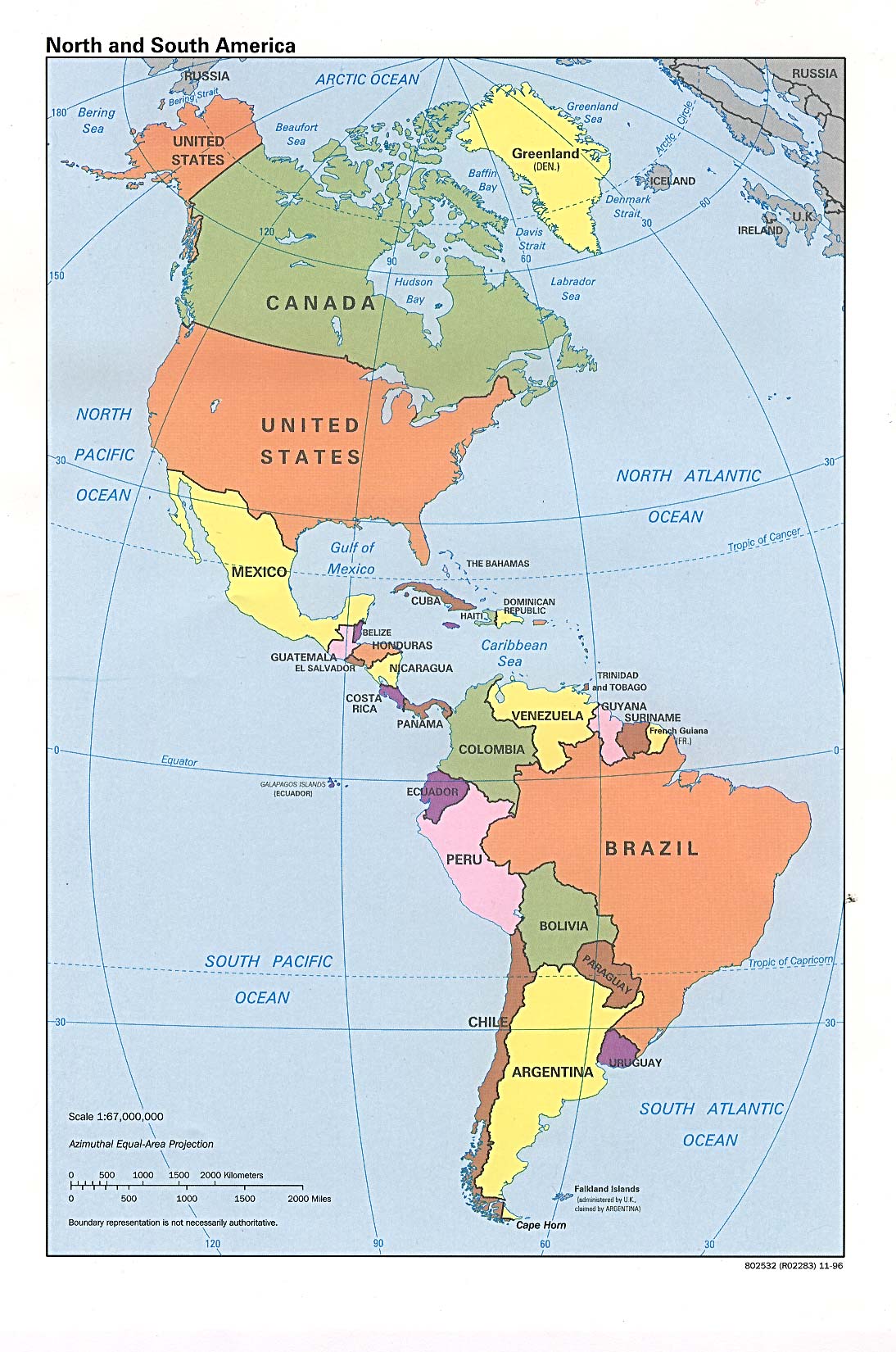
Today in Social Sciences we had to deliver the map of Europe. Paqui has said to us that why we didn't accept the invitation for the blog and Silvia has volunteered to do it in the class to show us how to accept it. Then Paqui has shown us how to write, how to edit, how to upload pictures and videos to the blog... Therefore she has given us a sheet of instructions that we know well (as we want! ). At the end of the class Paqui has given us another map of America:


In this map we have to do the same as in the other one.

17th of september 2010

Today in Social Sciences we have to go to another room with a projector (because the other class hasn't got it and Paqui must use it)

Then Paqui has given a sheet with all the names of the all European countries and more, like Kosovo¿? and the names of the countries of America in which we have to fill the gaps of the capitals of each one, but we didn't know half of them. After we have checked this sheet with Paqui. She has given us a map of Europe:


In the map we have to put the countries, the capitals and color each one of one colour.

15th of september 2010

Today it's was the first day in the High School. All the morning was a complete disaster because we didn't find the classes. In Social Sciences Paqui has given us a paper with the assessment criteria of the subject and then Paqui has explained us the percentages of the evaluation. We have talked about the reflective journal and Paqui has said to us that this year it will be easier, because we will only have to write the journal each 25 lessons, because we are going to be alterned to write it. But the blog is under construction. For homework we have to think in a name for the blog and write the reflective journal.

To participate in the blog we have to create a gmail account.

This class was fantastic, because we didn't copy anything!!!