Showing posts with label Clara Inés. Show all posts

Monday, June 22, 2015

Monday, 22nd June 2015

Hi, I’m Clara Inés!

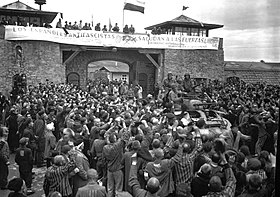
Today in Social Sciences class as there weren’t many people we have seen a documentary about the Mauthausen-Gusen concentration camp.

Source: http://www.ushmm.org/wlc/en/gallery.php?ModuleId=10005196&MediaType=PH

The documentary talked about the Spanish people who were sent  to this camp, but not all the Spanish people survived. These Spaniards were sent there because when the Spanish Civil War ended most of the Spanish people went  to France to live there and when the WW2 started with the Nazism many of these people were sent to this camp by Hitler's orders.

Source: http://www.scrapbookpages.com/Mauthausen/KZMauthausen/History/introduction.html

On the documentary these people talked about the five years that they “livde” there, in the camp. Almost all the people who were confined  there died of hunger, were executed or they committed suicide.

Source:https://en.wikipedia.org/wiki/List_of_subcamps_of_Mauthausen

In my opinion I think that the documentary was very hard. These people suffered a lot of, they were battered and abused. For me the most emotional part was when the Nazism started to disappeared and all the people of this camp could start to goes home, for me this was the most beautiful part.

Source:https://es.wikipedia.org/wiki/Campo_de_concentraci%C3%B3n_de_Mauthausen-Gusen

And the worst part was when the people died and they were stacked and were moved with excavators, These people were very skinny, due to the hunger.

Source:http://www.scrapbookpages.com/Mauthausen/KZMauthausen/ZiereisDeath.html


That's all for today. Have a happy summer and enjoy it.

Bye!!


Thursday, June 11, 2015

Thursday, 11th of June 2015


Hi! I'm Clara Inés  and this will be my last journal of this year!

Today in Social sciences we have taken the last exam of this year so we have to be before at the class.

Source:http://www.livelifemore.com/diet-for-kids-in-exam-days-by-dietitian-pallavi-jassal/

Later Paqui has given us the exams, which consisted of the Russian revolution, the interwar period with the USA from the Roaring Twenties to the Great Depression and the Fascist Italy.

So the exam had got two questions :


In the first one we have to choose between the 1917 revolution or the Stalinism (1927-1953) this question was worth 2.5 points.


In the second question we had to complete(d) the gaps with almost all the things that we have learned and this question was worth 7.5 points


Source:http://www.wikihow.com/Study-for-a-Social-Studies-Test

For me the exam wasn’t as long as other exams, and that all for this day .
Finally the bell has rung, and we have gone to another class.

Bye!!


Monday, April 27, 2015

Monday, 27th of April

Hello everybody!  I 'm Clara Inés and this is my third journal of the year. 

Today in Social Sciences we have done a lot of things.
At first Paqui has come to our class later because she has been with the 3rd ESO students visiting a beer factory.


Then we started the lesson, but at first all the people have started to ask  Paqui about the projects that we made and then Victor has come to class. After all these interruptions we have finally started with the scheme of the different stages of World War 1.

In the 1st stage: War of movement (1914): the armies moved towards the enemy. Fight developed in two fronts. In the Western front the Germans attacked France through Luxembourg and Belgium (Schlieffen Plan, to take Paris: the Germans planned a short fight against France to focus in the Eastern front against Russia. This failed and they had to fight almost alone in two fronts). After the battle of Marne, the French stopped the German advance. In the Eastern Front the Russians advanced through Eastern Prussia and Galitzia. The Germans stopped them after the Battles of the Masurian Lakes and Tannenberg. 
At the end of 1914 Japan joined the Triple Entente and the Ottoman Empire joined the Central Powers. The Japanese occupied Tsingtao and they didn't do much more during the rest of the war.

 
                        Source: http://historoda.com/2013/04/13/wwi-europe-plunges-into-war/                          

In the 2nd stage: War of attrition (1915-1916): The war fronts stabilized and didn't move since the end of 1914. Soldiers dug kilometres of trenches and tried to keep their positions. Bulgaria joined the Central Powers and Italy and Romania the Triple Entente. In the Western front the Germansattacked in Verdun and the French reacted at the Somme. The front didn't move, but there were around two million victims. In the Eastern front a big German offensive to the East took place and Russians had to retire back.
A third front opened in the Balkans: the Central Powers occupied Serbia and Romania. The British attacked the Ottoman Empire from Egypt and occupied Palestine, but they were defeated at Gallipoli.
Also Paqui  has done a scheme on the blackboard to explain all this.


Source: http://www.ynetnews.com/articles/0,7340,L-3611617,00.html


In the 3rd stage: crisis of 1917: There were internal problems in all the belligerent countries: soldiers' mutinies in all fronts, nationalist protests in the Austro-Hungarian Empire, Easter Rising in Ireland and a revolution in Russia: the Bolsheviks took power in October 1917 and decided to sign an agreement with the Germans to take Russia out of the war Brest-Litovsk Treaty


                     Source:http://io9.com/5960510/thousands-of-australian-students-are-taught-that-robots-                                                              led-the-russian-revolution

We have also added some new words to our glossary:

To exhaust-agotar
Slaughter – carnicería
To instill- inocular, inculcar
To withdraw- retirarse
Rising – levantamiento
Easter Rising – levantamiento de Pascua

Finally the bell has rung, and we couldn’t finish with the 4th stage, but we will finish that the next day. And we have gone to another class.


And a video for review all that we learned.

Bye!!


Monday, March 9, 2015

Monday, 9th of March

Hello everybody! I 'm Clara Inés and this is my second journal of the year. 

Today in Social Sciences we have done a lot of things.

At first ,one part of our class has come late because they were finishing an exam of Ethics.

Later we have revised all the things that we studied before , then we have continued with the conquest of the colonies that was fast due to the technological and military superiority of the colonists, who also used tribal rivalries to divide the indigenous peoples and occupy the territory.Paqui has also explained us the different types of colonies: they were divided into the colonies of exploitation, the colonies of settlement and protectorates. The colonies of exploitation  totally depended on their mother country. The colonies of settlement had autonomous government,but their foreign policy was not independent. And the protectorates, that in theory were independent, but their foreign policy was controlled by another power.The most important examples were Morocco, that was controlled by France and Spain between 1907 to 1956 and also Egypt, that was controlled by UK.

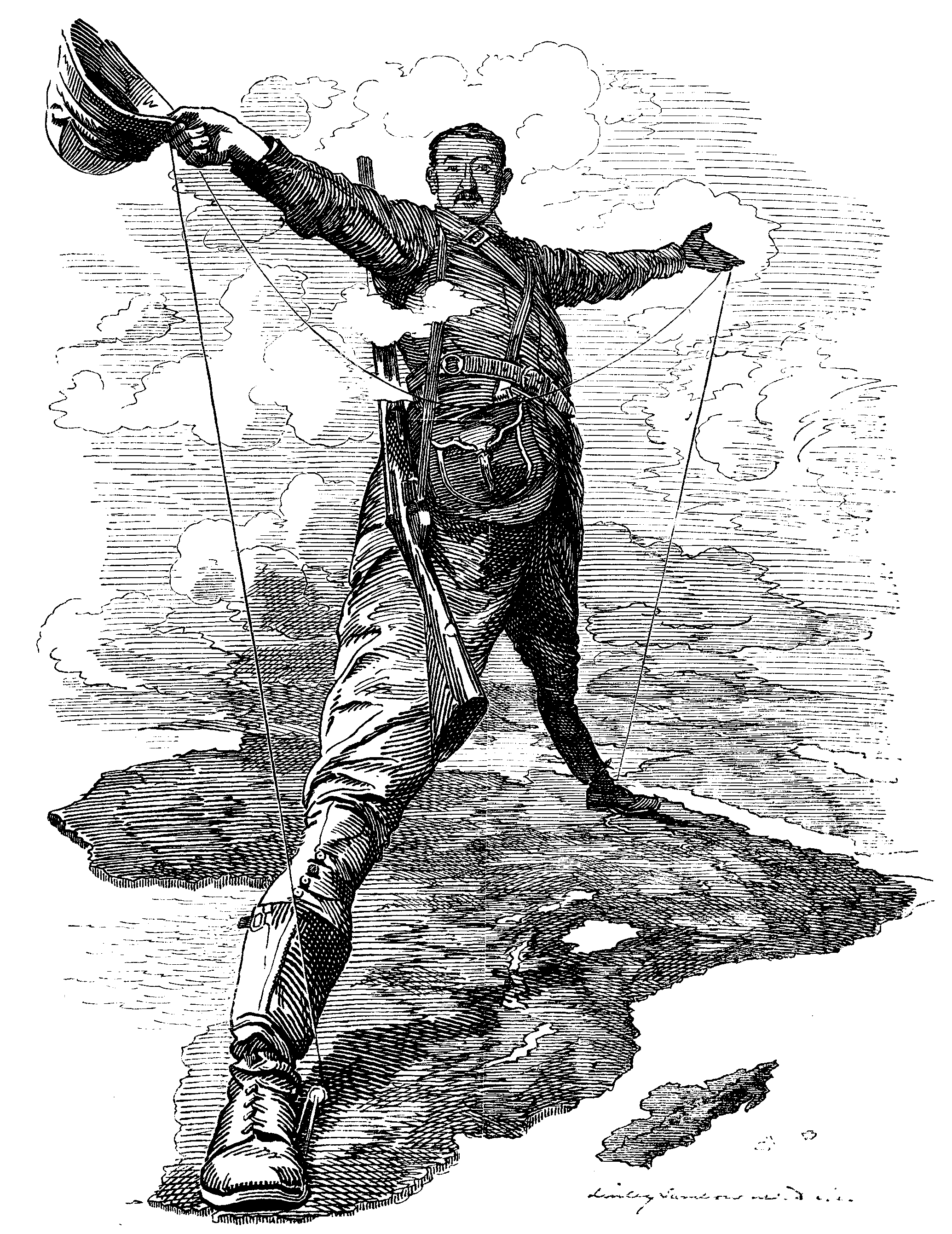
Later Paqui has started to explain the scramble for Africa. Tis means that the main European powers became confronted in the colonization of Africa, France and the UK wanted to created continuous empires in Africa (France from West to East and the United Kingdom from North to South). 


Source: http://en.wikipedia.org/wiki/The_Rhodes_Colossus

She has also explained the Berlin Conference in 1885, that was called in order to avoid a war between the Europeans powers in their race to occupy Africa. Otto Von Bismarck sponsored an international conference in Berlin, whose the main decisions were that the country that occupied the coast of territory could also seize the interior, free navigation of the African rivers, creation of Congo Free State, given to king Leopold II of Belgium. The main consequences of this were that all the continent was distributed between the Europeans. Only Liberia, Abyssinia and Morocco remained free. She has also showed us maps about this.


Source: http://www.clehmann.org/courses/122_15.htm

Later she has told us that king Leopold II of Belgium exploited Congo as a private property. All this occured in the rubber plantations.
Source: http://commons.wikimedia.org/wiki/File:Victim_of_Congo_atrocities,_Congo,_ca._1890-1910_(IMP-CSCNWW33-OS10-19).jpg

Then Paqui has given us the homework that we have to do for the next class, that is explain how Africa was occupied and the main decisions of Berlin Conference , its consequences. And she has also given the Exams, but they were without mark, so we have had to calculate them.

We have also added some new words to our glossary:

Trival Rivalries: Rivalidades tribales.
Colonies of explotation: colonias de explotación .
Colonies of settlement: colonias de poblamiento.
Protectorates: protectorado.
Rubber plantations: Plantación de Caucho.

Finally, as the other part of the class had exam of Ethics as well, and we have had to go out before.

Bye!!


Monday, January 26, 2015

Monday, 26th of January.

Hello everybody! I 'm Clara Inés and this is my first journal of the year.

Today in Social Sciences we have done a lot of things.

At first our second teacher of English Sonia has come to our class, later some students have written quotes on the little white board. Then the lesson has started.


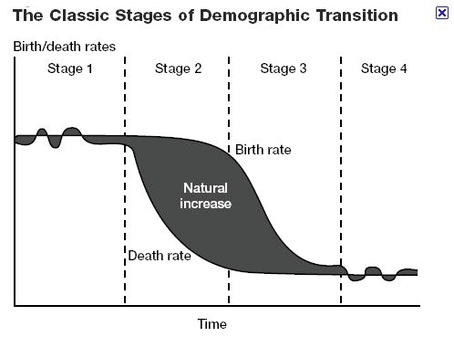
We have revised all the things that we studied the last day, the Demographic and Agrarian Revolution, that the Demographic Revolution was caused because there were less wars, hygiene and medicines all of these caused some changes like the life expectancy increased and the consequences were that the population growth created a high demand for all kind of products. 
Later we have started the point: 


Source: http://swedendemography.weebly.com/demographic-characteristics.html


And the Agrarian Revolution was caused due to more demand for agricultural products,what made that the prices increased, there were some changes for example: more land was cultivated(enclosures), introduction of the Norfolk four field system of crop rotation, mechanization of some works , and the selective breeding. And the consequences were that production increased, a richer and more varied diet and a surplus of farmers in the countryside, they had to migrate to cities in search of job.


Source: http://en.wikipedia.org/wiki/Scottish_Agricultural_Revolution

B)Changes in manufactured products and transport revolution.
B1 First Industrial Revolution. 
Source:http://www.industrialrevolutionresearch.com/how_industrial_revolution_started.php

And Paqui has drawn us the scheme of this point on the blackboard and we have to complete them in class so there were some causes in the first industrial revolution, there was more demand for all type of products. The main changes were the sources of energy, the inventions and innovations. The main invention was the steam engine, based on the force produced whenthe water is boiled and the steam is used to move an engine.
Source:http://epb.apogee.net/foe/fgo.asp

And the main energy sources were the hydraulic power and the mineral coal. The factory systemconsisted of the concentration of machines and workers in big factories and division of work. Working conditions got worse. The industries that developed most were the textile industry and the iron and steel industry.

                                Source: http://www.solwedish.com/solutions/iph/textile-industry/

Source: http://shehzadkhurram.blogspot.com.es/2013/11/strengthening-iron-and-steel-industry.html

And the main consequences were that the products were cheaper and the workers could buy more products. 

We have also added some new words to our glossary:
Farmer=Peasant-campesino
Selective Breeding-cría selectiva
Surplus-exceso, plusvalía in economics
Steam Engine- máquina de vapor
Coal-Carbón
Factory System- Sistema fabril.
And so more.

At the end of the class Paqui has given us the homework that we have to do: a scheme about the transport revolution with the causes, inventions, and consequences. 

Finally the bell has rung and we have gone to another class.

Bye! 

Tuesday, November 25, 2014

Tuesday, 25th of November

Hello everybody! I 'm Clara Inés and this is my second journal of the year.

Today in Social Sciences we have done a lot of things.

At first we have corrected the exercises that Paqui has gave us for today, about the Type of State and Constitution in USA
The type of state was divided into Federal Republic which means that every state has important powers: own laws, own courts of justice..., and the Presidentalist Republic, which means that the president holds wide powers.
And the Constitution was divided into the Principles on which it was based which includes seven articles with the organization of the new State, based on the principles of political liberalism. The Content was freedom, property, religious freedom, freedom of speech, press freedom, right to wear weapons. And the Amendments which are 27 up to this moment and included the abolution of slavery, the right to vote for women for black people, the prohibition of alcohol... and so on

Later Paqui has started to explain the last point of this unit, Spain in the 18th century,A) War of Spanish Succesion (1700-1714). When Charles II died without direct succesors, he left his kingdom to Philip of Anjou. Louis XIV's grandson and a lot of people disagreed with his testament. Austria, the Low Countries, Portugal and Great Britain were against the French influence over the Hispanic Monarchy and supported Archduke Charles of Austria. In the Iberian Peninsula: Castile supported Philip of Anjou and Aragon supported Archduke Charles.
                                                                      
                                                                                            Philip of Anjou                                 
                                           Source: http://www.cachecoins.org/leopoldhre.htm                                                                                                                    
                                                              Archduke Charles of Austria                                    Source:http://roble.pntic.mec.es/fpef0013/18thcentury/four.htm          


In the development of the war Paqui has explained this with a map and said that they had equal forces on both sides; the British invaded Gibraltar and Minorca; the French-Castilian army defeated those who supported Archduke Charles in Almansa; When the emperor of Austria died, Archduke Charles became emperor. Fearing Austria's reinforcement, the European powers looked for an agreement to end the war and they signed the Treatry of Utrecht, Spain appeared with the Nueva Planta decrees Philip V issued to punish the reings of the Crown of Aragón. Later the war continued in Catalonia until 1714, when Barcelona was bombed by Philip V's order. Finally they surrendered.

                                                                                        Battle of Almansa
Source: http://en.wikipedia.org/wiki/Battle_of_Almansa

The Treaty of Utrecht included the following decisions: Philip V was recognized king of the Hispanic Monarchy; The Europeans territories of Hispanic Monarchy were distributed among Austria and Savoy; Great Britain preserved Gibraltar and Minorca and they got also two important rights: the assiento: they could sell black slaves in the Indies and the ship of permission: once a year they could send a 500 tons ship with their products to be sold in the Indies.

                                 Source: http://ieslarochahistory.blogspot.com.es/p/blog-page.html

We have also added some new words to our glossary:
Take the risk-Arriesgarse
Assiento-Derecho de asiento
Ship of permission-Navío de permiso

At the end of the class Paqui has given us the homework that we have to do: a scheme about all that we have learnt today.

Finally the bell has rung and we have gone to run.

Bye!

Thursday, November 20, 2014

Old Woman Frying Eggs, Diego Velázquez.

Click!
Source:http://www.wga.hu/html_m/v/velazque/01/0105vela.html

“This work of art was make in 1618, on Seville, one year later after Velázquez had passed his exam of painting. But now the painting is on The National Gallery of Scotland in Edimbourg.
Diego Velázquez Autorretrato 45 x 38 cm - Colección Real Academia de Bellas Artes de San Carlos - Museo de Bellas Artes de Valencia.jpg
Source:http://es.wikipedia.org/wiki/Autorretrato_(Vel%C3%A1zquez)


At the end of the 19th century, the painting belonged for Sr. Charles Robinson power.                                                                                                                                                                                                                                                      


Later the work of art belonged to the Frederick Lucas Cook collection, but only until the 1955, because The National Gallery of Scotland in Edimbourg bought the work for 57.000 pounds.


The size of the painting is 100'50 cm x 119'5 cm (framed: 148.00 x 128.60 x 7.60 cm), The main material used was oil canvas because is a still life, opaque. The painting  is inn The National Gallery of Scotland at the present.

In the painting appeared an old woman appears in the moment when she is frying eggs in a clay pot over a portable stove, stirring the oil with a wooden spoon while she prepares another egg. She looks up  to a boy on the left of the painting with an expression of blindness. The boy has a bottle of wine and a melon. In the background we can see a basket of esparto. And in the foreground, on the floor we can see a copper cooking pot and to the right on a table we can see: a mortar, a plate with a knife, an onion and pottery jars. The old woman can be family of the painter and the boy who is on the left can be a messenger, he appeared in a lot of  Velázquez' works. Velázquez was inspired by Nordic pictures of kitchens.
Composition is simple, with a few characters but is very successful. It is organized into an oval shape. The scene doesn't have movement.
The contrasts of light and shadow is creater with a dark background. The objects appeared very natural due to the virtuosity that the painter had to show us the brightness and textures: rough, like melon and spoon, and polished in the egg and glass.

The colours are dark . The headscarf of the old woman, the eggs, the plate and the pot are white patches that contrast with the dark background. The brush strokes are thick.
The drawing is very well made, the outlines are very clear, but we see that the artist interests are the light and the color.

The meaning of this work of art is that seems a realistic painting, it can be a visual reflection of the senses of touch and vision;the old woman almost blind, is trying to touch with the spoon in her hands and the boy is looking at  the variety of the objects on the table.

We can see on this painting characteristics of Baroque: composition predominantly diagonal lines and curves with varied colors, contrasts of light and shadow, unimportance of the line, use of oil painting, we can see the realism of the work.

Velázquez was influence by Caravaggio an Italian painter, Velázquez was be able to appreciate the novelty of uniting of the Flemish cooking topics with the naturalistic technique of Caravaggio.

Sources used in this project:

www.nationalgalleries.org/collection/artists-a-z/v/artist/diego-velazquez/object/an-old-woman-cooking-eggs-ng-2180

http://mydailyartdisplay.wordpress.com/2012/09/07/an-old-woman-cooking-eggs-by-velazquez/

http://www.selectividad.tv/S_A_1_2_5_S_vieja_friendo_huevos_de_diego_velazquez.html

http://es.wikipedia.org/wiki/Vieja_friendo_huevos

Palace of the Marquis of Dos Aguas, Hipolito Rovira


File:Dosaigues porta.jpg
 Source:http://commons.wikimedia.org/wiki/File:Dosaigues_porta.jpg
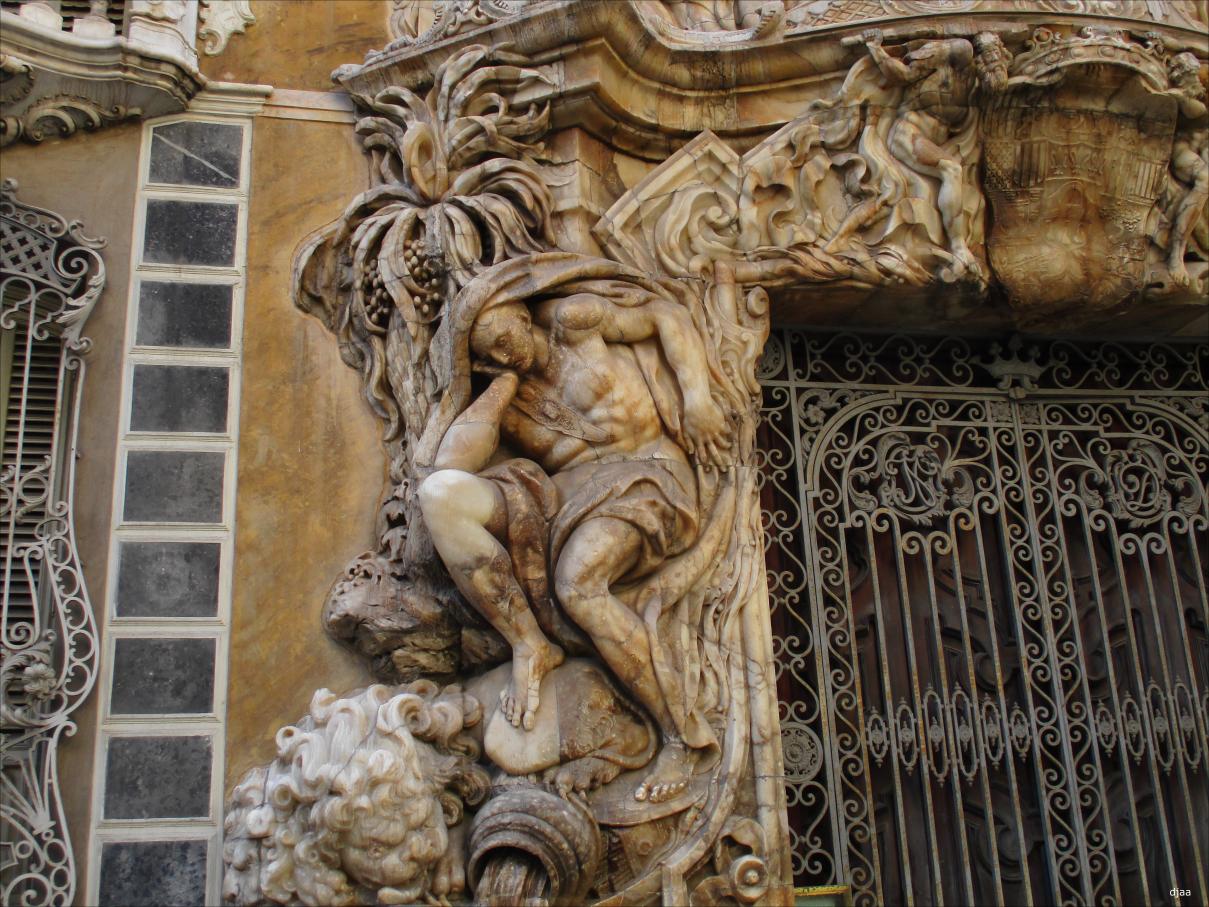
“Palace of the Marquis of Dos Aguas” by Hipolito Rovira (painter), Ignacio Vergara (sculptor), Luis Domingo (decorator)

The palace was made in the 15th century , built by the Rabassa de Perellós family,and it was reformed sometimes.

Now the Palace of the Marquis of Dos Aguas is a Museum National of Ceramic and Sumptuary Arts “González Martí”, on 2, Poeta Querol street,  in Valencia.
File:Marques de Dos Aguas 15.JPG

Source: http://commons.wikimedia.org/wiki/File:Marques_de_Dos_Aguas_15.JPG


The commisioners of the building were the Rabassa de Perellós family.

This building was a palace that was used for the domestic uses, but now is a Museum of Ceramic.


The materials that we can find in this building are:
The principal Gate is made with alabaster. In other parts we can find simple materials such as concrete, plaster, marble, etc...

The Barque features are concentrated in the main gate: 


Source: http://www.jdiezarnal.com/valenciaelpalaciomarquesdedosaguas.html


Source:http://www.jdiezarnal.com/valenciaelpalaciomarquesdedosaguas.html


Source:http://www.jdiezarnal.com/valenciaelpalaciomarquesdedosaguas.html
- The gate               
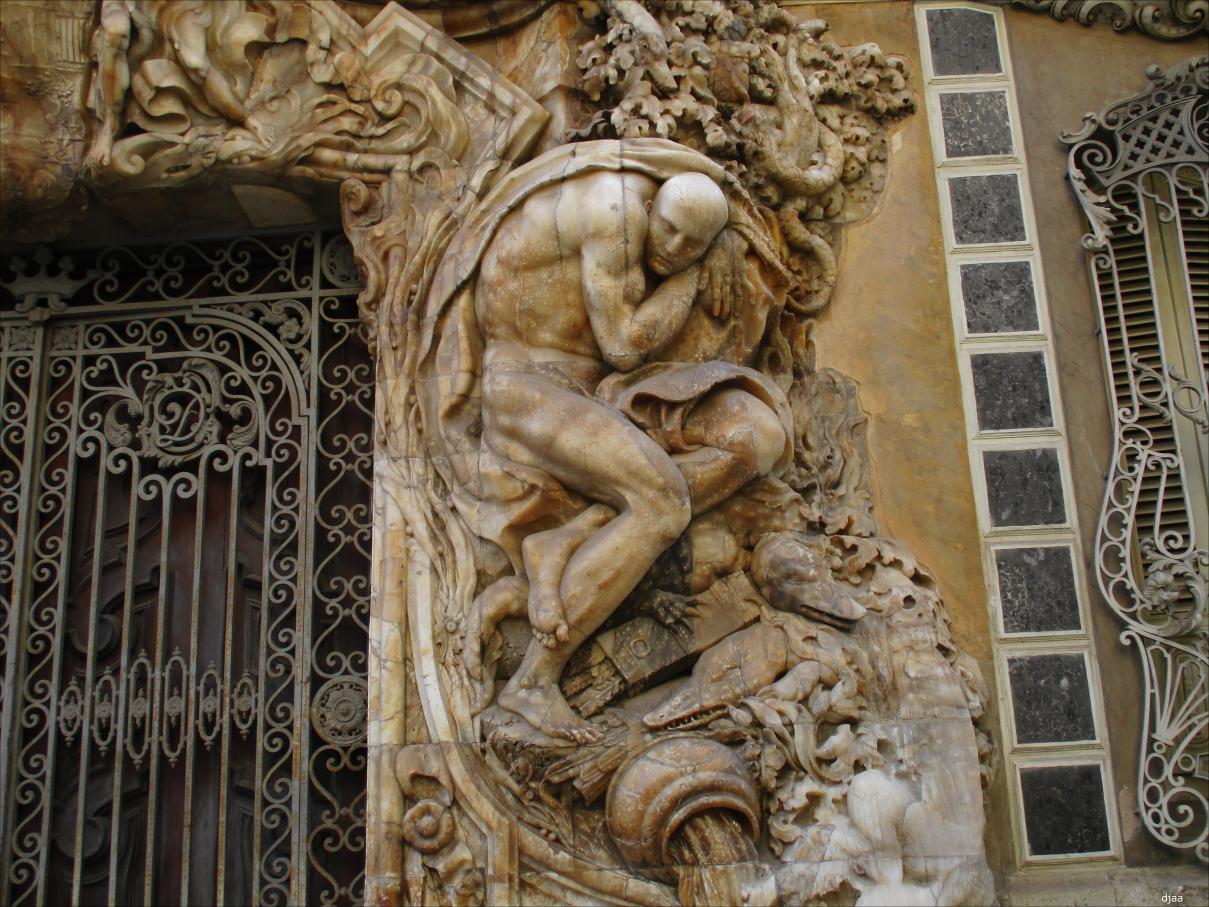
* In the right part there are two cocodrile heads, some arrows and one pot that spill water decoration of ivy rolls and a snake.
  * In the left part there is a lion leaning back and another pot that spills water and some arrows. A bove the lion there was a fit of another giant and decoration of vegetable type.
 *In the lintel of the gate there is the shield of the marquis, and the figures of two savages with maces. There are the surnames of Perellós on the walls.
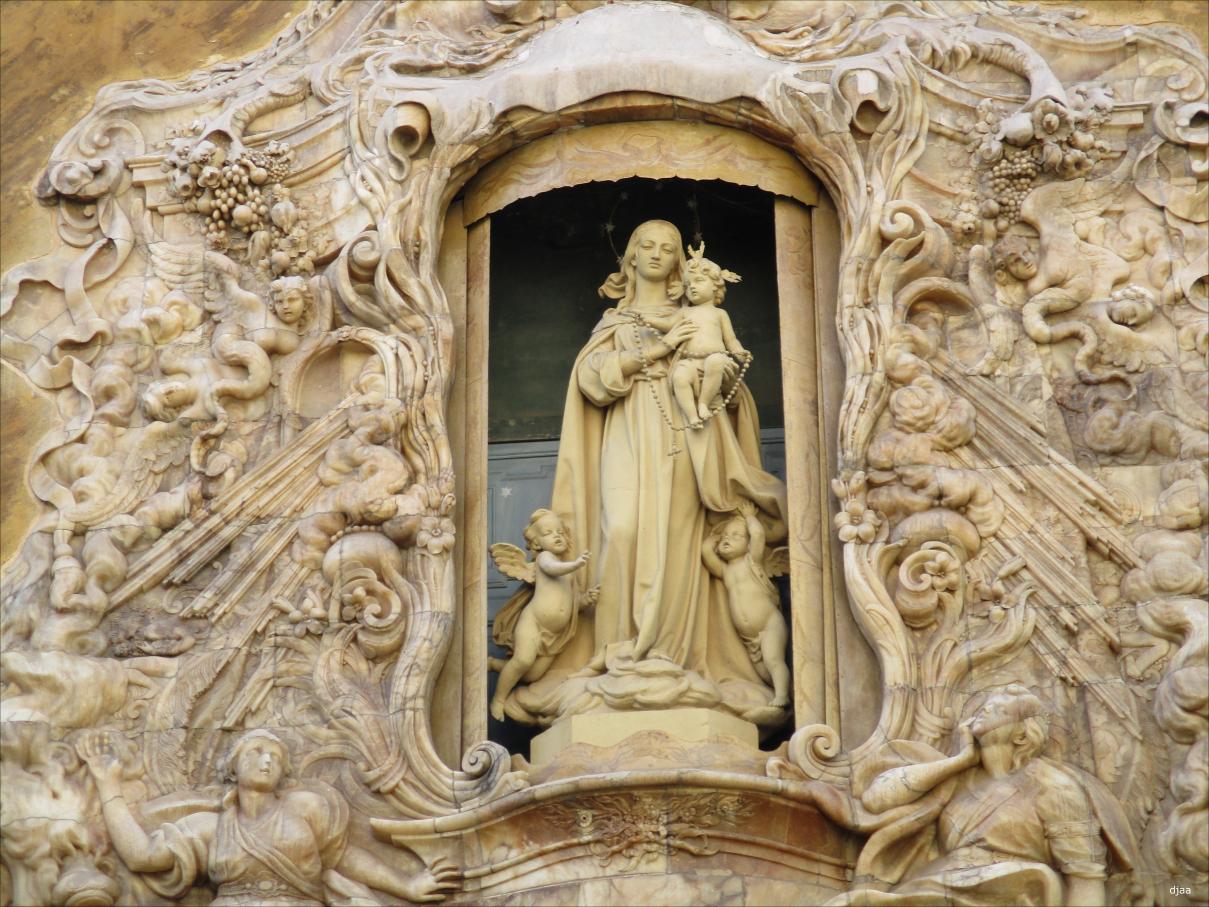
*In the upper part of the gate we can find the Virgin of Rosario. Below the  Virgin there are two matrons kneeling. Above we can findd an angel with a   trumpet. This Virgin now is made of plaster because they changed the original Virgin.


- The Palace was distributed in three zones around the patio and one tower, but later they  built another tower. The facade has one adjacent gallery in the upper floor.
- There is another gate called Gate of Carriage.
- In the interior we can find: a lobby, a garden terrace, salon of illustrious people, Chinese salon, dining room, smoke salon, Gothic salon, bedroom of the marquis, porcelain living room, red salon, dance salon, patio.

The main features of this building give movement to the building, with spirals and there is decorative exuberance in the exterior and the interior.


Sources used in the project:


http://www.jdiezarnal.com/valenciaelpalaciomarquesdedosaguas.htm

http://www.valenciavalencia.com/sights-guide/sights-listings/ceramics-museum.htm


http://es.wikipedia.org/wiki/Palacio_del_Marqu%C3%A9s_de_Dos_Aguas

Tuesday, October 14, 2014

Tuesday, 14th of October 2014

Hello everybody! I 'm Clara Inés and this is my first journal of the year.

Today in Social Sciences we have done a lot of things.

At first Paqui has been talking about the project that we have to do, about the Baroque art.

Later we have started with a new point, the point three: "The 17th century".Fran has started to read on our book the Overview of this point, that said, that in the period of the 17th century was a period of crisis and contrasts, there was an Absolute Monarchy that was the predominant form of the goverment, the English Revolutions took place, and the division between Catholic and Protestant countries caused a new war, and the Baroque was the new art style of this period.

Later we have continued which the point A: "Demography, Society and Economy".

Alfredo has started to read on the book the Demography, which said, that the population grew very slowly, due to the high mortality caused by epidemics (like the Black Death, we also studied this at 2nd ESO)Only in the places where new agricultural techniques were introduced, the population grew.


A man suffering from buboes and splotches
A man with the Black Death


Later Sara has started to read the Society in the 17th century, which said, that it continued to be divided into estates (privileged and underprivileged) but the underprivileged estate grew.

Marta has continued to read the Economy, agriculture continued to be the main economic activity, this was divided into :

-Production: In this part Paqui has done a drawing about the merchants and she has said that the merchants started concentrating workers in big workshops called manufactories. Mechants provided tools and raw materials and workers received a salary in exchange for their work. The products of the merchants, could be sold them directly in markets, they produced: tapestry, crockery and glassware.

-Trade: this part has been read by Minerva, this said that, international trade grew , and sea routes opened by the Portuguese and the Castilians in the 16th century continued to exist. In the 17th century a new trade route appeared the triangular trade which linked Europe,Africa and America. The English , the French and the Dutch broke the Iberian monopoly of colonial trade and formed the trading companies ,their ships received the protaction of their States. Portugal lost its main important colonies of Asia, England saized India, Holand saized Indonesia, but Portugal also kept Goa, Diu and Damao.

Paqui has explained this with some maps of the presentation.

Spanish_and_Portuguese_trade_routes.jpg


Triangular Trade


We have also added some new words to our glossary:

Overview-visión general
Weather-tiempo atmosférico
Precedent-precedente
Tapestry-tapicería
Glassware-cristalería
Crockery-vajilla
Guilds-gremios
Risky-peligroso
And so on.

At the end of the class Paqui hasgiven us the homework that we have to do: a summary about all that we have learnt today: Demography, Society and Economy.

Finally the bell has rung and we have gone to another class.

Bye!